

Japanese Katanas: Iaito, Japanese Swords, and Katanas for Martial Arts
Whether you are looking for a non-sharpened iaito for Iaido practice, a Japanese sword for a specific use, or a katana for your collection, discover a variety of models to compare according to your needs.
The katana is one of the most iconic Japanese swords. Closely linked to the history of the samurai, it now holds an important place in several Japanese martial arts traditions.
At Budo Fight, you’ll find a selection of iaito katanas, models in different lengths, and swords with various finishes.
To choose the right katana, it’s essential to distinguish between non-sharpened models designed for certain martial practices, sharpened blade swords, and decorative pieces.
Our Selection of Japanese Katanas and Iaito
Several models of katanas and iaito are available to meet different needs in terms of size, weight, finish, and intended use.
Among the references available at Budo Fight, discover:
The Iaito T1 katana: a non-sharpened blade model, featuring a 76 cm length and a weight of 900 g. Check the detailed specifications on its product page to confirm it meets your practice requirements.
The Japanese Iaito T3 katana: a reference from the iaito range, featuring a grooved blade. Compare its dimensions and finishes with other available models.
The Japanese Iaito T5 katana: another model in the selection, associated with the brand Meiji Japon. See its product page for details on materials, finishes, and handle characteristics.
The Shinogi sharpened katana: a sword to be distinguished from non-sharpened iaito, especially due to the precautions required and the regulations applicable to bladed weapons.
As product features and availability may change, please check the product pages before placing your order.
What Is a Japanese Katana?
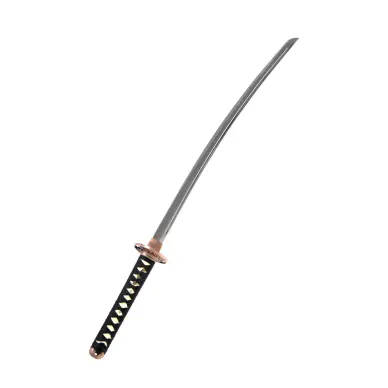
The Japanese katana is a traditional sword characterized by its curved, single-edged blade and long handle, usually allowing a two-handed grip.
It is historically associated with the samurai and Japanese martial arts traditions.
Today, the term katana can refer to different types of products: traditional swords, reproductions, models designed for certain martial arts, or collector’s items.
It’s important not to consider all katanas as interchangeable.
Main Parts of a Katana
A katana traditionally consists of several elements:
The blade: the main part of the sword, whose design varies by model.
The tsuka: the handle of the katana.
The tsuba: the guard located between the blade and the handle.
The saya: the scabbard designed to hold the blade.
The tsuka-ito: the wrapping around the handle.
The sageo: the cord attached to the scabbard on certain models.
These elements can feature different materials, colors, and finishes.
Their quality and assembly contribute to the overall characteristics of the sword.
Iaito: The Non-Sharpened Katana for Iaido
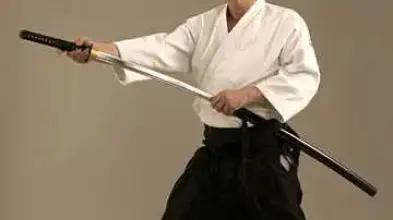
The iaito is a non-sharpened training sword mainly used in Iaido practice.
Unlike a sharpened katana, it is designed to allow the study of codified movements without a cutting edge.
Iaido is a Japanese martial art focused on the study of forms and movements related to sword handling.
The choice of an iaito depends on your school, your level, and your instructor’s recommendations.
Why Choose a Non-Sharpened Iaito?
A non-sharpened iaito katana is intended for specific technical practices under supervision.
The absence of a cutting edge reduces the risk of cuts from a sharpened blade but does not eliminate the risk of injury.
An iaito remains a rigid object, sometimes with a pointed tip, requiring careful handling.
What Length of Iaito Should You Choose?
Length is a key criterion.
An iaito that is too long or too short may not meet your school’s requirements.
To select your model, consider:
Your body type.
The recommended blade length.
The sword’s weight.
Overall balance.
Handle comfort.
Your instructor’s recommendations.
Before ordering, check whether the listed dimensions refer to the total sword length or just the blade length.
What Is the Ideal Weight for an Iaito?
Weight affects handling and comfort during practice.
A heavier iaito is not necessarily better suited for an advanced practitioner.
The choice depends on your level, body type, and the technical requirements of your discipline.
Sharpened Katana or Iaito: What’s the Difference?
The sharpened katana and the unsharpened iaito are designed for different uses.
Criteria | Unsharpened iaito | Sharpened katana |
|---|---|---|
Blade | Not sharpened | Sharpened |
Main use | Certain technical Iaido practices | Specialized use depending on the model and authorized context |
Risk of cuts | Reduced, but not zero | High |
Level of precaution | Important | Particularly high |
Model selection | According to the school and instructor | According to use, qualifications, and applicable rules |
For beginners in Iaido, it is best to follow your instructor’s recommendations rather than choose a sword based solely on its appearance.
A sharpened katana should never be used as a substitute for an iaito in exercises where it is not intended.
Katana, kenjutsu, and kendo: what are the differences?
The katana is associated with several Japanese martial traditions, but not all use the same equipment.
The katana in kenjutsu
Kenjutsu refers to a set of Japanese traditions related to the art of the sword.
Its schools may use different equipment depending on the techniques taught and the training context.
The study of the Japanese sword is rooted in the historical heritage of samurai martial arts.
The katana in Iaido
Iaido places great importance on the study of codified movements with the sword.
Depending on the level and school, practitioners may use a bokken or an iaito.
The choice of equipment should always follow the instructor’s recommendations.
What is the difference between kenjutsu and kendo?
Kenjutsu and kendo share a heritage linked to the Japanese sword, but their training methods and equipment are different.
In modern kendo, practitioners mainly use a shinai, a training sword made of bamboo slats, along with suitable protective gear.
To see an example, check out this shinai size 38.
The metal katana is therefore not the standard equipment for sporting exchanges in kendo.
Bokken or iaito katana: which to choose for beginners?
The bokken, a wooden training sword, is used in several Japanese disciplines.
It may be required for beginners in some schools before moving on to an iaito.
The choice, however, depends on the training program.
The advantages of the bokken
The bokken allows you to practice certain movements with a wooden replica of the general shape of a sword.
It remains rigid and requires the same fundamental precautions regarding space, control of movements, and partner safety.
When to switch to an iaito?
Switching to an iaito depends on the practitioner’s level and the instructor’s recommendations.
It should not be decided solely based on seniority or budget.
Discover our selection of wooden weapons for martial arts to explore bokken and other traditional equipment.
How to choose a Japanese katana?
Before buying a Japanese katana, it is important to clearly define the intended use.
1. Intended use
An iaito for training does not meet the same needs as a sharpened sword or a decorative model.
Start by identifying the product category that matches your goal.
2. Blade length
The length affects the overall dimensions and handling feel.
For martial use, it should match your school’s recommendations.
3. Weight and balance
Two swords with similar dimensions can feel very different.
Weight and its distribution are important criteria for comparing models.
4. Blade materials
Materials vary depending on the sword category.
Iaito and sharpened katanas can be made from different materials, each with distinct properties and uses.
Check the technical specifications for each reference.
5. Handle and finish
The tsuka should fit your hand size and intended use.
The wrapping, guard, and other finishing elements contribute to the sword’s appearance and characteristics.
6. Scabbard
The saya is one of the important parts of the katana.
Its design should be suited to the model and intended use.
7. Your school’s recommendations
For a katana intended for martial arts practice, your instructor’s advice remains essential.
They can guide you toward the features best suited to your level.
Japanese Katana: What Price Should You Expect?
The price of a katana varies greatly depending on its type, origin, materials, and craftsmanship.
A training iaito, a decorative replica, and a traditionally forged sword from Japan do not necessarily fall within the same price range.
What Factors Influence the Price of a Katana?
Several factors can explain price differences:
The type of sword: iaito, sharp model, or replica.
The materials used for the blade and handle.
The manufacturing process, whether handcrafted or industrial.
The product’s origin and provenance.
The quality of the finish and accessories.
The brand and specific features of the model.
A high price alone does not guarantee that a katana will suit your practice.
How Much Does an Iaito Cost?
Iaito prices vary depending on the models and their features.
To check current prices at Budo Fight, browse our selection of katanas and iaito.
You can compare the different references according to your budget and the features you’re looking for.
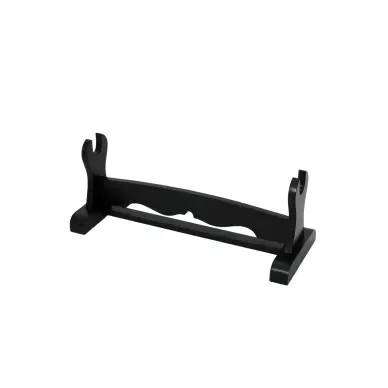
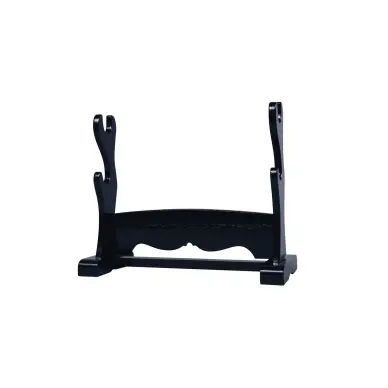
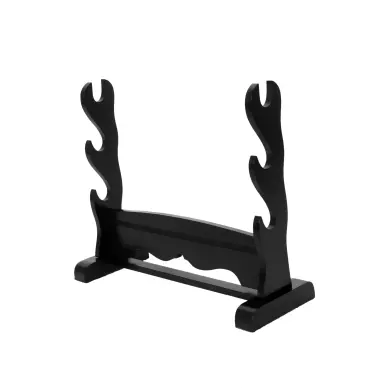
How to Display a Katana with a Kake Stand?
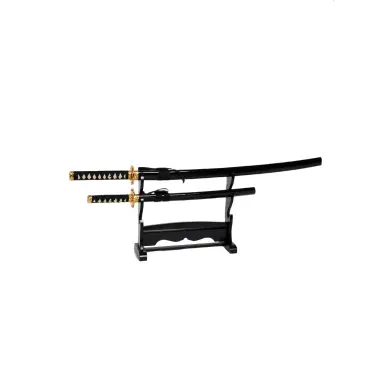
The kake, or Japanese sword stand, allows you to display one or more swords.
It can be used to showcase a collector’s katana or store equipment in an appropriate space.
There are different types of stands depending on the number of swords and the desired presentation.
How to Choose a Katana Stand?
To select a kake, check:
Compatibility with the sword’s dimensions.
The stability of the stand.
The number of swords it can hold.
The materials and finish.
The intended location for display.
A katana, even if not sharp, should be stored securely and kept out of reach of unauthorized persons.
How to Maintain a Katana or Iaito?
Maintenance depends on the type of blade and the materials used.
A non-sharp iaito does not necessarily require the same care as a steel-bladed katana.
Maintaining an Iaito
After use, follow the manufacturer’s recommendations for cleaning and storage.
Avoid products unsuitable for the blade’s materials and finish.
Regularly check the condition of the handle, guard, and scabbard.
Maintaining a Steel Katana
Steel blades may require special care to prevent corrosion.
Use only methods and products appropriate for the blade’s material.
For an antique or valuable sword, it is best to seek advice from a qualified professional before any intervention.
Storage and Preservation
Store your katana in a suitable environment, away from excessive humidity.
Regularly check the overall condition of the sword and its scabbard.
If you notice any defect or loose part, avoid any technical handling before inspection.
Is It Legal to Own a Katana in France?
Katana regulations in France depend on their characteristics and legal classification.
A sharp katana may fall under the regulations for bladed weapons, particularly category D.
Acquisition and possession, when permitted, should not be confused with carrying or transporting.
Can You Transport a Katana?
Carrying and transporting a category D weapon are subject to specific rules, including the requirement of a legitimate reason.
Placing a katana in a case does not, by itself, authorize transport.
The legitimacy of the reason may be assessed depending on the circumstances.
Before any trip, check the applicable regulations for the specific model and your situation.
Is a Non-Sharp Iaito Subject to the Same Rules?
The legal classification of an iaito depends on its characteristics.
Do not assume that a blunt blade is automatically exempt from all regulations.
If in doubt, consult official sources or the relevant authorities.
FAQ – Frequently Asked Questions About Japanese Katanas
What’s the Difference Between a Katana and an Iaito?
The katana refers to a type of Japanese sword. The iaito is a non-sharp training sword used especially in Iaido practice.
Which Katana Should You Choose for Iaido?
For Iaido, choosing an iaito depends on your body type, your level, and your instructor’s recommendations.
Is an Iaito Sharp?
A training iaito is normally designed with a non-sharp blade. However, it remains rigid and can cause injury.
What Length of Katana Should You Choose?
The length should match your body type and intended use. For martial arts practice, follow your school’s recommendations.
What’s the Difference Between a Bokken and an Iaito?
The bokken is a wooden sword. The iaito is a non-sharpened training sword, usually made of metal.
Can you use a katana in kendo?
Modern kendo mainly uses the shinai for partner drills. The metal katana is not the standard equipment for sporting exchanges.
Why are some katanas more expensive?
The price mainly depends on the type of sword, materials, craftsmanship, origin, and finishes.
How do you display a katana?
A stand called a kake can be used to display a sword. Choose a stable model and a secure location.
Can you own a katana in France?
Ownership may be allowed depending on the category and characteristics of the sword, subject to applicable legal conditions. The rules for carrying and transporting are separate.
Buy your Japanese katana at Budo Fight
At Budo Fight, discover a selection of Japanese katanas, non-sharpened iaito, and martial arts swords.
To choose your equipment, compare:
The type of sword and its intended use.
The blade length.
The weight and balance.
The materials and finishes.
The handle and scabbard design.
Your instructor’s recommendations for martial arts practice.
Also discover the Meiji Japan brand, our selection of wooden martial arts weapons, and our full range of martial arts weapons.
Browse all our Japanese katanas and choose the model that matches your practice, preferences, and budget.