










Boxing Headgear: How to Choose the Right Headgear for Training and Sparring?
Looking for boxing headgear for your training sessions, sparring, or certain competitions? At Budo-Fight, discover a selection of protective headgear for English boxing, Muay Thai, kickboxing, savate, MMA, and other combat sports.
Classic boxing headgear, full face headgear with cheek protection, nose bar headgear, grill headgear, or competition headgear: each design offers specific features in terms of coverage, visibility, support, and comfort.
Your choice mainly depends on your discipline, the type of drills, your body shape, and any requirements from your club or federation.
Budo-Fight offers models from BudoFight, Metal Boxe, Adidas, Leone, Montana, Elion, and King Pro Boxing, as well as other specialized manufacturers depending on availability.
To complete your gear, also check out our selection of boxing and combat sports protection gear.
Why Wear Boxing Headgear?
The boxing protective headgear is designed to cover certain areas of the head and face during contact drills.
Depending on its design, the padding can help absorb some impacts and reduce the risk of superficial injuries on the covered areas.
It is commonly used during various sparring sessions and technical partner training.
Protecting Key Areas of the Head and Face
The areas covered vary depending on the model.
Headgear may include protection for:
The forehead.
The temples.
The sides of the head.
The ears.
The cheekbones and cheeks.
The chin, depending on the design.
The top of the skull, on some models.
More extensive coverage can be useful for certain drills, but it may also affect visibility or the weight of the headgear.
Reducing the Risk of Certain Superficial Injuries
The padding in headgear can help limit cuts, scrapes, or superficial injuries during partner drills.
Its effectiveness depends on build quality, coverage areas, and fit.
However, facial coverage should not be mistaken for guaranteed protection against all injuries.
Does Headgear Protect Against Concussions?
No, boxing headgear should not be considered reliable protection against concussions or head trauma.
Even with headgear, impacts can transmit force to the head.
Wearing padded equipment is not a reason to increase the power of your strikes.
Controlled exchanges, respect for your partner, and proper supervision remain essential.
What Are the Different Types of Boxing Headgear?
Boxing headgear is mainly distinguished by its shape and the areas it covers.
The most comprehensive model is not necessarily the best fit for every discipline.
Boxing Headgear Comparison Table
Type of Headgear | Features | Recommended Use |
|---|---|---|
Classic or Open Headgear | Protection for the forehead, temples, and sides of the head, depending on the model | English boxing, technical drills, and sparring |
Full Face Headgear with Cheek Protection | Extra padding around the cheeks and cheekbones | Sparring with greater facial coverage |
Nose Bar Headgear | Bar positioned in front of the nose | Training requiring specific protection for this area |
Grill Headgear | Face protection grill, sometimes removable | Specific martial arts and combat sports drills |
Headgear with Top Protection | Extra padding on the top of the skull | Certain kickboxing and striking disciplines with high kicks |
Competition Headgear | Shape and features comply with specific regulations | Competition, only when the model is approved |
These different categories can overlap.
For example, full face headgear may also include top-of-the-head protection.
Before purchasing, always check the exact features of the model.
Classic Boxing Headgear: Prioritizing Visibility and Mobility
Classic boxing headgear, sometimes called open headgear, typically covers the forehead, temples, ears, and sides of the head.
They leave a significant portion of the face exposed.
This design is popular for drills where the boxer needs to track their partner’s movements.
Why Choose Open Headgear?
Open headgear can offer several advantages:
A relatively clear field of vision.
A generally less enclosing design.
Good freedom of head movement.
Easy access to key visual information during exchanges.
Covers suitable for various drills, depending on the model.
However, it does not protect the cheekbones and nose as much as more enclosing headgear.
BudoFight Orion and Elite Models
Within the Budo-Fight range, the Orion and Elite headgear are key references to compare for English boxing.
Their design, materials, and adjustment systems differ.
Your choice depends on the comfort you seek, sizing, and the drills you practice.
The commercial name of a model alone does not guarantee competition approval: always check the applicable requirements.
Full Face Boxing Headgear: Extra Facial Coverage
Full face boxing headgear usually features reinforcements around the cheeks or cheekbones.
Some models also cover part of the chin.
They may appeal to practitioners seeking more comprehensive facial protection for certain training sessions.
Why Choose Headgear with Cheek Protectors?
Lateral reinforcements help cover parts of the face exposed to contact.
They can be useful when you want extra protection around the cheekbones.
Depending on the model, they may also alter how impacts reach the covered areas.
Field of Vision Remains Essential
Full face headgear generally has more material around the face.
This design can reduce some peripheral vision.
It’s important to ensure the reinforcements do not excessively hinder your ability to see your partner’s movements.
Very enclosing headgear that fits poorly is not necessarily a good choice.
Full Face Headgear Available at Budo-Fight
The selection includes:
The Cosmos BudoFight full face headgear.
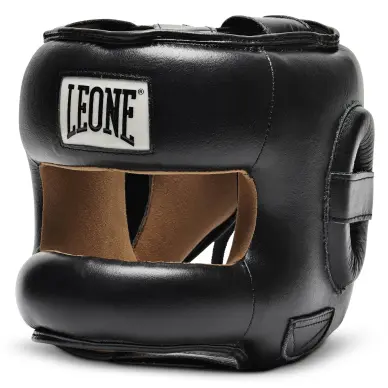
Leone full face headgear, including the DNA and Full Cover ranges.
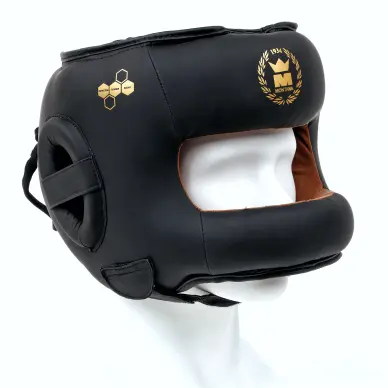
Montana full face models.
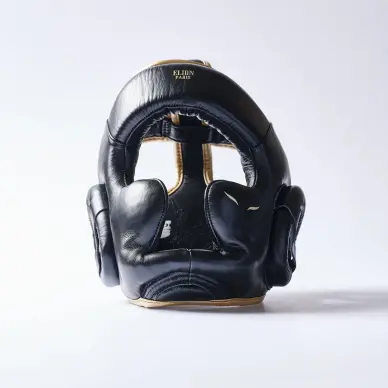
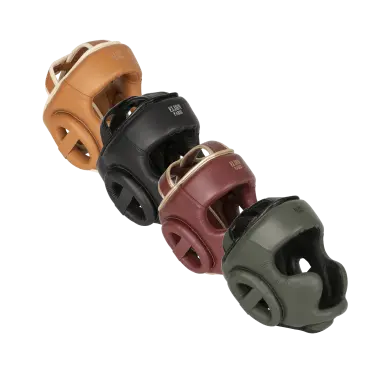
Elion references with various facial protection designs.
These products stand out for their materials, padding, and support systems.
Also compare actual dimensions rather than relying solely on the “full face” label.
Boxing Headgear with Nose Bar: Extra Nose Protection
Some headgear is equipped with a protective bar placed in front of the nose.
This design aims to limit direct impact to this area.
The bar may be integrated into the headgear or made from specific materials depending on the model.
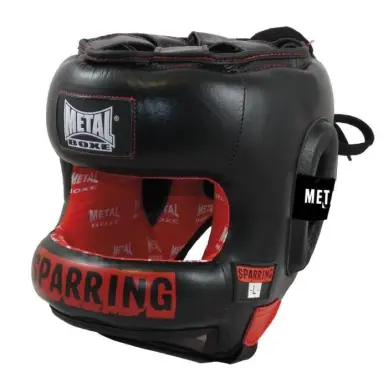
Metal Boxe Transparent Bar Headgear
The Metal Boxe polycarbonate nose bar boxing headgear is one of the models available at Budo-Fight.
Its main feature is a transparent polycarbonate nose bar.
Unlike an opaque bar, this design allows you to maintain some visibility through the protected area.
The model also features:
Injected foam padding.
Polyurethane outer coating.
Adjustment at the back of the head.
Additional support system under the chin.
Semi-full face design.
It is available in one Senior size, with an adjustment system.
For Which Training Sessions?
Headgear with a nose bar may interest boxers seeking extra nose coverage during certain technical or sparring sessions.
However, it is essential to check both field of vision and comfort.
A nose bar does not guarantee the absence of nose or facial injury.
Additionally, this type of headgear is not always allowed in competition.
Boxing Headgear with Grill: Specialized Facial Protection
Headgear with a grill stands out from classic headgear by featuring a structure in front of the face.
They may be used in certain martial arts and combat sports technical training sessions.
Their design and usage conditions vary by model.
Removable Grill Headgear
Some headgear features a removable grill.
At Budo-Fight, you can compare:
The Ultra BudoFight Headgear, equipped with a removable grill.
The Metal Boxe extreme combat grill headgear, also with a removable grill.
These pieces of equipment differ in materials, dimensions, and adjustment systems.
Why choose headgear with a face grill?
A grill can provide an extra barrier in front of certain areas of the face.
It is especially useful for specific drills where its use is required.
However, the grill may affect your field of vision, especially downward or to the sides.
The practitioner should ensure the headgear remains stable and suitable for the intended exercises.
Can you use headgear with a grill in competition?
Not always.
Many boxing competitions require specific headgear models.
Headgear with a grill designed for a particular training session is not automatically allowed in official competitions.
For self-defense disciplines, also check out our selection of Krav Maga gear.
Headgear for Muay Thai and Kickboxing: pay attention to the top of the head
Striking arts with both hands and feet involve different techniques than English boxing.
In Muay Thai, kickboxing, K-1, or savate, some drills may include kicks aimed at the head.
Your choice of headgear should take this into account.
Top-of-the-head protection
Some headgear features extra padding on the top of the head.
This design can be useful when drills involve controlled high strikes.
The protection should be suitable for the techniques you plan to practice.
Not all boxing headgear necessarily offers this coverage.
Other important criteria
For striking sports, also compare:
The field of vision to the sides and downward.
Coverage of the forehead and temples.
The possible presence of cheek protectors.
Stability during movement.
The design of the chin strap.
Weight and freedom of movement.
Extra protection should not prevent you from properly following your partner's movements.
Full Contact headgear
Budo-Fight also offers a range of headgear for Full Contact disciplines, including BudoFight, Leone, and Montana collections.
The features of these models vary.
Before choosing, check the actual coverage areas and the drills recommended by the manufacturer.
Which headgear to choose for English boxing and sparring?
In English boxing, the choice mainly depends on the type of session.
Headgear used for technical drills does not necessarily need the same features as competition equipment.
For technical partner drills
During controlled exercises, mobility and field of vision are important.
A classic, well-fitted headgear can be suitable for some training sessions.
The practitioner should be able to maintain a natural posture and follow their partner's movements.
For sparring sessions
During sparring, exchanges may involve potential impacts to the head.
Depending on club guidelines, headgear with extra cheek coverage can be a good option.
However, padding thickness is not the only factor.
Size, stability, visibility, and both partners’ technique are essential.
For more details on the necessary gear for sparring, see our guide to choosing sparring gloves.
Does thicker headgear allow you to hit harder?
No.
Headgear should never be seen as permission to increase the intensity of exchanges.
Even with heavy padding, impacts to the head can cause injuries.
Sessions should always match the technical level and the coach’s instructions.
Competition boxing headgear: FFBOXE, WAKO, and sport regulations
Competition headgear must meet different requirements than training equipment.
The rules may vary depending on the discipline, federation, age group, and competition level.
Some bouts require headgear, while others are held without it.
Headgear for amateur boxing
Budo-Fight offers headgear designed for amateur boxing, such as the BudoFight Elite, BudoFight Competition, and Adidas Pro FFBOXE models.
These options let you compare different designs for sports practice.
However, you should distinguish between the commercial purpose of a model and its actual approval for a given event.
Adidas Pro FFBOXE headgear
The Adidas Pro FFBOXE competition boxing headgear is listed in the catalog as a model for amateur boxing competitions.
It is available in colors and sizes suited for this use.
Before a competition, check that the model and its configuration are accepted by the organizer.
BudoFight Competition WAKO headgear
The range also includes a BudoFight Competition WAKO boxing headgear.
This model is designed for training and some competitions in this discipline.
However, its use must comply with the regulations applicable to the event.
Why check approvals?
Regulations may require:
A specific type of headgear.
A designated color, often red or blue.
No cheek or chin guards.
An approved brand or reference.
Different requirements depending on age category.
Specific technical features.
Headgear labeled “competition”, “FFBOXE” or “WAKO” is not automatically allowed in all competitions.
Likewise, the CE marking, when applicable, does not replace any specific federation requirements.
Before ordering headgear for an official competition, check the latest regulations and confirm with your club or the event organizer.
How to choose the right size boxing headgear?
Size plays a key role in the comfort and stability of your headgear.
A model that is too large may move during exchanges.
Headgear that is too tight can cause uncomfortable pressure on your face or head.
Measuring your head circumference
To choose correctly, measure your head circumference at the forehead, usually above the eyebrows, following the manufacturer's instructions.
Then compare this measurement to the size guide for the model.
Size charts vary between brands.
Example of sizes at BudoFight
For reference, some BudoFight models, such as the Cosmos, use the following size chart:
Size | Approximate head circumference |
|---|---|
S | 48 to 52 cm |
M | 53 to 56 cm |
L | 57 to 59 cm |
XL | 60 cm and above |
These measurements apply to models using this specific guide.
They should not be automatically used for all BudoFight headgear or other brands.
Check the fit
After adjusting your headgear, check the following points:
It stays stable when you turn your head.
It does not slip over your eyes.
It does not press excessively on your temples.
The side pads are properly positioned.
The closure system stays secure.
You can breathe and move naturally.
You maintain adequate visibility.
Protection should not require excessive tightening to stay in place.
Choosing between two sizes
If your head circumference falls between two sizes, check the manufacturer's recommendations.
Face shape, padding, and adjustment options also affect the fit.
It may be better to compare several models rather than choose an unsuitable size.
Which boxing headgear should you choose for a child or teenager?
Younger athletes have specific needs.
The choice should take into account their body shape and the training exercises offered by their club.
An adult size S does not necessarily fit every child.
Choose headgear suited to body shape
For a young boxer, check in particular:
Head circumference.
Headgear weight.
Padded area placement.
Stability of the fastening system.
Comfort around the ears.
Visibility during movement.
The headgear should not drop over the eyes when the child moves.
Club guidelines come first
Contact conditions vary by age, discipline, and skill level.
For children and teenagers, always ask the coach for advice before buying.
Choosing protection does not replace proper supervision or exercise control.
Genuine leather or synthetic leather headgear: which to choose?
Boxing headgear is made from different materials.
The outer covering affects the feel, care, finish, and some durability features.
However, it alone does not determine the level of protection.
Synthetic leather headgear
Polyurethane (PU) and other synthetic materials are used in many models.
They allow for a range of prices and finishes.
Depending on their design, this headgear can be suitable for occasional or regular use.
Care depends on the covering and the manufacturer's instructions.
Genuine leather headgear
Natural leather is used in some specialized brand models.
It is valued for its flexibility and finish.
However, its durability also depends on build quality, stitching, and maintenance.
A genuine leather headgear is not automatically more protective than a synthetic model.
The importance of padding
Many headgear models use foams of varying densities.
Some feature multiple layers or molded padding.
To compare, look at:
The thickness and distribution of padded areas.
The quality of the finishing.
The shape of the headgear.
The comfort of the parts in contact with the skin.
Stability during movement.
The intended use specified by the manufacturer.
A more expensive model is not necessarily better suited for every practice.
The different closure systems
Depending on the headgear, adjustment may use:
Laces on top of the head.
A velcro closure at the back.
A closure under the chin.
A combination of several systems.
The goal is to achieve stable, comfortable support that allows for full movement.
Which headgear to choose for your discipline?
Boxing
In boxing, your choice mainly depends on the type of training.
Open headgear may appeal to those who want a wide field of vision.
A full-face model can offer extra cheekbone coverage for certain sparring sessions.
For competition, federation requirements must be checked separately.
Muay Thai and kickboxing
In striking disciplines, you need to consider techniques involving high kicks.
Coverage on top of the head, downward visibility, and secure fit can be especially important.
Choose a model that matches your planned training exercises.
Savate French boxing
In savate, the variety of kicks means you need to maintain good perception of trajectories.
The headgear should allow you to follow your partner’s movements and maintain proper mobility.
Competition requirements depend on the applicable regulations.
MMA
In MMA, training can combine stand-up striking and ground work.
Some headgear is suitable for specific striking or sparring drills.
Others may hinder grappling phases or not be suitable for certain situations.
Always check the manufacturer’s recommended use and your coach’s advice.
To complete your training, explore our selection of MMA gear.
Which boxing headgear should you choose as a beginner?
For beginners, the best choice depends first on the exercises offered by your club.
It’s not necessary to buy the most protective or expensive headgear right away.
For your first training sessions
Ask if headgear is required from the very first sessions.
Some classes focus mainly on technique, bag work, and non-contact drills.
For other sessions, headgear may be required.
Our beginner’s boxing essentials guide helps you identify other gear to consider.
For your first sparring sessions
Choose a model that is:
Suited to your head size.
Easy to adjust.
Comfortable around the ears and forehead.
Equipped with padding appropriate for your drills.
Offering a sufficient field of vision.
Your coach can help you choose between open and full-face headgear.
Boxing sets
Some boxing sets for kids and adults let you complete your gear with different items.
Their contents vary by model.
Always check if headgear is included before placing your order.
Boxing headgear brands at Budo-Fight
Our selection brings together several manufacturers offering different shapes and features.
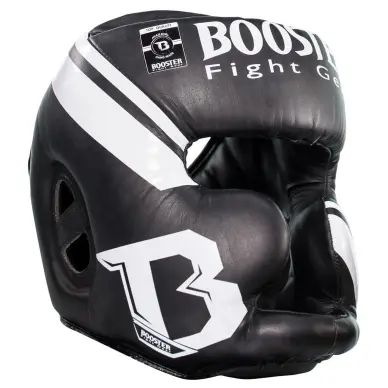
BudoFight: headgear for training and some competitions
The BudoFight range includes models like Cosmos, Orion, Elite, Full Contact, Sparring Spectra, Ultra, and Competition WAKO.
They meet different needs depending on their construction.
Some prioritize cheekbone coverage, others have a more open design or are made for specific drills.
Materials and adjustment systems vary by model.
Metal Boxe: classic, bar, and grill headgear
Metal Boxe offers several models, including Military, Mirror, Legacy, and competition headgear.
The brand also features the polycarbonate clear bar headgear and a removable grill headgear.
These different designs let you compare gear for distinct uses.
Adidas: a range focused on boxing
Adidas notably offers the Pro FFBOXE competition headgear.
Your choice depends on size, materials, and the sports requirements in effect.
Leone and Montana: different coverage levels
Leone and Montana offer classic, full-face, or Full Contact headgear depending on the model.
Models can be compared based on shape, padding, weight, and finish.
Elion and King Pro Boxing
Elion offers a range of boxing headgear, including full-face models.
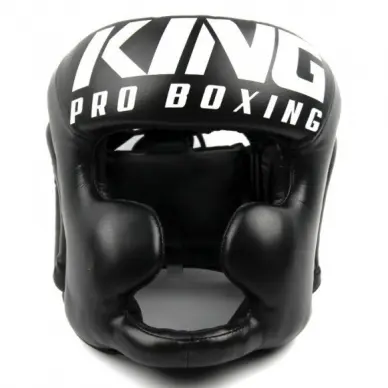
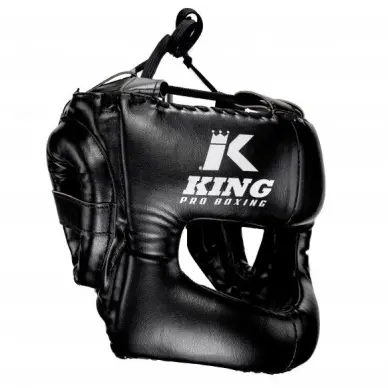
King Pro Boxing completes the selection with equipment inspired by the world of Muay Thai boxing.
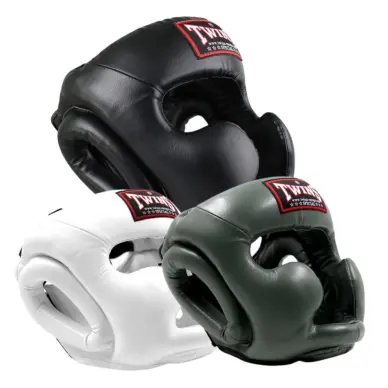
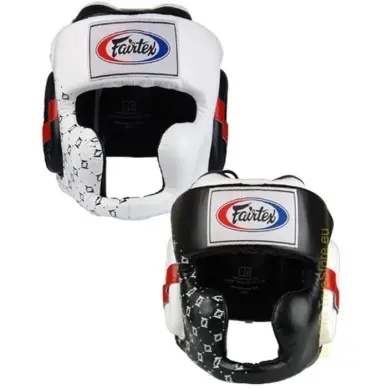
Depending on availability, Budo-Fight may also offer other brands specializing in Muay Thai, such as Fairtex or Twins Special.
When choosing, focus on the headgear’s features and fit rather than just the brand’s reputation.
What other equipment should you consider with boxing headgear?
Headgear is just one part of your protective equipment.
It does not replace other essential accessories for contact training sessions.
Mouthguard
The mouthguard helps reduce the risk of certain dental and mouth injuries.
It must fit your teeth properly.
Discover our selection of mouthguards for boxing and combat sports.
Boxing gloves and hand wraps
For sparring, gloves should match the type of exchanges and your coach’s instructions.
Check out our selection of training boxing gloves.
Hand wraps can provide extra support for your hands and wrists.
Groin guards
Depending on the discipline and exercises, groin protection may also be necessary.
Discover our groin guards for combat sports.
Shin and foot guards
In striking sports, appropriate protection can be used for partner training sessions.
See our selection of shin guards and foot guards.
Your choice of protective gear should always match the discipline and level of contact.
How to use boxing headgear safely?
Properly fitted headgear is important, but it’s only one part of necessary precautions.
Check your headgear before training
Before each session, inspect:
The condition of the padding.
The strength of the stitching.
The closure system.
The stability of the headgear.
No significant deformations.
The condition of any bars or grills.
Do not use headgear that is badly damaged or no longer stays in place properly.
Adapt exercises to the practitioners’ level
During sparring, intensity should match the session’s objectives.
Practitioners must follow the coach’s instructions and control their strikes.
Wearing headgear does not eliminate the risks associated with impacts.
After a significant impact
If symptoms suggestive of concussion appear, stop activity immediately and seek proper medical evaluation.
Do not continue sparring just because headgear was worn.
How to care for your boxing headgear?
Regular maintenance helps preserve hygiene and extend the life of your headgear.
Clean after each session
After training, wipe down surfaces according to the manufacturer’s recommendations.
Avoid harsh products that could damage leather, polyurethane, or padded areas.
Let the headgear dry in a well-ventilated area.
Avoid moisture and high heat
Do not leave damp headgear in a closed bag for extended periods.
Avoid exposing it to excessive heat or direct sunlight for long periods.
These conditions can damage certain materials.
Regularly check fastenings and padding
Inspect stitching, laces, velcro, and foam areas.
For models with bars or grills, also check facial protection elements.
Damaged parts can compromise the headgear’s effectiveness.
Can headgear be shared in a club?
Some clubs use shared headgear for beginners’ first sessions.
It’s important to clean the headgear between users and check the fit for each person.
Not all practitioners have the same body shape.
For regular training, having your own headgear can improve hygiene and ensure the right size.
When should you replace your headgear?
There is no universal lifespan.
Replacement depends on frequency of use, care conditions, impacts received, and material condition.
Headgear with severely damaged padding, a broken fastening, or that no longer fits securely should be checked before any reuse.
Frequently asked questions about boxing headgear
Which boxing headgear should you choose as a beginner?
Choose a comfortable, well-fitted model with coverage suited to your training. Ask your coach for advice on whether to pick a classic or full-face headgear.
What’s the difference between open-face and full-face headgear?
An open headgear generally leaves a larger part of the face exposed. A full-face headgear features extra padding around the cheeks or cheekbones, depending on its design.
Which headgear should you choose for sparring?
The choice depends on the intensity, discipline, and your club’s guidelines. Padding, size, stability, and field of vision are all essential criteria.
Does boxing headgear protect against concussions?
It should not be considered reliable protection against concussions. Its main role is to cover certain areas and reduce some superficial injuries.
What is the purpose of boxing headgear with a nose bar?
It features a bar placed in front of the nose to reduce exposure of this area to direct impacts. However, you should check the visibility, fit, and usage limitations.
What’s the difference between a nose bar headgear and a grill headgear?
A nose bar headgear offers localized protection, especially in front of the nose. A grill headgear has a structure covering a larger part of the face. Both are designed for different uses.
Can you use grill headgear for English boxing?
Some grill headgear can be used for specific drills. However, they are not automatically suitable for standard sparring or allowed in official competitions.
Which headgear should you choose for Muay Thai?
Choose a model suitable for kickboxing drills, with proper coverage of exposed areas and good visibility. Top-of-the-head protection can be an important factor for certain training sessions.
Which headgear should you choose for competition?
Check the regulations for your federation, category, and event. Requirements for shape, color, and approval vary between competitions.
Are FFBOXE and WAKO headgear allowed in all competitions?
No. Even if a model is presented for a federation or discipline, you must check the requirements for the specific event.
How do you choose your headgear size?
Measure your head circumference according to the manufacturer’s instructions and consult their size guide. The headgear should stay stable without excessively compressing the head.
Is a size S headgear suitable for a child?
Not necessarily. Sizes and dimensions vary by manufacturer. The choice should be based on head circumference and actual fit.
Should you choose genuine leather headgear?
Not necessarily. Synthetic models can also be suitable for regular training. Padding, finish, and comfort are essential factors.
Is full-face headgear always more protective?
It usually covers more areas of the face, but that doesn’t mean it’s better suited to every drill. You should also consider visibility, fit, and risks that cannot be eliminated by headgear.
Can you use the same headgear for boxing and MMA?
Some models may be suitable for multiple activities, but not for all drills. Check compatibility with groundwork and your coach’s guidelines.
How do you clean your boxing headgear?
Clean the surfaces using a method suitable for the material, let it air dry, and regularly check the straps and padding.
When should you replace your boxing headgear?
Replacement may be necessary if the padding, stitching, or straps are damaged, or if the headgear no longer stays securely in place.
Why buy your boxing headgear from Budo-Fight?
Since 1963, Budo-Fight has been supporting martial arts and combat sports practitioners in choosing their equipment.
Our selection includes classic, full-face, nose bar, grill headgear, and models designed for specific competitions.
Whether you practice English boxing, Muay Thai, kickboxing, savate, or other combat sports, compare the models based on their coverage, padding, size, and comfort.
From beginner models to equipment designed for regular training, you’ll find a range of options and finishes to meet the needs of both practitioners and clubs.
Discover our boxing headgear at Budo-Fight and choose equipment tailored to your discipline, body type, and training requirements.