



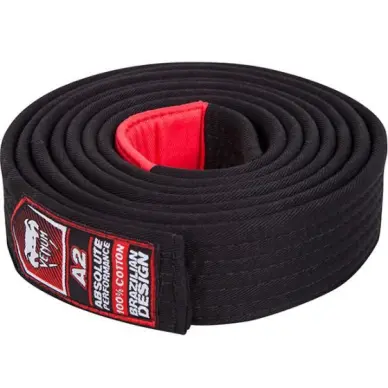
BJJ Belts
Discover at Budo Fight our selection of BJJ belts for kids and adults. From the white BJJ belt to the black belt, each color represents an important milestone in a practitioner's progression.
Whether you are just starting Brazilian Jiu-Jitsu or looking for a new belt after a promotion, choose a model suited to your level, body type, and preferences.
Find BJJ belts from various brands, including BudoFight and Venum, to complete your BJJ gi and support your training on the mats.
BJJ Belt Colors: Understanding the Ranks
In Brazilian Jiu-Jitsu, the belt color corresponds to the practitioner's rank. Unlike the color of the gi, it cannot be chosen freely.
Progression depends on technical skills, experience, consistency, and the instructor's evaluation.
The BJJ belt system distinguishes between the ranks for children, teens, and adults. It also includes intermediate degrees, often indicated by stripes on the belt.
What Are the BJJ Belts for Kids?
BJJ belts for kids follow a specific progression system, designed to guide young practitioners through their learning journey.
In the IBJJF ranking system, kids' ranks generally apply to practitioners aged 4 to 15.
After the white belt, progression includes several color groups:
Gray belts: gray and white, gray, then gray and black.
Yellow belts: yellow and white, yellow, then yellow and black.
Orange belts: orange and white, orange, then orange and black.
Green belts: green and white, green, then green and black.
These ranks are associated with specific age requirements and progression stages.
From age 16, practitioners enter the ranking system for teens and adults. The rank awarded then depends on their journey and the rules of the relevant organization.
Before purchasing a new BJJ belt for kids, always check the color validated by the instructor.
What Are the BJJ Belts for Adults?
For adults, the classic Brazilian Jiu-Jitsu progression includes five main colors:
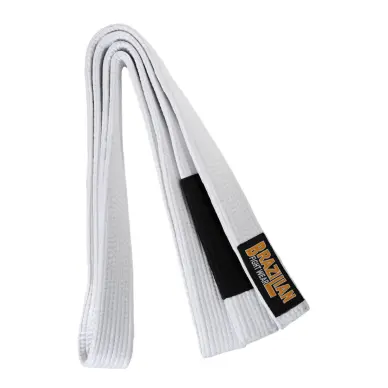
White BJJ belt: the first rank, for beginners.
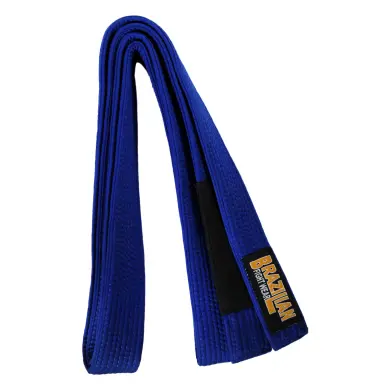
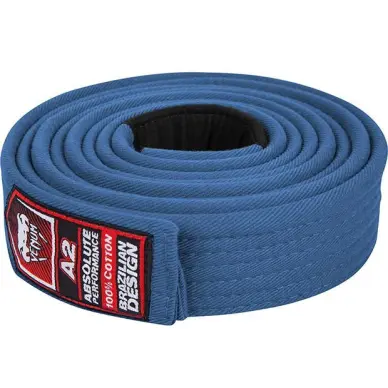
Blue BJJ belt: the first colored belt, marking significant technical progress.
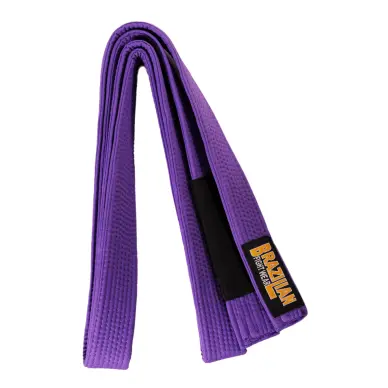
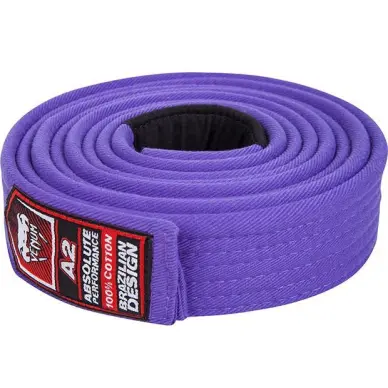
Purple BJJ belt: an advanced rank, associated with greater mastery of techniques and combat situations.
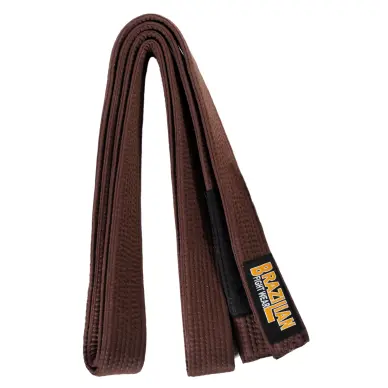
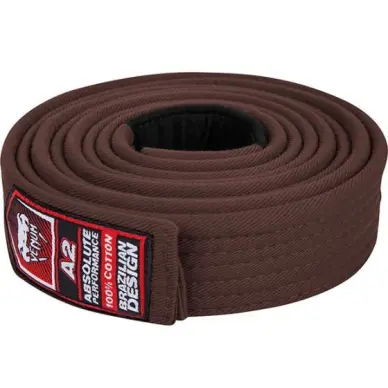
Brown BJJ belt: a stage of refinement before the black belt.
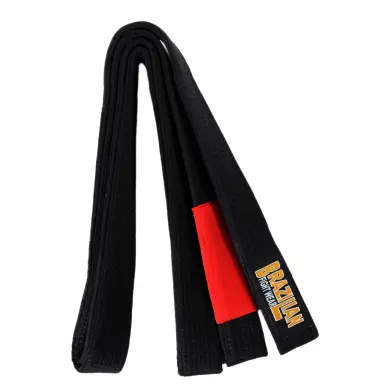
Black BJJ belt: an advanced rank representing many years of learning and practice.
Gray, yellow, orange, and green belts belong to the kids' system and are not part of the classic adult progression.
Your belt color should always match the rank awarded by your instructor.
How Long Does It Take to Earn a BJJ Black Belt?
Earning a black belt in Brazilian Jiu-Jitsu generally requires several years of training, technical progression, and personal commitment.
The timeframe depends on your consistency, level, athletic background, and your instructor's evaluation.
The International Brazilian Jiu-Jitsu Federation (IBJJF) sets age requirements and minimum periods for certain promotions. These rules may change and include specific provisions.
There is no universal timeframe guaranteeing the black belt. Meeting the minimum periods does not mean a rank promotion is automatic.
To find out the conditions that apply to your situation, consult your instructor and your federation.
What Are the Ranks After the BJJ Black Belt?
Progression in Brazilian Jiu-Jitsu does not stop at the black belt.
Practitioners can continue to advance through a degree system, awarded according to criteria and periods defined by governing bodies.
Higher ranks include the red and black belt, the red and white belt, and the red belt, reserved for particularly high levels of progression.
These ranks represent a long-term commitment to the discipline.
Which BJJ Belt Brand Should You Choose?
While you cannot freely choose your belt color, you can select its brand, material, and finish.
At Budo Fight, we offer Brazilian Jiu-Jitsu belts from various brands, including BudoFight and Venum.
Discover the BudoFight and Venum models available in our selection to complete your outfit.
Depending on the model, belts may be made of cotton or material blends. Fabric quality, thickness, stitching, and flexibility affect comfort and knot hold.
Choose a durable BJJ belt, comfortable to tie, and suited to your training frequency.
To personalize your belt, also check out our examples of embroidery on belts.
What size BJJ belt should you choose?
The size of your BJJ belt is a key factor to ensure your gi stays securely in place.
It should be long enough to wrap around your waist, tie the knot, and leave both ends hanging down.
To estimate the required length, one method is to plan for about twice your waist circumference, plus 110 to 120 cm.
For example, for a waist measurement of 80 cm, a length of about 270 to 280 cm can be a good starting point.
This is only a guideline: the ideal length depends on your body type, the thickness of your gi, and how you tie your belt.
To better understand this calculation method, see our guide to choosing the right belt length.
Sizes may also be listed as A1, A2, A3, or A4 depending on the brand. Always refer to the size guide for your chosen model.
How to care for your Brazilian Jiu-Jitsu belt
A BJJ belt is used at every training session with your gi and requires proper care.
Follow the manufacturer's instructions for washing and drying. Some materials can shrink or lose their shape when exposed to high temperatures.
Let your belt dry completely before storing it, and avoid keeping it damp in your gym bag.
Regular care helps maintain its comfort and durability.
Buy your BJJ belt at Budo Fight
Whether you're looking for a white belt to start, a blue, purple, or brown belt to mark your progress, or a black Brazilian Jiu-Jitsu belt, discover our selection at Budo Fight.
Find BJJ belts for kids and adults, available in various sizes, materials, and brands.
Choose your Brazilian Jiu-Jitsu belt at Budo Fight and complete your gi with accessories for your BJJ training.