


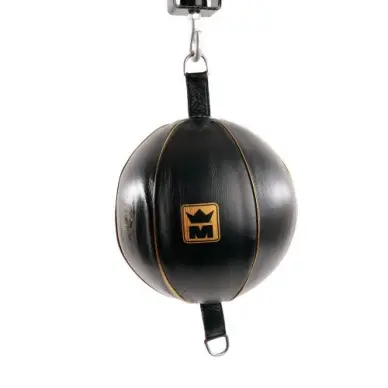

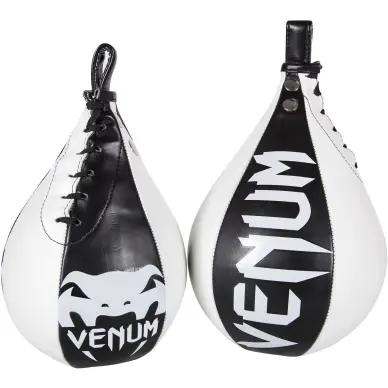

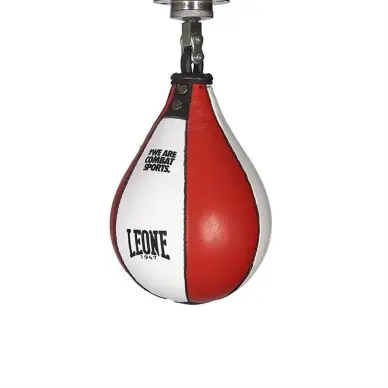

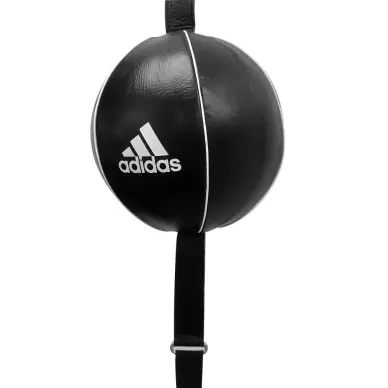




Speed Balls: Speedballs and Double-End Bags for Boxing
Looking for a speed ball for boxing to improve your coordination, precision, and sense of rhythm? At Budo-Fight, discover a selection of speedballs and double-end bags to enhance your training at home or at the gym.
The speed ball is an iconic accessory in English boxing. It allows you to repeat strikes on a light, mobile target, focusing on consistent movements, fluidity, and rhythm control.
Classic speed ball, double-end bag, Mexican Style, or American Style: these pieces of equipment have different shapes and behaviors. Your choice depends on the exercises you want to do, your skill level, and your installation conditions.
Budo-Fight offers models from BudoFight, Metal Boxe, Montana, Elion, Cleto Reyes, Leone, Venum, and Adidas, depending on availability.
To complete your training, also explore our selection of punching equipment for boxing and combat sports.
Why train with a speed ball?
The speed ball is mainly used to practice repetitive movements and synchronize your motions.
Unlike a heavy bag, it is not primarily designed to develop punching power.
Instead, it is ideal for technical drills focused on rhythm, coordination, and accuracy.
Improve hand-eye coordination
To hit a classic speed ball, the boxer must watch the target and synchronize their movements with its rebounds.
This requires close attention to hand trajectory and striking rhythm.
With practice, movements become more fluid and natural.
Work on speed and rhythm
Successive punches help you develop a steady cadence.
The practitioner gradually learns to control their movements without always aiming to hit harder.
The execution speed depends on technique, the size of the ball, inflation, and installation quality.
Develop precision and timing
Double-end bags react differently to impacts.
They allow you to work on punch placement with a target that moves after each strike.
These drills can complement precision, distance, and anticipation work done at the gym.
Engage arms and shoulders
Repeated sets can also help build muscular endurance in the arms and shoulders.
Exercise duration should match the practitioner’s fitness level and technical skills.
Good posture is more important than chasing maximum speed.
What are the different types of speed balls?
The Budo-Fight category mainly includes two main types: classic speed balls and double-end bags.
The main difference is how the target moves after a strike.
Comparison Table: Speed Balls and Punching Bags
Equipment Type | How It Works | Main Focus |
|---|---|---|
Classic speed ball | Rebounds under a rigid platform, with a suitable swivel mount | Rhythm, coordination, and repetitive strikes |
Double-end bag | Target held between two anchor points | Precision, timing, and reactions to a moving target |
Mexican Style bag | Double-end, with a specific shape depending on the model | Precision and striking different zones |
American Style bag | Double-end, with a shape designed for technical drills | Combinations, movement, and coordination |
These pieces of equipment can complement each other, but they are not interchangeable.
To choose the right one, first identify the skills you want to work on and your available installation options.
Classic speed ball: the speedball for rhythm training
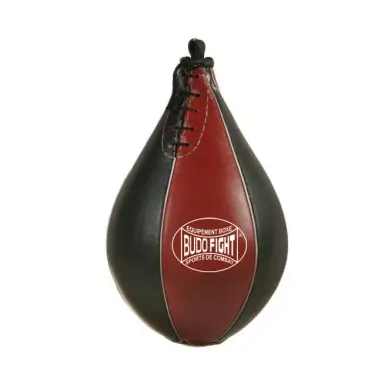
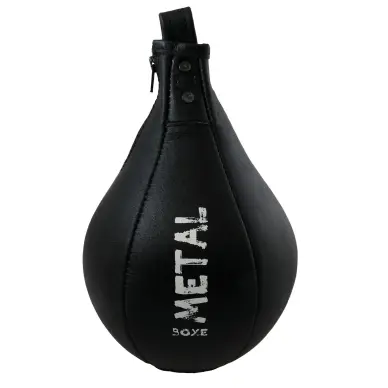
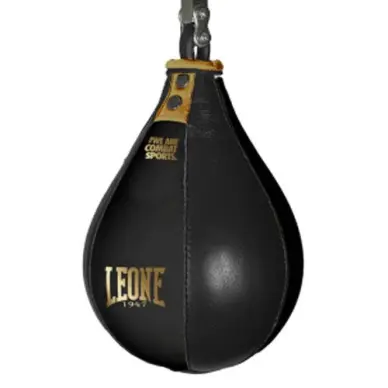
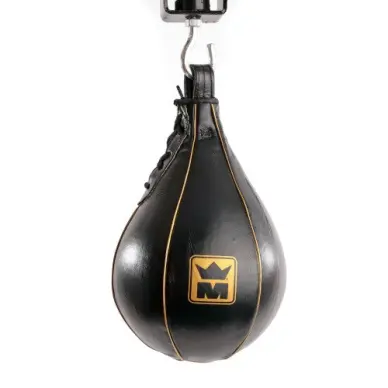
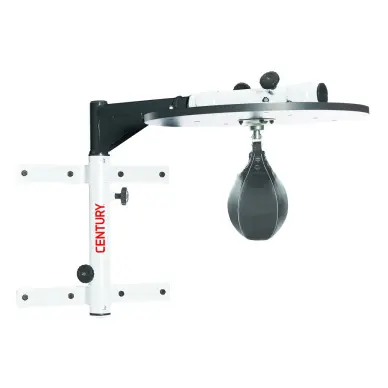
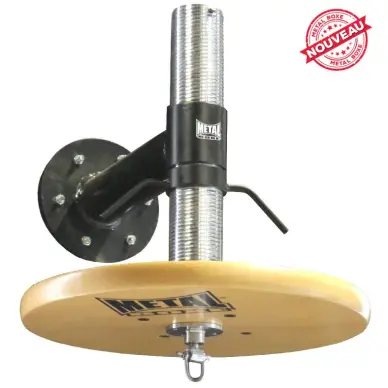
The classic speed ball, or speedball, is a small inflatable target generally installed under a rigid platform with a suitable swivel mount.
After each strike, the ball rebounds against the platform surface.
This setup allows for repeated punches at a steady rhythm.
What exercises is it for?
The classic speed ball is especially useful for:
Work on alternating hands.
Develop hand-eye coordination.
Repeat strikes at a steady pace.
Improve movement fluidity.
Perform technical sequences that engage the shoulders.
The goal is not to strike with maximum power.
Controlled movements generally help you better learn the rhythm of the rebounds.
Which models should you choose?
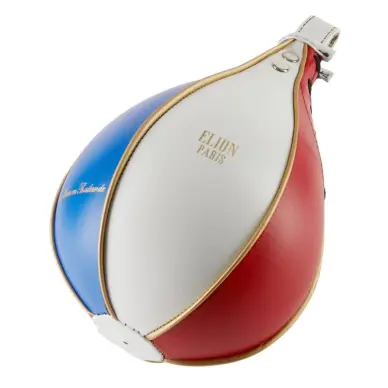
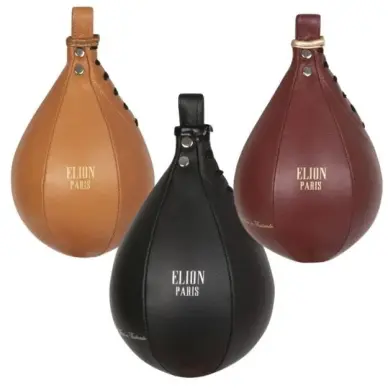
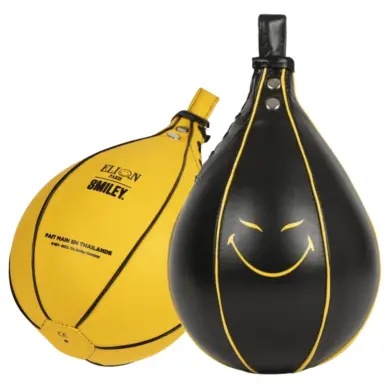
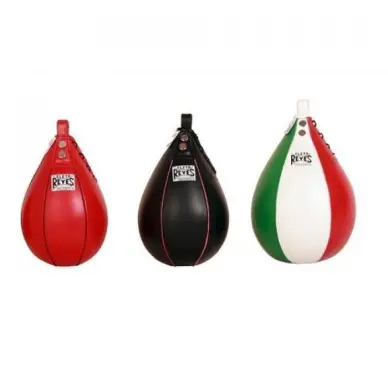
The Budo-Fight selection includes classic speed balls from brands like BudoFight, Metal Boxe, Montana, Venum, Leone, Elion, and Cleto Reyes.
These models differ in size, materials, finish, and price.
Some manufacturers offer several sizes for the same model.
Before placing your order, check the speed ball’s dimensions, bladder design, and the manufacturer’s installation instructions.
Specific installation required
A classic speed ball requires a compatible rebound system and swivel mount.
The ball alone is not necessarily a ready-to-use piece of equipment.
If you already have an installation, make sure its features match your chosen model.
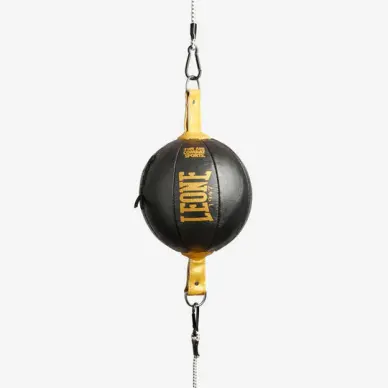
Double-end bag: train accuracy, reflexes, and footwork
The double-end bag works differently from a classic speed ball.
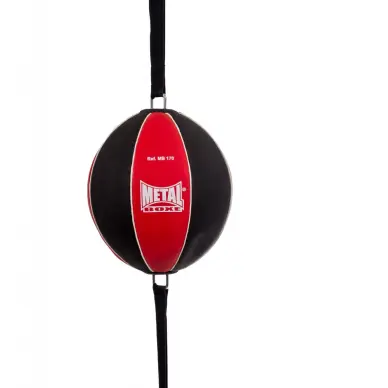
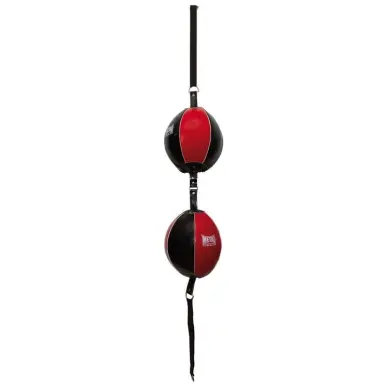
It is held in place by two anchor points, usually above and below the target.
After a strike, it moves and then returns toward the practitioner.
This movement allows you to vary drills for accuracy and coordination.
Why choose a double-end bag?
A double-end bag can be used to train:
The accuracy of straight punches and certain combinations.
Strike timing.
Distance control.
Footwork around a moving target.
Combining offensive and defensive movements.
The rebound speed depends on the system’s tension, the shape of the bag, and the intensity of the impacts.
A double-end bag does not fully replicate an opponent’s reactions, but it is a valuable addition to technical training.
Mexican Style bag
The Mexican Style models in the Budo-Fight selection use a double anchor system.
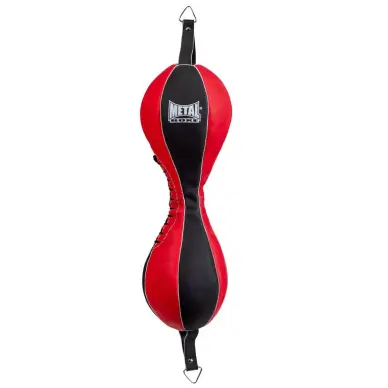
The Metal Boxe Mexican Style bag features a shape made of two stacked rounded sections.
This design offers multiple striking zones and lets you work on different punch trajectories.
It’s ideal for varying combinations at different heights.
American Style bag
The American Style models also use a double anchor system.
The Metal Boxe model lets you practice strikes at various levels as well as certain accuracy and evasion drills.
Its shape and reaction after impact provide a different feel from a classic speed ball.
Mexican Style or American Style: which should you choose?
Both types let you train on a moving target.
Your choice mainly depends on:
The shape of the bag.
The target’s dimensions.
The anchor system.
The drills you want to do.
Your available space.
The manufacturer’s recommendations.
Commercial names may vary by brand.
Tip: compare the technical features of each model rather than choosing solely based on “Mexican Style” or “American Style.”
Speed ball or double-end bag: which is best for beginners?
For beginners, both pieces of equipment can be useful, but they require different learning approaches.
Learning rhythm
A classic speed ball lets you start with repetitive movements.
The goal is to understand the rebounds and gradually maintain a steady rhythm.
Coordination can be challenging at first: it’s best to start slowly and focus on consistency before speed.
Training on a moving target
The double-end bag is more focused on punch placement and reacting to the target’s movement.
Start with simple, controlled strikes.
A target that rebounds too quickly can make learning more difficult.
Adjust the system’s tension if possible, following the manufacturer’s instructions.
Which equipment to start boxing?
The speed ball is a complementary accessory.
It does not replace gloves, protective gear, or other essential equipment for classes.
If you’re just starting out, check our essential boxing equipment guide.
What size speed ball should you choose?
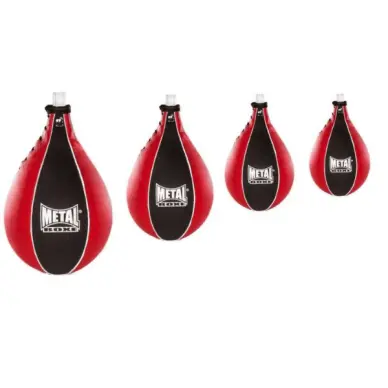
Speed balls come in several sizes.
Some brands offer XS, S, or M sizes, while others list the target’s diameter directly.
These sizes are not necessarily the same from one manufacturer to another.
Small speed ball: accuracy and coordination
A small speed ball has a reduced striking surface.
It can be a great choice for practitioners looking to work on precision and coordination.
Certain smaller models allow for fast rebounds when properly inflated and mounted.
However, a smaller speed ball is not automatically faster in every setup.
Medium-sized speed ball: a more accessible target
A larger speed ball generally offers a striking surface that is easier to hit.
It can be a good option for learning movements and developing a steady rhythm.
The choice also depends on the ball’s behavior and the setup used.
How to choose between different sizes?
To compare two models, be sure to check:
The diameter and dimensions.
The weight of the speed ball.
Its shape.
The outer material.
The bladder design.
The type of mounting required.
The recommended inflation guidelines.
For example, some Cleto Reyes speed balls are available in XS and S sizes, while Montana offers models in other formats.
Always refer to the dimensions listed on the product page.
Genuine leather or synthetic material: which speed ball should you choose?
The outer material affects striking feel, maintenance, and certain durability features.
Genuine leather speed balls
Natural leather is used on several models from specialized brands.
It is valued for its feel and mechanical properties.
Manufacturers like Montana and Cleto Reyes offer speed balls with leather covers.
Durability, however, depends on the quality of the stitching, construction, and maintenance.
Synthetic speed balls
Synthetic covers allow for a variety of price ranges and finishes.
They can be suitable for occasional or regular use depending on the model’s features.
The outer material is not the only factor to consider.
The importance of the inner bladder
Many inflatable speed balls feature an inner bladder to maintain shape and pressure.
Some models, especially from Montana, use a replaceable latex bladder.
This feature can make maintenance easier when a compatible part is available.
Note: not all speed balls necessarily have a replaceable bladder. Check the manufacturer’s specifications before purchasing.
Finishing details to check
When choosing a model for regular use, also examine:
The strength of the stitching.
The finish of the closure area.
The durability of the mounting section.
The quality of the cover.
The manufacturer’s usage recommendations.
A more expensive model is not automatically better suited for every practitioner.
How to install a speed ball or double-end bag?
Installation depends on the type of target you use.
A classic speed ball and a double-end bag require different setups.
Installing a classic speed ball
A traditional speed ball works with a rebound platform and a suitable swivel mount.
Before use:
Check the compatibility of the speed ball with your setup.
Inspect the strength of the support.
Make sure the swivel mount is properly installed.
Adjust the working height to maintain a comfortable posture.
Check the inflation pressure.
Test the ball’s movement with light strikes.
Follow the manufacturer’s instructions regarding assembly and required accessories.
Installing a double-end bag
The double-end bag requires two suitable anchor points, one above and one below the target.
Check the strength of the supports and the compatibility of the straps or elastics used.
The tension should match the manufacturer’s recommendations.
Excessive tension or unsuitable mounts can compromise the equipment’s performance.
Anchor elements are not necessarily included with the bag. Some Metal Boxe models, for example, are sold without the mounts.
Always check the product page to see exactly what is included with shipping.
Can you install a speed ball at home?
Yes, as long as the building structure, available space, and mounting conditions allow.
Striking and rebounds can produce noise and transmit vibrations to walls or ceilings.
If you live in an apartment, also consider any restrictions related to neighbors.
If you are unsure about the strength of the support, have a qualified professional check the installation conditions.
What exercises can you do with a speed ball?
The speed ball allows you to perform various technical drills depending on the model used.
Rhythm drill for beginners
With a classic speed ball, start with light, regular strikes.
Observe the rebounds and aim to maintain a smooth motion.
As your rhythm becomes more natural, gradually alternate your hands.
The goal is to master the movements before increasing the pace.
Coordination Exercise
Perform short sets while keeping your hands in a comfortable position.
Focus on synchronizing your movements rather than on power.
You can gradually increase the duration of your sets as long as your technique remains consistent.
Precision Exercise with Double-End Bag
With a double-end bag, start with controlled straight punches.
Let the target return before throwing the next strike.
Once you master its movement, add footwork and simple combinations.
The intensity should always match your skill level.
Footwork and Evasion Exercise
Some double-end bags can be used to combine striking and movement drills.
After a punch, reposition yourself correctly and observe the target’s return path.
Progress by gradually increasing the complexity of your combinations.
Bag work does not replace supervised partner drills with a coach.
Complement Your Training with Other Targets
Speed balls do not replace other technical training equipment.
Focus mitts allow you to work punch combinations with a partner.
Thai pads are especially suitable for certain punch-kick drills.
These tools help you vary your training session goals.
Speed Ball, Punching Ball, or Punching Bag: What’s the Difference?
The speed ball is sometimes confused with other boxing equipment.
However, these tools have different features and uses.
Speed Ball and Punching Ball
The classic speed ball rebounds quickly off a rigid surface.
The freestanding punching ball may use a spring or another return mechanism.
The sensations and possible exercises are therefore different.
To discover freestanding equipment, check out our selection of punching balls for boxing.
Speed Ball and Punching Bag
The punching bag is generally a larger target, used for working various striking combinations.
The speed ball is more focused on rhythm, coordination, and precision.
Both pieces of equipment can complement each other in a boxing gym.
See our selection of punching bags for combat sports.
To compare the main training options, also check out our guide to choosing the right punching bag.
Which Gloves Should You Use with a Speed Ball?
The choice of protection depends on the type of speed ball, the intensity of your drills, and your coach’s recommendations.
For light technical work on a classic speed ball, your needs may differ from those of a heavy bag session.
Gloves for Training
Certain boxing drills can be done with gloves suited to the target and the technique being practiced.
The choice mainly depends on comfort, glove weight, and the mobility you want.
Discover our selection of boxing gloves for training.
Should You Wear Hand Wraps?
Hand wraps can provide extra support for your hands and wrists.
They should be fitted correctly, without excessive tightness.
You can browse our range of hand wraps.
Protective gear does not make up for poor striking technique.
For your first sessions, follow your coach’s advice on using gloves and wraps.
Speed Ball and Double-End Bag Brands at Budo-Fight
At Budo-Fight, several manufacturers offer speed balls and double-end bags with different features.
BudoFight: A Classic Speed Ball
Our brand offers a speed ball designed for rhythm and coordination drills.
It’s an option to consider based on your needs, budget, and available setup.
Metal Boxe: Speed Balls and Double-End Bags
Metal Boxe offers several types of speed balls and double-end bags.
The American Style and Mexican Style models feature different shapes to vary your training.
The brand also offers classic speed balls for boxing workouts.
Montana and Cleto Reyes: Leather Speed Balls
Montana offers speed balls in multiple sizes as well as double-end bags.
Cleto Reyes features speed balls in various sizes and finishes.
To compare these models, look at the diameter, material, and bladder design.
Elion, Leone, Venum, and Adidas
These brands offer a variety of speed balls and striking bags.
Their models stand out for their materials, shape, size, and versatility.
The best choice depends above all on the type of training you want, user comfort, and the features of each model.
How to Care for Your Speed Ball?
Regular maintenance helps preserve the features of your speed ball and ensures optimal performance.
Check the inflation pressure
For inflatable models, always follow the manufacturer’s recommended pressure.
An under-inflated speed ball may behave differently during strikes.
Over-inflation can also put unnecessary stress on the bladder and seams.
Never use an arbitrary pressure without consulting your model’s instructions.
Clean the cover
After training, clean the surface using a method suitable for its material.
Avoid harsh products that could damage leather or synthetic covers.
Let the equipment dry in a well-ventilated area.
Inspect seams and bladder
Regularly check the condition of the cover, seams, and lacing areas.
If the speed ball loses pressure, inspect its condition before continuing use.
Some models have a replaceable bladder, provided you find a compatible part.
Check attachments and mounting accessories
Regularly inspect the mounting elements of your setup.
For classic speed balls, check the condition of the swivel attachment.
For double-end balls, inspect the straps, elastics, and anchor points.
Do not use equipment with damaged attachments.
Frequently Asked Questions About Speed Balls
Which speed ball should I choose as a beginner?
A classic speed ball of the right size, properly installed, is suitable for initial rhythm and coordination exercises. User comfort also depends on working height and the quality of the attachment.
What’s the difference between a speed ball and a double-end ball?
The classic speed ball rebounds against a rigid surface. The double-end ball is held between two anchor points and moves freely after strikes. The exercises and sensations are therefore different.
What size speed ball should I choose?
Smaller models generally have a reduced striking surface. Larger models may be more accessible for certain exercises. Compare dimensions and the manufacturer’s recommendations.
What’s the difference between Mexican Style and American Style?
These terms refer to certain double-end ball models. Their shape can vary: the Metal Boxe Mexican Style model, for example, features two stacked rounded sections. Exact features depend on the manufacturer.
How do you inflate a speed ball?
Use the appropriate inflation equipment and follow the manufacturer’s instructions. Avoid over-inflating the bladder.
Are attachments included with double-end balls?
Not always. Some models come with adjustment straps but without anchor elements. Always check the exact contents listed on the product page.
Can you use a speed ball without gloves?
Certain light exercises may be performed according to your coach’s guidance, but the choice of protection depends on the type of speed ball and the intensity of strikes. For beginners, ask your club for advice.
Can a speed ball be used to train power?
It is mainly used for rhythm, coordination, and precision. For striking exercises requiring a larger target, a punching bag is generally more suitable.
Can you install a speed ball at home?
Yes, if you have enough space and suitable anchor points for your chosen model. Consider the strength of the support and possible vibrations.
How do you know when to replace your speed ball?
Check the condition of the cover, seams, bladder, and attachment area. If the speed ball shows significant damage or no longer holds pressure, check if it can be repaired or needs to be replaced.
Why buy your speed ball from Budo-Fight?
Since 1963, Budo-Fight has supported martial arts and combat sports practitioners in choosing their equipment.
Our selection includes classic speed balls as well as double-end balls, including American Style and Mexican Style models.
Whether you’re a beginner, regular boxer, coach, or club manager, compare models by their dimensions, materials, design, and installation requirements.
Discover our speed balls and double-end balls at Budo-Fight to improve your rhythm, precision, and coordination during training.