




Judo Gear and Equipment: Judo Gis, Belts, and Accessories
Looking for judo gear to get started, improve, or compete? At Budo-Fight, explore our selection of judo equipment for kids and adults, suitable for all levels of practice.
Find all the essentials for judokas: judo gis, judo belts, protective gear, zooris, and accessories for your dojo training sessions.
Whether you practice judo for leisure, in a club, or in competition, choose equipment that fits your body type, training frequency, and goals. Quality gear ensures comfort, freedom of movement, and durability for your outfit during grips, throws, and groundwork.
What equipment do you need for judo?
To start judo, only a few essential items are needed. As you progress and train more frequently, other accessories can complete your outfit.
Judo Equipment | Purpose | For whom? |
|---|---|---|
Outfit consisting of a jacket and pants, designed to withstand grips and throws | All judokas | |
Keeps the jacket closed and shows the practitioner’s rank | All judokas | |
Allow you to walk in the dojo outside the tatami | Kids and adults | |
Protects the genital area, depending on needs and practice rules | Relevant practitioners | |
Additional protection designed for certain female practitioners | Relevant practitioners | |
Lets you carry and store your outfit and accessories | All judokas |
For your first class, check with your club: they can tell you the expected outfit and any specific instructions.
Judo gi: the essential outfit for judokas
The judo gi, commonly called a judo kimono, is the foundation of every practitioner’s gear.
Unlike regular sportswear, it’s designed to withstand the unique demands of judo: gripping the collar and sleeves, repeated pulling, throws, and friction on the tatami.
A judo gi consists of two main parts:
The jacket (uwagi), with fabric and stitching tough enough for gripping.
The pants (zubon), which must allow for movement, bending, and groundwork.
The outfit is completed with a belt (obi), tied around the waist.
Discover our selection of judo gis for kids and adults, with models for beginners, regular training, and competition.
How to choose your judo gi?
The choice of a judo gi mainly depends on three factors: the judoka’s level, training frequency, and the cut of the outfit.
For a child or beginner, opt for a lightweight, comfortable, and easy-to-wear judo gi. A soft fabric is ideal for learning techniques in good conditions.
For a judoka who trains regularly, choose an outfit with more durability, strong stitching, and reinforced areas.
For competition, check the judo gi’s measurements and the requirements of your federation or event organizer. Some competitions require approved models.
The fabric weight, given in g/m², is also an important factor. Lightweight judo gis are generally better for beginners, while heavier models are preferred for intensive practice.
White or blue judo gi?
The white judo gi is the most common traditional outfit in clubs and for training.
The blue judo gi is used in some competitions to help distinguish between the two competitors.
For beginners, a white gi is usually the simplest choice. For competitions, check the rules for your event.
Judo Belts: Ranks, Colors, and Progression
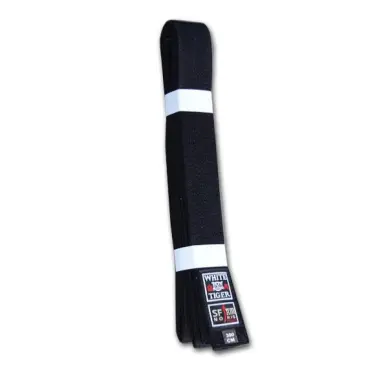
The judo belt, called obi in Japanese, is used to keep the judo gi jacket closed.
It also holds strong symbolic value: its color represents the judoka’s rank and progression.
Throughout their training, practitioners develop technical skills, control, discipline, and understanding of judo principles.
Which Belt Color Should You Choose?
Belt colors and promotion requirements depend on the practitioner’s age and the grading system used by their federation.
In France, judokas typically progress through various colored belts before reaching black belt ranks.
To select your belt, check the rank given by your instructor and choose a length that fits your body type.
How to Tie a Judo Belt?
The belt must be properly tied to keep the jacket closed during training.
It wraps around the waist and is finished with a secure knot, with evenly balanced ends.
To learn the step-by-step technique, see our complete guide to tying a judo belt.
Judo Protection: Comfort and Safety During Practice
Judo is a martial art focused on gripping, throwing, and ground control. While striking techniques are not part of standard sport judo, some additional protective gear may be useful depending on individual needs.
Men’s Groin Guard
The men’s groin guard is designed to protect the groin area from accidental impacts.
Its use depends on your practice, desired comfort, and the rules in your club or competition.
It’s important to choose protection that fits your body, stays in place, and doesn’t restrict movement.
Women’s Chest Guard
The Coolguard chest guard provides extra protection for female practitioners who want it.
Comfort, support, and freedom of movement are essential when choosing this gear.
Before using any protection in competition, check your federation’s rules regarding allowed gear under the judo gi.
Judo Zooris: An Essential Dojo Accessory
Judo zooris are sandals traditionally worn to move around outside the tatami.
Judo is practiced barefoot on the training surface. However, it’s important to wear shoes or sandals in hallways, locker rooms, and other dojo areas.
Zooris help maintain hygiene rules and keep your feet clean before stepping onto the tatami.
For both kids and adults, choose a pair that’s easy to slip on, comfortable, and fits the practitioner’s shoe size.
How to Properly Wear Your Judo Uniform?
Wearing the judo gi follows specific rules and traditions.
The jacket is closed by placing the right side inside and the left side over it. The belt is then tied around the waist.
The judo gi must be clean, in good condition, and properly fitted.
Sleeves and pants should allow free movement without being too short or too loose.
For competitors, additional rules may apply regarding dimensions, fabric, and permitted markings.
Wearing your uniform correctly also shows respect for tradition and dojo etiquette.
Judo Equipment for Kids: Getting Ready for the First Classes
For a child starting judo, the goal is to choose simple, comfortable gear that fits their size.
The basic equipment usually includes:
A kids’ judo gi suited to their height.
A judo belt matching their rank.
A pair of zooris for walking outside the tatami.
A kids’ sports bag for carrying their uniform.
A gi that’s too large can hinder movement and learning techniques. It’s best to pick the right size, keeping in mind possible fabric shrinkage after washing.
Check the sizes and features of our judo gi for kids to find the right uniform for your young judoka.
Judo Equipment for Training and Competition
A judoka’s needs evolve with experience.
For Recreational Judo and First Training Sessions
A lightweight, comfortable judo gi, along with a belt and zooris, is usually enough to get started.
The priority is to discover techniques, learn breakfalls, and progress with confidence.
For Regular Training
Judokas who train several times a week should choose a durable judo gi that can withstand repeated grips and throws.
Weight, weave, reinforcements, and seam quality become especially important.
For Judo Competition
A judoka competing in tournaments must choose an outfit that complies with the applicable rules.
Certain international competitions requireIJF-approved judo gis, which meet specific technical standards.
Your choice of gi should therefore consider not only comfort and durability, but also its approval and fit.
Judo: a Japanese martial art based on flexibility and respect
Created in Japan in 1882 by Jigorō Kanō, judo is a martial art and sport discipline developed from the study of various jujutsu schools.
Its name generally means “the way of flexibility”.
Judo is based on the efficient use of energy, balance, control, and adapting to the opponent’s movements.
Unlike disciplines focused on punches and kicks, sport judo mainly emphasizes throws, pins, and certain submission techniques within a regulated framework.
Jigorō Kanō and the creation of the Kodokan
In 1882, Jigorō Kanō founded the Kodokan, his judo school in Tokyo.
His ambition went beyond mastering combat techniques: he aimed to develop a method for physical, intellectual, and moral education.
Judo is thus built around two core principles:
Seiryoku Zenyo: the best use of energy.
Jita Kyoei: mutual help and benefit.
These principles remain essential in modern judo teaching.
The values of judo
Judo is also known for the values taught in the dojo: respect, courage, sincerity, honor, humility, self-control, courtesy, and friendship.
These values guide judokas throughout their journey, from their first classes to competitions.
To learn more about the history of this discipline, check out our article dedicated to the fascinating history of judo.
How to care for your judo gear?
Proper care helps extend the lifespan of your equipment.
After each training session, take your judo gi out of your bag and let it dry in a well-ventilated area.
Follow the manufacturer’s washing instructions to avoid excessive shrinkage or fabric damage.
Regularly check the seams, collar, and reinforcements of your gi.
Remember to clean your zooris and air out your sports bag as well.
Clean, well-maintained gear ensures comfort for the practitioner and upholds hygiene standards in the dojo.
Why buy your judo gear from Budo-Fight?
Since 1963, Budo-Fight has supported martial arts and combat sports practitioners in choosing their equipment.
Whether you’re a beginner, experienced judoka, instructor, or competitor, discover a selection of products tailored to your needs.
Find in particular:
Judo beltsfor different ranks.
Zoorisand dojo accessories.
Get equipped to progress on the tatamiwith our selection of judo gear and equipment.
Explore the different categories and choose products suited to your practice, level, and budget.
