




Aikido Gear and Equipment: Gi, Hakama, Bokken, and Accessories
Looking for aikido gear to start, improve, or practice regularly at the dojo? At Budo-Fight, discover a selection of aikido equipment for kids and adults, suitable for both beginners and advanced practitioners.
Find all the essentials for this Japanese discipline: aikido gi (aikidogi), hakama, aikido belts, bokken, jo, tanto, and training accessories.
Whether you practice aikido for fun, in a club, or intensively, choose an outfit and accessories suited to your level, body type, and your instructor’s recommendations.
From your first class on the tatami to mastering throws, pins, and traditional weapons work, the right equipment ensures comfort, durability, and freedom of movement.
What Equipment Do You Need for Aikido?
Aikido equipment depends on the practitioner’s level and the customs of their school.
To start, a keikogi and a belt are usually enough. The hakama and training weapons are introduced according to dojo traditions and the curriculum.
Essential Aikido Equipment Table
Equipment | Main Use | For Whom? |
|---|---|---|
Durable, comfortable outfit for techniques on the tatami | All practitioners | |
Keeps the jacket closed and may indicate rank | All practitioners | |
Traditional garment worn over the keikogi | Depending on level and dojo rules | |
Sandals for walking outside the tatami | All practitioners | |
Wooden training sword | Supervised technical work | |
Wooden staff used in formal exercises | Supervised technical work | |
Training knife, usually wooden | Supervised technical work |
Required equipment may vary depending on the club and school. Always check your instructor’s guidelines before purchasing.
Aikido Gi: How to Choose Your Aikidogi?
The aikido gi, also called aikidogi or keikogi, is the basic outfit for practitioners.
It consists of a jacket and pants, completed with a belt.
The keikogi should allow you to perform movements, falls, throws, and pins without restricting motion.
Which Material to Choose for Your Aikido Gi?
Aikido gi are often made of cotton, but the fabric composition varies by model.
Cotton is valued for its comfort and textile qualities. The weave and weight affect the fabric’s feel, flexibility, and durability.
A lightweight model is suitable for beginners, while a denser fabric is often preferred for regular practice.
Be sure to check the product page for details on fabric composition and washing instructions.
Lightweight or Heavyweight Aikido Gi?
Your choice depends on your level and how often you train.
For beginners, a comfortable keikogi with enough durability is usually a good choice.
For regular practice, look for strong stitching, fabric suitable for gripping, and a cut that allows ground techniques.
For intensive practice, pay special attention to fabric strength and reinforcements.
The best aikidogi isn’t necessarily the heaviest: it should first and foremost fit your body and your practice.
What’s the Difference Between an Aikidogi and a Judo Gi?
The aikido keikogi and the judo gi have several similarities.
Both are designed for use on the tatami, involving gripping and body movement.
However, some aikido gi have a specific cut, especially in the sleeves and pants.
The choice depends on the practitioner’s preferences and the recommendations of the dojo.
You can also compare the judo gis, some of which may be suitable for aikido training depending on your instructor’s requirements.
Aikido Hakama: Tradition, Fit, and Comfort
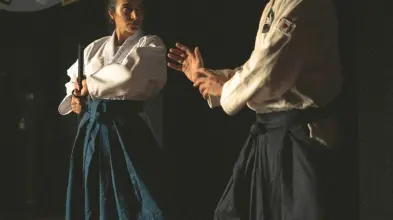
The aikido hakama is a traditional Japanese garment worn over the keikogi.
It stands out for its wide cut, pleats, and long ties that secure it at the waist.
The hakama is closely linked to the visual identity of aikido and the heritage of Japanese martial arts.
From What Rank Can You Wear a Hakama?
The rules for wearing a hakama vary depending on the school and instructor.
In some dojos, it is reserved for practitioners who have reached a certain level. In others, it may be allowed earlier.
Before buying a hakama, ask your instructor if it is required in your club and which color is recommended.
Which Hakama Color Should You Choose?
Black hakamas anddark blue or indigo hakamas are especially common in aikido practice.
The allowed color may depend on your school’s traditions.
To avoid mistakes, check your dojo’s guidelines before choosing your model.
The Pleats of the Hakama and Their Meaning
The traditional hakama usually features seven main pleats: five in the front and two in the back.
These pleats are sometimes associated with budo values, including:
Gi: rectitude and justice.
Rei: respect and courtesy.
Chi: wisdom.
Shin: sincerity.
Chu: loyalty.
Ko: filial piety.
Jin: benevolence.
This symbolic interpretation is part of the traditions passed down in some schools, even though explanations may vary.
How to Choose the Right Hakama Size?
The length of the hakama should match the practitioner’s height.
A hakama that is too long may restrict movement, while a model that is too short may not meet your school’s preferences.
Consider your height, the level at which the hakama is worn, and the manufacturer’s size guide.
The Koshi-ita: The Hakama Back Plate
The koshi-ita is the reinforced part at the back of the hakama.
It helps structure the garment and keeps it in place on the back.
Its rigidity and design vary by model.
Aikido Belt: Choosing Your Obi
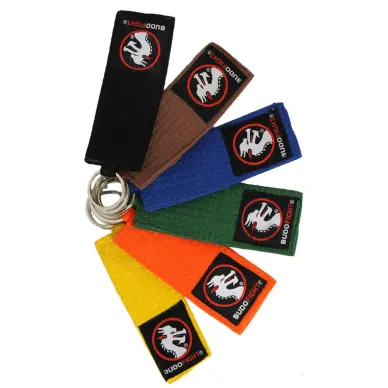
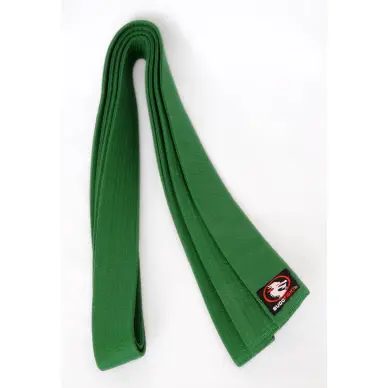
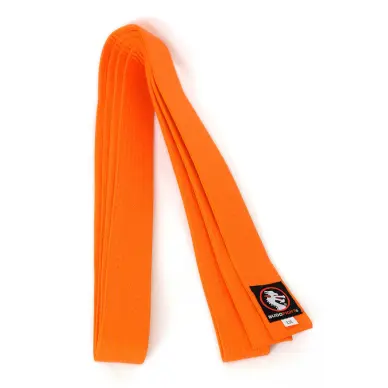
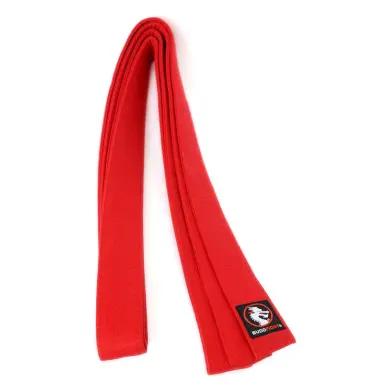
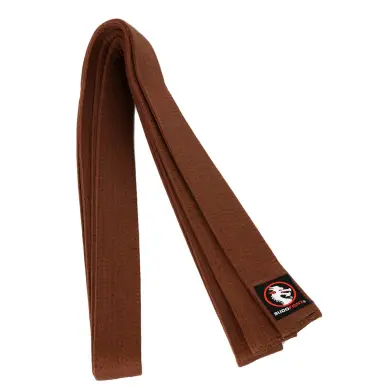
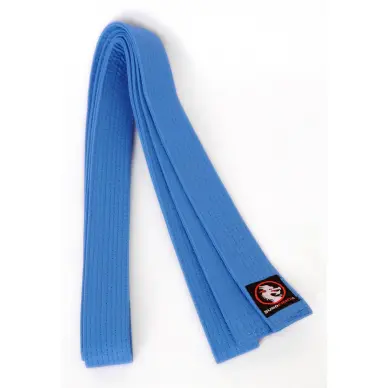
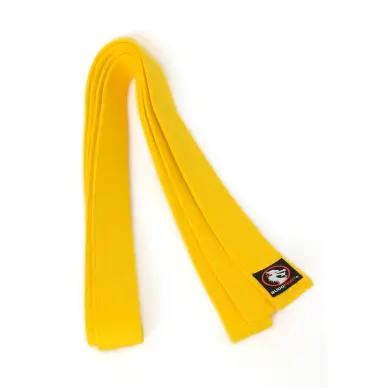
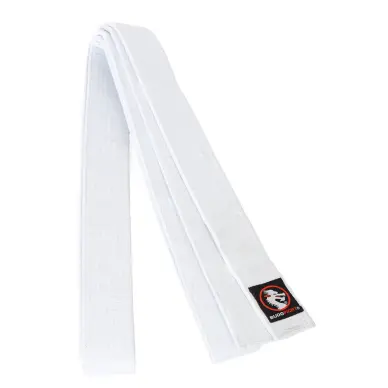
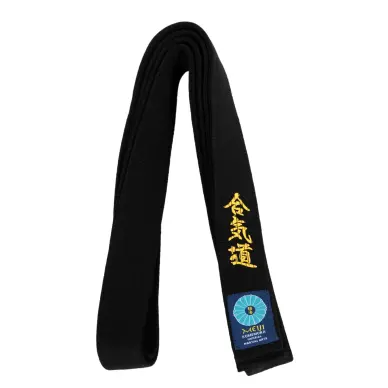
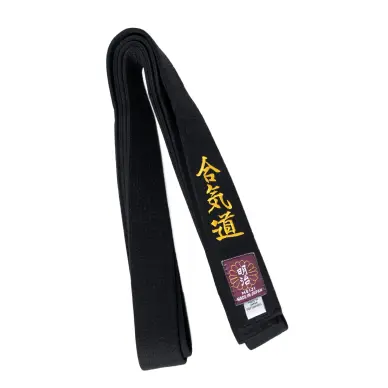
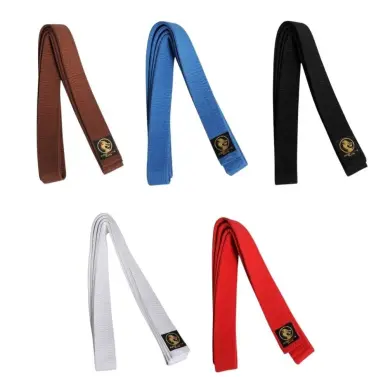
The aikido belt, called obi, keeps the keikogi jacket closed.
It can also symbolize the practitioner’s level depending on the school’s traditions.
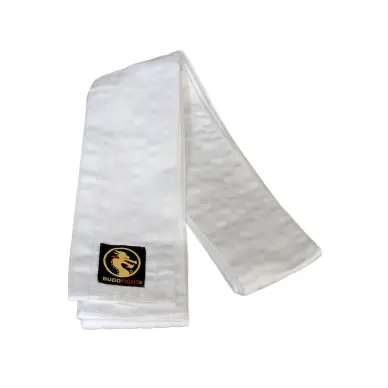
Discover the white aikido obi, suitable for practitioners using a white belt.
White Belt and Black Belt in Aikido
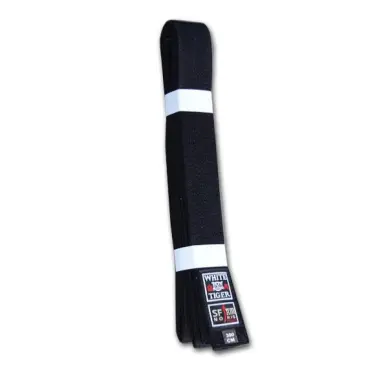
In many aikido schools, kyu grade practitioners wear a white belt, while those who have achieved dan rank wear a black belt.
However, some schools also use colored belts, especially for children’s classes.
The belt system therefore depends on the federation and the dojo.
What Belt Length Should You Choose?
The belt should wrap around your waist and allow you to tie a secure knot.
The choice depends on your body type and how the belt is worn with the keikogi or hakama.
Check the manufacturer’s guidelines to select the right length.
Aikido Zooris: Maintaining Dojo Hygiene
Aikido is generally practiced barefoot on the tatami.
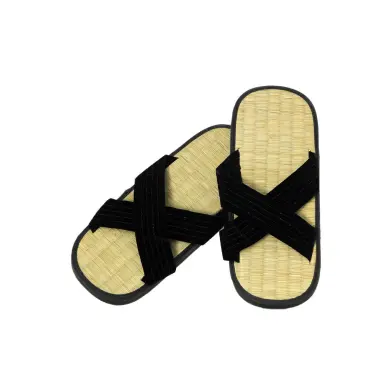
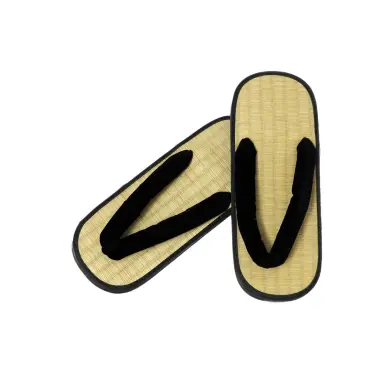
Outside the training area, practitioners wear sandals, often called zooris or zori, to move around the dojo.
They help keep your feet clean before stepping on the tatami.
Discover our selection of martial arts zooris.
Y-Strap or X-Strap Zooris?
There are several types of traditional sandals.
Rice straw zooris with Y-straps have a separation between the toes.
Rice straw zooris with X-straps offer a different fit over the top of the foot.
The choice depends on your comfort and personal habits.
Before stepping on the tatami, zooris are usually left at the edge of the training area, according to dojo etiquette.
Aikido Weapons: Bokken, Jo, and Tanto
Traditional weapons training plays an important role in some aikido schools.
It helps develop distance, movement, coordination, and technical principles.
Discover our range of aikido weapons as well as our selection of wooden martial arts weapons.
The three main accessories used are the bokken, the jo, and the training tanto.
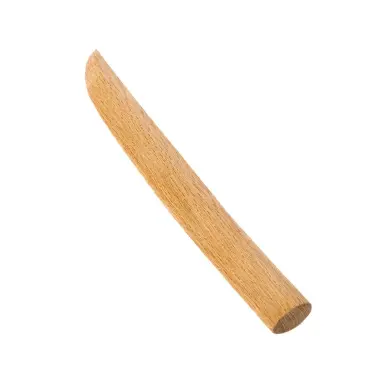
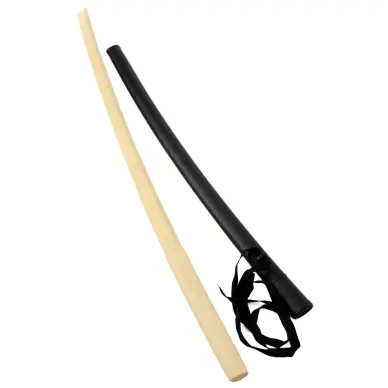
Aikido Bokken: the wooden training sword
The bokken is a wooden replica of a Japanese sword.
It is used to study footwork, distance, and certain codified sequences.
The choice of bokken depends on its length, weight, type of wood, and your instructor’s recommendations.
Aikido Jo: the traditional staff
The jo is a wooden staff used in various technical exercises.
It helps develop coordination, precision, and movement skills.
Its length and diameter should match the requirements of your dojo’s practice.
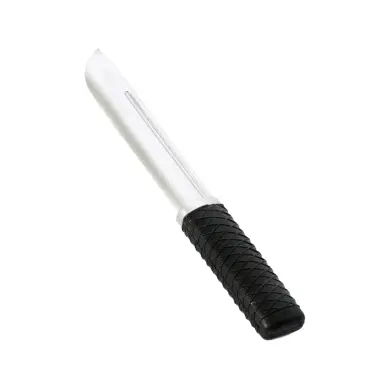
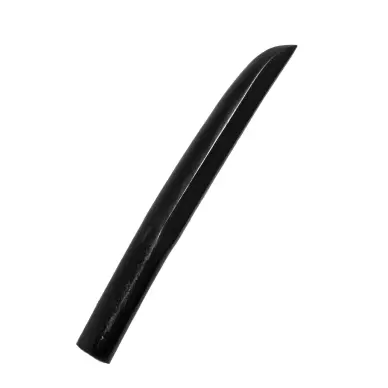
Aikido Tanto: the training knife
The tanto is a training knife, usually made of wood for traditional practice.
It is used to study specific codified technical situations under the supervision of an instructor.
Always follow your club’s safety guidelines when using it.
Aikido Weapons Set
For practitioners who want several accessories, discover the white oak weapons set.
Before choosing a set, check the sizes and types of weapons required by your instructor.
What exercises can you practice with aikido weapons?
Weapons training includes several forms of traditional exercises.
Exercise | Principle | Equipment used |
|---|---|---|
Suburi | Individual repetition of fundamental movements | Bokken or jo |
Awase | Synchronization and harmonization work with a partner | Bokken or jo |
Kata | Codified sequence of techniques | Depending on the school |
Kumijo | Codified work with two jo | Jo |
Kumitachi | Codified work with two bokken | Bokken |
These exercises are designed to develop technical mastery and should be practiced in a suitable environment with a qualified instructor.
Wooden training weapons can cause injuries if misused. Always respect safety distances and your dojo’s guidelines.
Aikido ranks: understanding kyu and dan
As in many Japanese martial arts, aikido progression is organized around two main rank categories:
Kyu, which are the stages of progression before dan ranks.
Dan, which are the advanced ranks.
The number of kyu, exam requirements, and awarding conditions may vary depending on federations and schools.
Kyu ranks in aikido
Kyu ranks support the gradual learning of fundamental techniques.
In many systems, progression leads to 1st kyu (ikkyu) before reaching the first dan.
Traditional names include:
Rokkyu: 6th kyu.
Gokyu: 5th kyu.
Yonkyu: 4th kyu.
Sankyu: 3rd kyu.
Nikyu: 2nd kyu.
Ikkyu: 1st kyu.
Some programs also include additional levels or preparatory stages for beginners.
Evaluations focus on technical mastery, movement, breakfall quality, and the practitioner’s attitude.
Dan ranks in aikido
Dan ranks mark the advanced stages of progression.
The most common names are:
Rank | Japanese Name |
|---|---|
1st dan | Shodan |
2nd dan | Nidan |
3rd dan | Sandan |
4th dan | Yondan |
5th dan | Godan |
6th dan | Rokudan |
7th dan | Nanadan |
8th dan | Hachidan |
The requirements for each rank vary depending on the organization.
In France, official recognition of certain ranks is subject to specific federal and regulatory procedures.
To find out the applicable exam requirements, consult your instructor and your federation.
The Origins of Aikido: Morihei Ueshiba and Japanese Traditions
Aikido is a Japanese martial art developed in the 20th century by Morihei Ueshiba, often called O-Sensei.
It draws inspiration from Japanese martial traditions and philosophical principles focused on harmony and self-mastery.
The name aikido is generally interpreted as the “way of harmonizing energies”.
A Martial Art Based on Movement and Control
Aikido mainly uses footwork, off-balancing, throws, and immobilizations.
The goal of training is to develop technical mastery, coordination, and the ability to handle opposition.
Instruction places great importance on respect for your partner and control of your movements.
Is Aikido a Competitive Sport?
Unlike many combat sports, most aikido schools do not practice competitive sport.
Learning is based mainly on technical repetition, partner work, and personal progress.
However, some branches have their own forms of competition.
The content of training sessions therefore depends on the style and the school.
Beginner Aikido Equipment: What Do You Need to Buy?
To start aikido, the required equipment is generally simple.
A comfortable keikogi, a suitable beltand zooris are the basics for your first training sessions.
The hakama and weaponscan be added gradually, depending on your club’s curriculum.
Before purchasing additional equipment, ask your instructor for advice.
Aikido Equipment for Children
For young practitioners, choosea gi that fits their size and is flexible enough for practice.
Freedom of movement is especially important for learning rolls and footwork.
Accessories used during classes should always be age-appropriate and follow the dojo’s safety guidelines.
How to Care for Your Aikido Gi and Hakama
Regular care helps preserve the comfort and lifespan of your equipment.
After each training session, take your keikogi out of your bag and let it dry in a ventilated area.
Follow the manufacturer’s washing instructions to avoid excessive shrinkage.
For the hakama, check the fabric’s specific recommendations and take care to maintain the pleats when storing it.
Wooden weapons should be inspected regularly for cracks, splinters, or other damage.
Do not use damaged accessories during training.
Why Buy Your Aikido Equipment from Budo-Fight?
Since 1963, Budo-Fight has supported martial arts and combat sports practitioners in choosing their equipment.
Whether you are new to aikido or have been practicing for years, discover a selection of products suited to your discipline.
Discover in particular:
Get ready for your next training sessions with Budo-Fight and choose aikido equipment adapted to your level, your body type, and your school’s traditions.
Discover our full selection in the aikido gear and equipment category.