












Aikido Gear & Equipment: Gi, Hakama, Bokken, and Accessories
Looking for aikido gear to get started, improve, or practice regularly at the dojo? At Budo-Fight, explore a selection of aikido equipment for kids and adults, suitable for both beginners and advanced practitioners.
Find all the essentials for this Japanese martial art: aikido gi for all levels, hakama, aikido belts, bokken, jo, tanto, and training accessories.
Whether you practice aikido for leisure, in a club, or intensively, choose an outfit and accessories suited to your level, body type, and your instructor’s recommendations.
From your first lesson on the tatami to mastering throws, pins, and traditional weapons work, the right equipment ensures comfort, durability, and freedom of movement.
What Equipment Do You Need for Aikido?
Aikido equipment depends on the practitioner’s level and the customs of their school.
To start, a keikogi and belt are usually enough. The hakama and training weapons are introduced according to dojo traditions and the curriculum.
To discover more useful accessories, check out our selection of additional aikido gear.
Essential Aikido Equipment Table
Equipment | Main Use | For Whom? |
|---|---|---|
Aikido gi (keikogi) | Durable, comfortable outfit for techniques on the tatami | All practitioners |
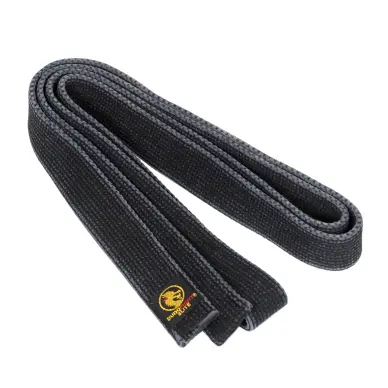
Aikido belt (obi) | Keeps the jacket closed and may indicate rank | All practitioners |
Worn over the keikogi | Depending on level and dojo rules | |
Zooris | Sandals for moving around off the tatami | All practitioners |
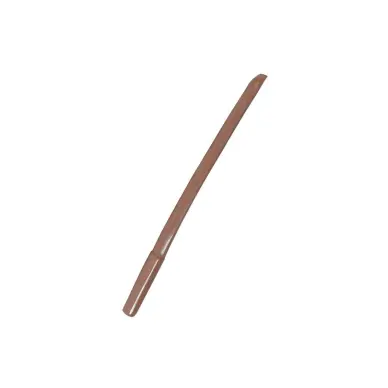
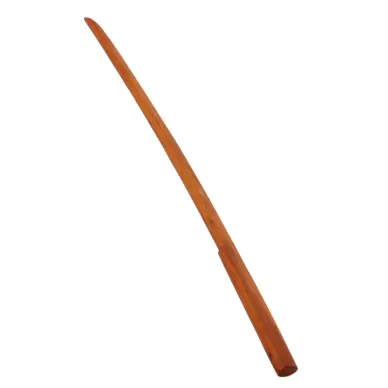
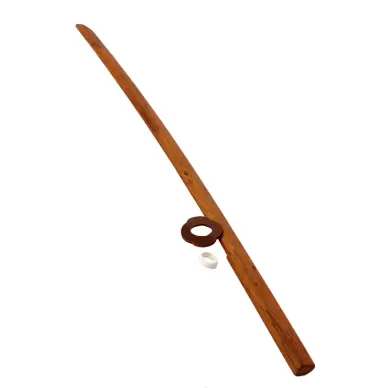
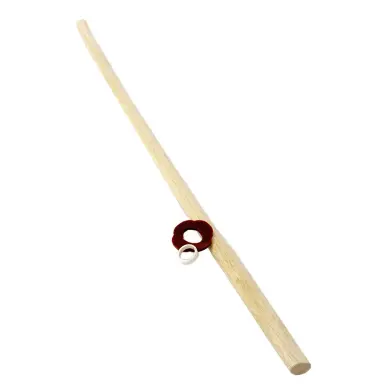
Bokken | Wooden training sword | Supervised technical work |
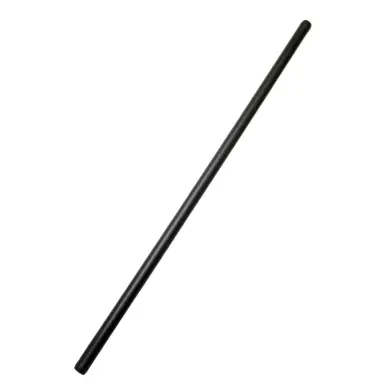
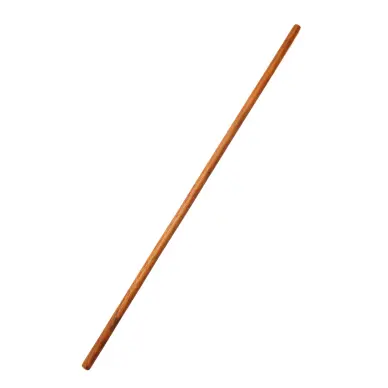
Jo | Wooden staff used in formal exercises | Supervised technical work |
Tanto | Training knife, usually wooden | Supervised technical work |
Required equipment varies by club and school. Always check your instructor’s guidelines before purchasing.
Aikido Gi: How to Choose Your Aikidogi?
The aikido gi, also called aikidogi or keikogi, is the basic outfit for practitioners.
It consists of a jacket and pants, completed with a belt.
The keikogi should allow you to move, fall, throw, and pin without restricting your movements.
What Material Should You Choose for Your Aikido Gi?
Aikido gi are often made of cotton, but the composition varies by model.
Cotton is valued for its comfort and textile qualities. The weave and weight affect the fabric’s feel, flexibility, and durability.
A lightweight model is suitable for beginners, while a heavier fabric is often preferred for regular practice.
Among specialized brands, discover aikido gear by Meiji Kumemura.
It’s important to check the product page for fabric details and washing instructions.
Lightweight or Heavy Aikido Gi?
The choice depends on your level and how often you train.
For beginners, a comfortable and durable keikogi is usually a good choice.
For regular practice, opt for strong seams, a fabric suited to grabs, and a cut that allows ground techniques.
For intensive training, pay special attention to fabric strength and reinforcements.
The best aikidogi isn’t necessarily the heaviest: it should above all fit your body and your practice.
Size is also crucial. For key sizing tips, check our general martial arts gi size guide, and don’t forget to review the manufacturer’s chart.
What’s the Difference Between an Aikidogi and a Judo Gi?
The aikido keikogi and judo gi have several similarities.
Both are designed for tatami practice involving grabs and body movements.
However, some Aikido gi feature a specific cut, especially in the sleeves and pants.
The choice depends on the practitioner’s preferences and the recommendations of the dojo.
You can also compare the gi designed for judo practice, as some models may be suitable for Aikido training depending on the instructor’s requirements.
Aikido Hakama: Tradition, Fit, and Comfort
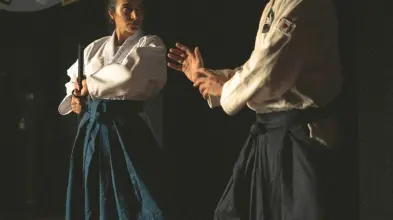
The Aikido hakama is a traditional Japanese garment worn over the keikogi.
It stands out for its wide cut, pleats, and long ties that secure it at the waist.
The hakama is closely linked to the visual identity of Aikido and the heritage of Japanese martial arts.
From What Rank Can You Wear a Hakama?
The rules regarding hakama use vary depending on the school and instructor.
In some dojos, it is reserved for practitioners who have reached a certain level. In others, it may be allowed earlier.
Before purchasing a hakama, ask your instructor if its use is required in your club and which color is recommended.
Which Hakama Color Should You Choose?
Black, dark blue, or indigo hakama are especially common in Aikido practice.
The allowed color may depend on the school’s traditions.
Budo-Fight offers Meiji models in these colors, with different manufacturing origins depending on the reference. To discover Japanese-made models, see the traditional Meiji Japan range.
To avoid mistakes, check your dojo’s customs before choosing your model.
The Pleats of the Hakama and Their Meaning
The traditional hakama usually features seven main pleats: five in the front and two in the back.
These pleats are sometimes associated with budo values, including:
Gi: rectitude and justice.
Rei: respect and courtesy.
Chi: wisdom.
Shin: sincerity.
Chu: loyalty.
Ko: filial piety.
Jin: benevolence.
This symbolic interpretation is part of the traditions passed down in some schools, though explanations may vary.
How to Choose the Right Hakama Size?
The length of the hakama should match the practitioner’s height.
A hakama that is too long may hinder movement, while one that is too short may not meet the school’s preferences.
Consider your height, the level at which the hakama is worn, and the manufacturer’s size guide.
Depending on the model, measurement may be taken from the waist to the desired length above the feet.
The Koshi-ita: The Hakama Back Plate
The koshi-ita is the reinforced part located at the back of the hakama.
It contributes to the garment’s structure and helps it stay in place at the back.
Its rigidity and design vary depending on the model.
Aikido Belt: Choosing Your Obi
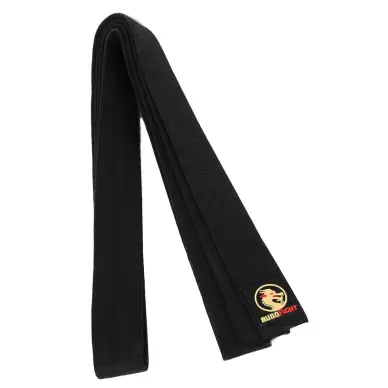
The belt suitable for Aikido practice, called obi, keeps the keikogi jacket closed.
It can also symbolize the practitioner’s rank according to the school’s traditions.
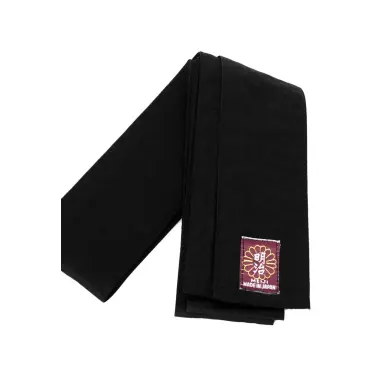
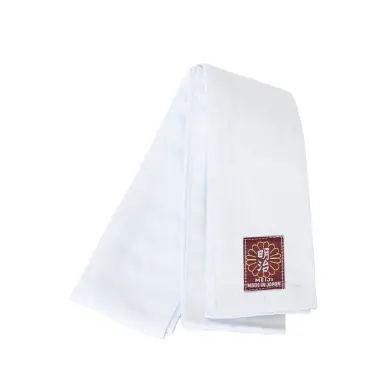
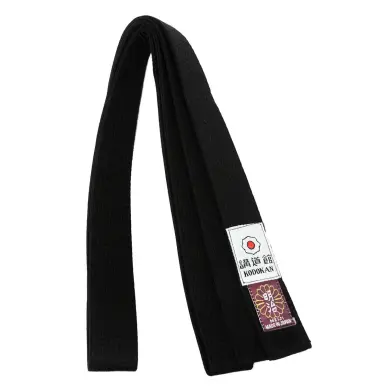
Our selection includes white, black, and colored belts, as well as some obis designed for use with traditional attire.
White Belt and Black Belt in Aikido
In many Aikido schools, kyu-ranked practitioners wear a white belt, while dan-ranked practitioners wear a black belt.
However, some schools also use colored belts, especially for children’s classes.
The belt system therefore depends on the federation and the dojo.
What Belt Length Should You Choose?
The belt should wrap around the waist and allow for a secure knot.
The choice depends on your body shape and how the belt is worn with the keikogi or hakama.
Refer to the manufacturer’s guidelines to select the appropriate length.
For guidance, see our practical guide to martial arts belt lengths.
Aikido Zooris: Maintaining Dojo Hygiene
Aikido is generally practiced barefoot on the tatami.
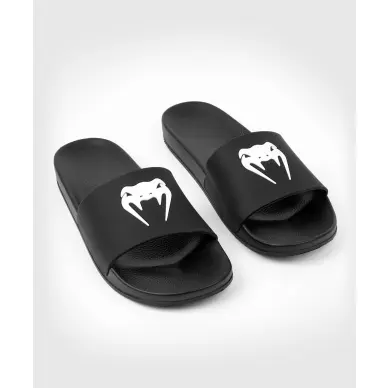
Outside the training area, practitioners wear sandals, often called zooris or zoris, to move around the dojo.
They help keep feet clean before stepping onto the tatami.
Discover our Japanese sandals for moving around the dojo, also suitable for other barefoot martial arts.
Y-Strap or X-Strap Zooris?
There are several types of traditional sandals.
Rice straw zooris with Y-straps have a separation between the toes.
Rice straw zooris with X-straps offer different support across the top of the foot.
The choice depends on the comfort you seek and your personal habits.
Before stepping onto the tatami, zooris are usually left at the edge of the training area, according to dojo etiquette.
Aikido Weapons: Bokken, Jo, and Tanto
Training with traditional weapons plays an important role in the teaching of some Aikido schools.
It is especially useful for studying distance, movement, coordination, and technical principles.
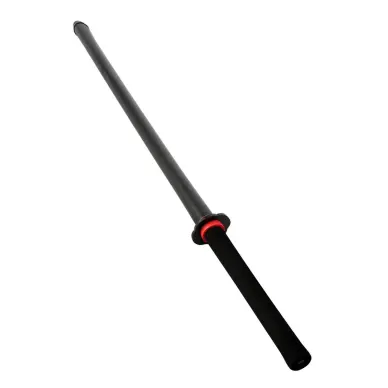
Discover our selection of training weapons for Aikido, as well as our range of wooden equipment for martial arts.
The three main accessories used are the bokken, jo, and training tanto.
Aikido Bokken: the wooden training sword
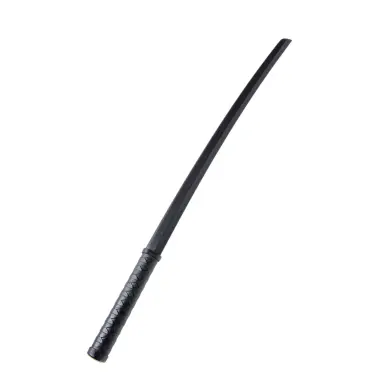
The bokken is a wooden replica of a Japanese sword.
It is used to study movement, distance, and specific codified sequences.
The choice of bokken depends on its length, weight, type of wood, and your instructor’s recommendations.
Aikido Jo: the traditional staff
The jo is a wooden staff used in various technical exercises.
It helps develop coordination, precision, and movement skills.
Its length and diameter should match the requirements of your dojo’s practice.
Aikido Tanto: the training knife
The tanto is a training knife, usually made of wood in traditional practice.
It is used to study certain codified technical situations, always under the supervision of an instructor.
Its use must always follow the club’s safety guidelines.
Aikido Weapons Sets
For practitioners who want several accessories, some sets include different training weapons, mainly wooden models.
Before choosing a set, check its contents, the size of the accessories, and the types of weapons required by your instructor.
What exercises can you practice with Aikido weapons?
Weapons training includes several forms of traditional exercises.
Exercise | Principle | Equipment used |
|---|---|---|
Suburi | Individual repetition of fundamental movements | Bokken or jo |
Awase | Synchronization and harmonization work with a partner | Bokken or jo |
Kata | Codified sequence of techniques | Depending on the school |
Kumijo | Codified work with two jo | Jo |
Kumitachi | Codified work with two bokken | Bokken |
These exercises are designed to develop technical mastery and should be practiced in a suitable environment with a qualified instructor.
Wooden training weapons can cause injury if used improperly. Always respect safety distances and follow your dojo’s guidelines.
Aikido ranks: understanding kyu and dan
As in many Japanese martial arts, progression in Aikido is often organized around two main categories of ranks:
Kyu, which are the steps of progression before dan ranks.
Dan, which represent the advanced ranks.
The number of kyu, exam requirements, and awarding conditions may vary between federations and schools.
Kyu ranks in Aikido
Kyu ranks support the gradual learning of fundamental techniques.
In many systems, progression leads to 1st kyu (ikkyu) before reaching the first dan.
Traditional names include:
Rokkyu: 6th kyu.
Gokyu: 5th kyu.
Yonkyu: 4th kyu.
Sankyu: 3rd kyu.
Nikyu: 2nd kyu.
Ikkyu: 1st kyu.
Some programs also include additional levels or preparatory steps for beginners.
Evaluations focus on technical mastery, movement, the quality of falls, and the practitioner’s attitude.
Dan ranks in Aikido
Dan ranks mark the advanced stages of progression.
The most common names are:
Rank | Japanese Name |
|---|---|
1st dan | Shodan |
2nd dan | Nidan |
3rd dan | Sandan |
4th dan | Yondan |
5th dan | Godan |
6th dan | Rokudan |
7th dan | Nanadan |
8th dan | Hachidan |
The requirements for obtaining ranks vary depending on the organization.
In France, official recognition of certain ranks is subject to specific federal and regulatory procedures.
To find out the applicable exam requirements, consult your instructor and your federation.
The Origins of Aikido: Morihei Ueshiba and Japanese Traditions
Aikido is a Japanese martial art developed in the 20th century by Morihei Ueshiba, often called O-Sensei.
It draws inspiration from traditional Japanese martial arts and philosophical principles that emphasize harmony and self-mastery.
The name aikido is generally interpreted as "the way of harmonizing energies."
A Martial Art Based on Movement and Control
Aikido mainly uses movement, unbalancing, throws, and immobilizations.
The goal of training is to develop technical mastery, coordination, and the ability to handle opposition.
Instruction places great importance on respect for the partner and control of movements.
Is Aikido a Competitive Sport?
Unlike many combat sports, most aikido schools do not practice competitive sport.
Learning is mainly based on technical repetition, partner work, and personal progress.
However, some branches have their own forms of competition.
The content of training sessions therefore depends on the style and school.
Beginner Aikido Equipment: What Do You Need to Buy?
To start aikido, the required equipment is generally simple.
A comfortable keikogi, a suitable belt, and zooris are a good foundation for your first training sessions.
The hakama and weapons can be added gradually, depending on your club's curriculum.
Before purchasing additional gear, ask your instructor for advice.
Aikido Equipment for Kids
For young practitioners, choose a gi that fits their size and is flexible enough for exercises.
Freedom of movement is especially important for learning falls and movement techniques.
Accessories used during classes should always be appropriate for the age of the participants and follow the dojo's safety guidelines.
How to Care for Your Aikido Gi and Hakama?
Regular care helps maintain the comfort and longevity of your gear.
After each training session, take your keikogi out of your bag and let it dry in a well-ventilated area.
Follow the manufacturer's washing instructions to avoid excessive shrinkage.
For the hakama, check the fabric's specific recommendations and take care to keep the pleats when storing it.
Wooden weapons should be inspected regularly for cracks, splinters, or other damage.
Damaged accessories should not be used during training.
To carry your uniforms and accessories, also check out our bags designed for martial arts equipment.
Why Buy Your Aikido Equipment from Budo-Fight?
Since 1963, Budo-Fight has supported martial arts and combat sports practitioners in choosing their equipment.
Whether you're discovering aikido or have been practicing for years, find a selection of products suited to your discipline.
Discover in particular:
Aikido gis for kids and adults.
Traditional hakamas.
Aikido belts and obis.
Zooris for the dojo.
Bokkens, jos, and training tantos.
Accessories for technical work.
You can also explore the other equipment offered by our BudoFight brand, available for several martial arts disciplines.
Get ready for your next training sessions with Budo-Fight and choose aikido equipment suited to your level, body type, and your school's traditions.