









Judo Gis, Belts, and Accessories: How to Choose the Right Judo Gear
Looking for judo gear to get started, progress at the dojo, or prepare for competition? At Budo-Fight, discover a selection of judo equipment for kids and adults, suitable for all skill levels.
Find all the essentials for judokas: judo gis, belts, zooris, protective gear, and training accessories. Each item meets specific needs, whether you’re learning your first breakfalls, practicing throws, or competing.
Whether you practice judo for fun, several times a week, or with a competitive goal, choose gear that matches your body type, training frequency, and your instructor’s recommendations.
What Equipment Do You Need for Judo?
To start judo, a judo gi, a belt, and a properly fitted outfit are usually the basics.
Other accessories can complete your gear for trips to the dojo, physical preparation, and regular training sessions.
Essential Judo Equipment
Equipment | Main Use | For Whom? |
|---|---|---|
Judo gi | Withstand grips, throws, and friction on the tatami | All judokas |
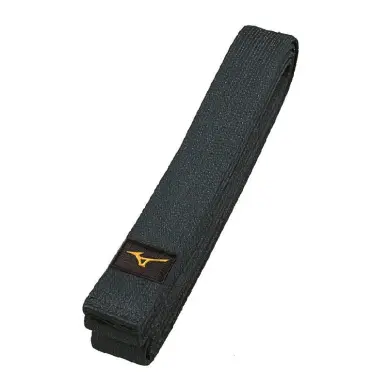
Judo belt (obi) | Keep the jacket closed and show rank | All judokas |
Judo zooris | Move around the dojo off the tatami | Kids and adults |
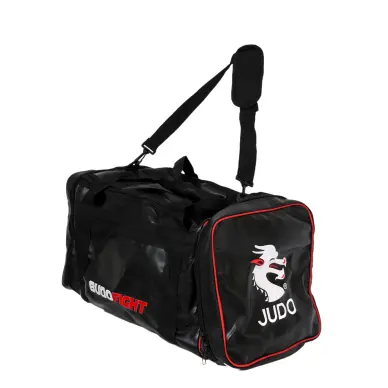
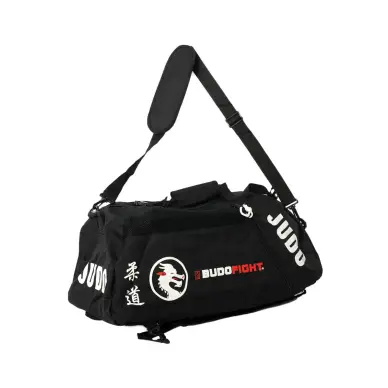
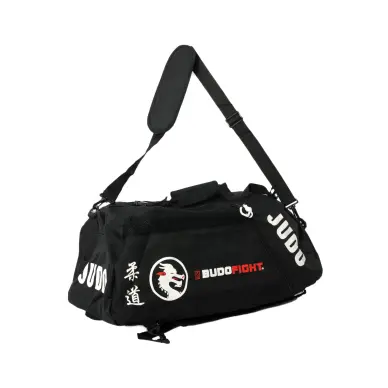
Sports bag | Carry your outfit and accessories | All practitioners |
Ear guards | Protect ears from friction and impacts | As needed |
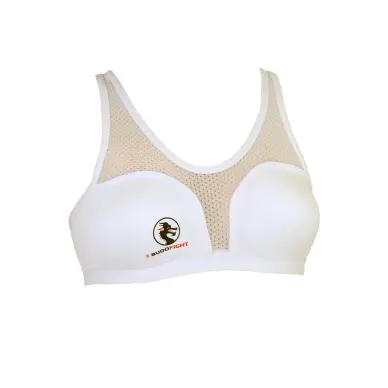
Chest guard | Provide extra protection for the torso | As needed |
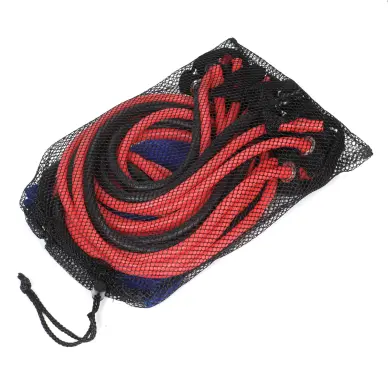
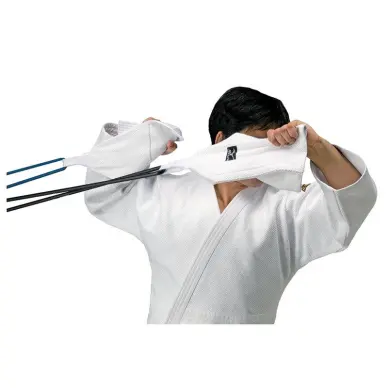
Grip training accessories | Enhance hand and forearm strength | Regular and advanced practitioners |
Not all protective gear is allowed in competition. Before making a specific purchase, check your club or federation’s rules.
Judo Gi: How to Choose Your Judogi?
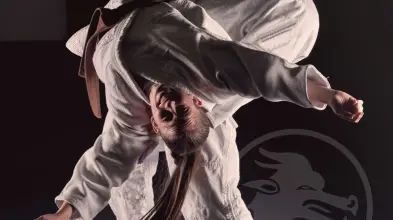
The judo gi, also known as judogi, is the foundation of every practitioner’s gear.
Unlike regular sportswear, it’s designed to withstand collar and sleeve grips, repeated pulling, throws, and friction on the tatami.
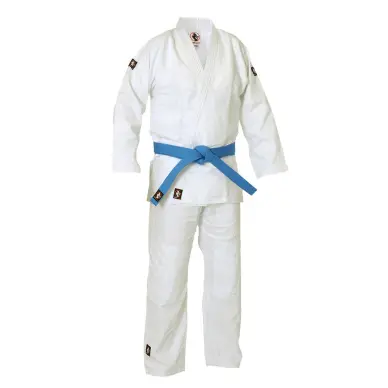
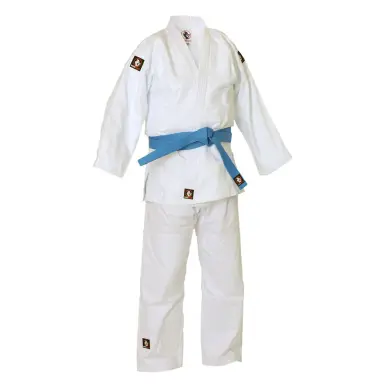
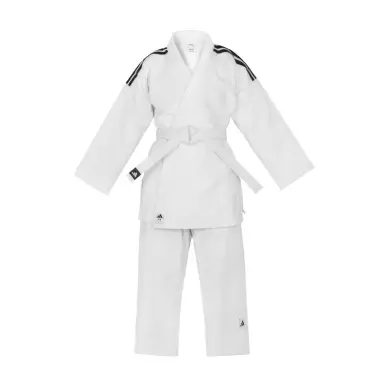
A judo gi consists of a jacket (uwagi) and pants (zubon), along with a belt (obi).
Discover our selection of judo gis for kids and adults, with models for beginners, regular training, and competition.
Judo Gi for Beginners
For your first classes, choose a lightweight, flexible, and comfortable judo gi.
A relatively light fabric lets you learn techniques and movements without wearing unnecessarily heavy gear.
Your choice mainly depends on age, body type, and training frequency.
For beginners, the priority is a properly fitted judo gi that’s durable enough for the exercises required by your club.
Judo Gi for Regular Training
Judokas who train several times a week put more strain on their outfit.
Grip work, throws, groundwork, and sparring all place repeated stress on the fabric.
For regular practice, pay close attention to seam quality, reinforcements, collar strength, and fabric density.
The best model isn’t always the heaviest: it should offer a good balance between durability and freedom of movement.
Judo Gi for Competition
Competition gis are usually built for intensive practice.
Depending on the competition, your outfit may need to meet specific requirements for size, fabric, cut, and certification.
Before choosing a model, check the rules for your competition level.
To learn more about the different criteria, check out our guide to choosing the right judo gi.
Which Fabric Weight Should You Choose for a Judo Gi?
The weight of a judo gi refers to the fabric mass expressed in grams per square meter (g/m²).
It gives an indication of the fabric density, but alone does not determine the quality or durability of a gi.
The composition, weave, reinforcements, and stitching also play an important role.
Indicative Weight Chart
Weight | User Profile | Key Features |
|---|---|---|
About 200 to 350 g/m² | Children and beginners | Lightweight, flexible, and comfortable |
About 450 to 600 g/m² | Regular training | Balance between durability and comfort |
About 650 g/m² and above | Experienced judokas and competitors | Denser fabric, structured fit, and resistance to heavy use |
These values are for reference only. Some models may suit several levels of practice, and the weight of the pants may differ from the jacket.
Lightweight Judo Gi: Who Is It For?
A lightweight judo gi is generally appreciated for beginners.
It is especially suitable for children and practitioners just starting to learn fundamental techniques.
The fabric’s flexibility makes movement easier, but overall durability also depends on how it is made.
Rice Grain Weave: Why This Fabric?
The rice grain weave is a hallmark of many judo gis.
It is recognizable by its textured pattern on the jacket.
This weave is designed to create a fabric that withstands gripping and close-contact work.
However, two rice grain weave judo gis can have very different characteristics.
To compare them, check their weight, composition, cut, and reinforcement quality.
Is a Heavier Judo Gi Always Better?
No. A denser fabric does not automatically mean the gi is better suited for you.
A gi that is too heavy or stiff can be uncomfortable for beginners.
Conversely, a competitor may look for a more structured uniform to meet their level’s demands.
The right choice depends above all on your intended use.
How to Choose the Right Size Judo Gi?
A properly fitted judo gi should allow you to perform techniques without excessive restriction.
It should provide enough freedom for movement, bending, gripping, and groundwork.
Sizes are usually indicated according to the user’s height, but cuts may vary between brands.
Key Points to Check Before Buying
Consider:
Your height: this is the first reference point for choosing a judo gi.
Your body type: some cuts are better suited for slim or broader builds.
Sleeve length: it should match your practice and any regulatory requirements.
Pant length: it should not hinder movement.
Shrinkage: some fabrics may shrink after the first washes.
To better understand size conversions, see our judo gi size guide.
Do Sizes Vary by Brand?
Yes. Two judo gis labeled for the same height can have different cuts.
BudoFight, Adidas, Mizuno, and other brands offer models with varying proportions and features.
If you choose a uniform from this brand, our Mizuno judo gi size guide can also help.
White or Blue Judo Gi: Which Should You Choose?
The white judo gi is traditionally the most common in clubs and for training sessions.
It is generally suitable for first classes and regular practice.
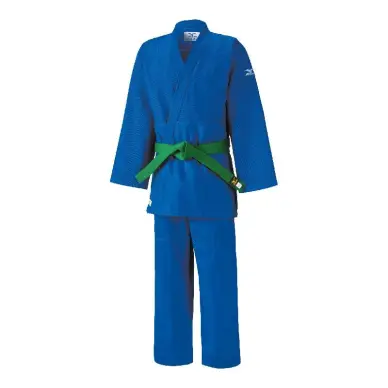
The blue judo gi is used in some competitions to distinguish between the two fighters.
For beginners, a white gi is usually the simplest choice.
If you compete, check which colors and models are required for your category.
What’s the Difference Between a Judo Gi and Other Martial Arts Gi?
Several disciplines use uniforms that look similar to a judo gi.
However, their design meets different technical requirements.
Judo Gi vs. Karate Gi
The judo gi is designed to withstand gripping, throwing, and pulling.
The karate gi, also called karate gi, is generally made for maximum freedom of movement for stances, blocks, and striking techniques.
It’s best to use a uniform designed for your discipline.
Judo Gi vs. BJJ Gi
Brazilian jiu-jitsu also uses an outfit designed to withstand gripping techniques.
However, BJJ gis feature cuts and characteristics specifically adapted to this discipline.
A judo gi is not automatically allowed in a Brazilian jiu-jitsu competition, and vice versa.
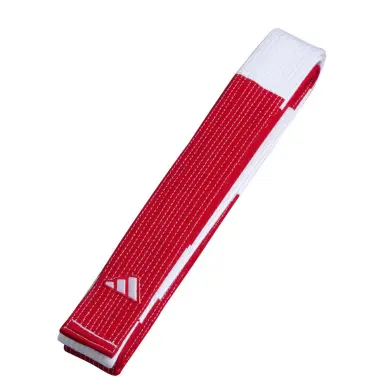
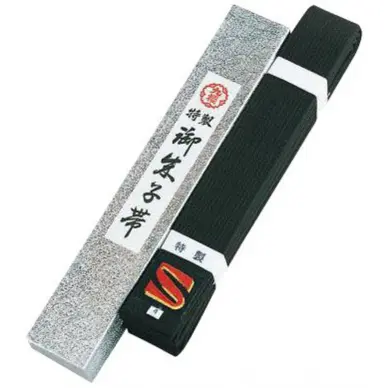
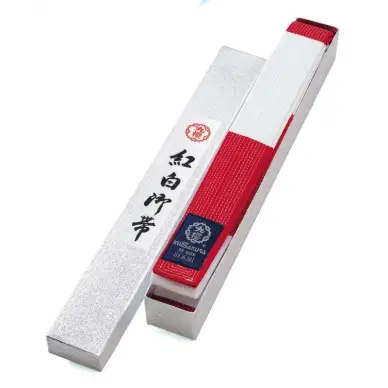
Judo belts: ranks, colors, and progression
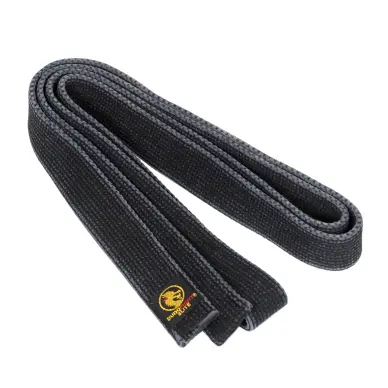
The judo belt, called obi in Japanese, is used to keep the jacket closed.
It also represents the technical progression and rank of the judoka.
Discover our selection of judo belts for kids and adults, available in different colors and lengths.
Judo belt colors
In France, judokas usually start with a white belt before progressing through various colors.
Intermediate ranks and promotion requirements may vary depending on age and federation rules.
The black belt marks an important milestone in a judoka’s progression, but learning continues well beyond this rank.
To choose the right color, always refer to the rank assigned by your instructor.
What length of judo belt should you choose?
The belt should wrap around the waist, tie securely, and leave two ends of appropriate length.
The required length depends on waist size, the thickness of the judo gi, and how you tie the knot.
A belt that’s too short will be hard to tie, while an excessively long belt can hinder movement.
Check our martial arts belt size guide to choose the right length.
How to tie your judo belt?
The belt should keep the jacket properly closed during training.
It is wrapped around the waist and finished with a stable knot, with ends as even as possible.
To learn the method, see our guide to tying a judo belt.
Judo zooris: a practical accessory for the dojo
Zooris are sandals traditionally associated with Japanese martial arts.
Judo is practiced barefoot on the tatami, but it’s important to protect your feet when moving through locker rooms, hallways, and areas outside the training surface.
Zooris help maintain proper hygiene in the dojo.
Discover our selection of zooris for judokas.
How to choose your zooris?
When choosing a pair, consider the shoe size, sole shape, and strap comfort.
Zooris should be easy to slip on and stable enough for regular movement around the dojo.
For children, choose a model suited to foot size and easy to use.
Care depends on the material of the sandals. Let them dry thoroughly after use.
Judo protection: which equipment is useful?
Judo is a martial art based on grips, throws, pins, and certain submission techniques.
Unlike striking sports, the protective gear used is not mainly intended to absorb punches or kicks.
However, some additional equipment can be useful depending on the practitioner’s needs.
See our selection of accessories and protection for judo practice.
Judo ear guards
Ear guards protect the ears from certain friction and repeated impacts.
They can be used in some training situations, especially during exercises involving prolonged ground contact.
Their design and fit should allow for good freedom of movement.
Check your club’s rules and any competition restrictions before using them.
Chest guard
Some female practitioners may want extra chest protection.
Comfort, support, and freedom from interference during gripping and throwing are important factors.
Before a competition, make sure the chosen protection is allowed by the applicable regulations.
Groin guard
The groin guard is designed to protect the genital area from accidental impacts.
Its use depends on the type of training and the rules of the discipline.
It is not necessarily allowed in all forms of judo competition.
Protection should never include elements that are dangerous for the practitioner or their partner.
Judo equipment for kids: getting ready for the first classes
For a child starting judo, it’s best to choose simple and comfortable gear.
A judo gi suited to their size, a belt matching their rank, and zooris are usually a good starting point.
Depending on the model, the belt may be included with the gi or sold separately. Check this before purchase.
Which gi to choose for a child?
A lightweight judo gi is often suitable for the first training sessions.
Its cut should allow running, squatting, falling, and performing technical exercises without excessive restriction.
Avoid choosing a gi that is much too large in hopes of keeping it for several years.
Excessively loose clothing can hinder movement and gripping.
Which sports bag for a young judoka?
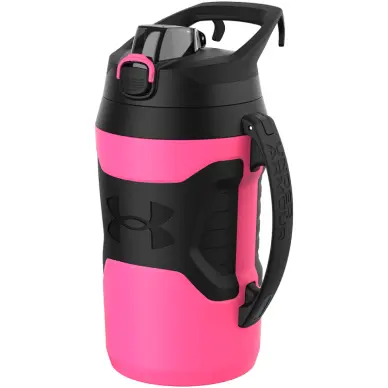
The bag should be able to hold the gi, belt, zooris, a water bottle, and possibly a change of clothes.
For children, choose a format that is easy to carry and suited to their size.
You can discover the sports bags specially designed for judo.
Should you buy competition gear right from the start?
No. For the first classes, a properly fitted beginner judo gi is usually sufficient.
As the child progresses and participates in sporting events, their instructor may recommend a more suitable outfit.
The priority remains comfort, technical progress, and the enjoyment of practicing.
Judo equipment for regular training
With experience, a judoka’s needs evolve.
Technical drills and sparring put more strain on the outfit and may require additional physical preparation.
Uchikomi: repeating entry techniques
Uchikomi involves repeating throwing entries, usually without completing the full throw.
This exercise helps develop coordination, positioning, off-balancing, and precision of movement.
The judo gi must withstand repeated grips and allow good freedom of movement.
Nagekomi: practicing throws
Nagekomi involves repeating throws with a partner.
It helps improve positioning, control, and execution of techniques.
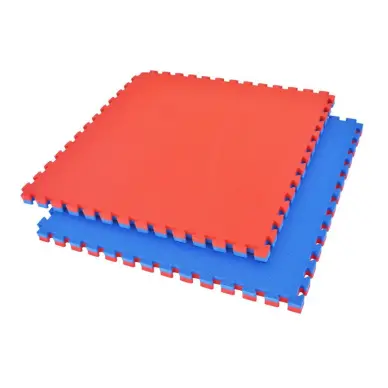
These drills require proper supervision, a suitable training surface, and sufficient breakfall skills.
Randori: adapting to a partner
Randori is a form of free practice with a partner.
Judokas work on applying techniques, managing movement, and reacting to opposition.
A durable, well-fitted outfit is especially important for this type of exercise.
Grip training and physical preparation
Grip strength, also known as grip, plays a key role in judo.
Controlling the collar and sleeves helps set up off-balancing and throws.
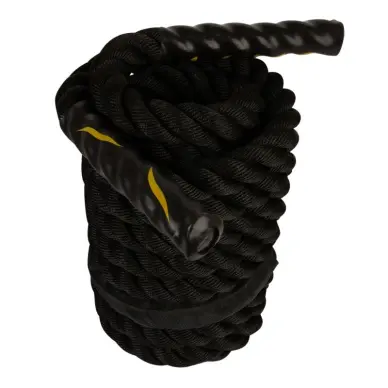
Specific drills can supplement technical grip work.
Certain physical preparation accessories for combat sports can be used to train hand and forearm strength or mobility.
Strength training should remain progressive and adapted to the practitioner’s level.
Judo in competition: what are the rules for the judo gi?
Judo competitions may impose specific requirements regarding the outfit.
Rules vary depending on the federation, age categories, and competition level.
IJF-approved judo gi
In some international competitions, judokas must wear equipment that meets the requirements of the International Judo Federation (IJF).
These rules may concern:
The dimensions of the jacket and pants.
The characteristics of the fabric and collar.
The lengths of sleeves and pants legs.
Markings and approval labels.
Authorized colors for the event.
A judo gi described as a competition model is not necessarily IJF-approved.
Likewise, a heavy fabric weight alone does not guarantee compliance.
Before entering a competition, check the official requirements for the event and the compliance of your chosen model.
How to wear your judo gi correctly?
The judo outfit follows traditional presentation rules.
The jacket is closed by placing the right side inside and the left side over it.
The belt is then tied around the waist.
The judo gi must be clean, properly fitted, and in good condition.
Sleeves and pants should allow good freedom of movement.
Jewelry and accessories that could be dangerous must be removed according to club guidelines.
During competitions, additional rules may apply regarding the outfit and its dimensions.
Judo: a Japanese martial art founded on respect
Judo was created in Japan in 1882 by Jigorō Kanō, based on the study and adaptation of various jujutsu schools.
Its name is usually translated as “the way of gentleness.”
Judo is based on the efficient use of energy, off-balancing, control, and adapting to a partner’s movements.
Jigorō Kanō and the Kodokan
In 1882, Jigorō Kanō founded the Kodokan, his judo school in Tokyo.
His goal was not limited to teaching combat techniques.
He also developed a method of physical and moral education, in which sports practice and respect play an important role.
Two principles are especially associated with his teaching:
Seiryoku Zenyo: the best use of energy.
Jita Kyoei: mutual aid and prosperity.
These principles still guide the teaching of modern judo.
To learn more, check out our article on the fascinating history of judo.
The values of judo
Judo traditionally teaches eight core values:
Politeness, courage, sincerity, honor, modesty, respect, self-control, and friendship.
These values are part of the learning process at the dojo and support judokas throughout their progression.
From the first classes to competitions, these values shape the identity of the discipline.
How to care for your gi and judo gear?
Regular maintenance helps preserve the comfort, hygiene, and lifespan of your equipment.
Washing your judo gi
Follow the instructions on the manufacturer’s label.
Some fabrics may shrink after washing, depending on their composition and the temperature used.
Avoid treatments that could damage the fibers and seams.
After washing, let your judo gi dry completely before storing it.
Caring for your belt
Care recommendations vary depending on the materials and finishes.
For embroidered or personalized belts, carefully follow the manufacturer’s instructions to preserve the inscriptions.
Cleaning your zooris and sports bag
After training, remove damp clothing and let your bag air out.
Clean your zooris according to the care instructions for their material.
Regularly check the seams of your judo gi, the collar, and areas subject to repeated stress.
Any damaged equipment should be inspected before further use.
Frequently asked questions about judo gear
What equipment do you need to start judo?
A judo gi in your size and a belt are usually essential. Zooris and a sports bag are useful additions for trips to the dojo.
What fabric weight should you choose for your first judo gi?
A relatively lightweight gi, for example around 200 to 350 g/m², is often suitable for beginners. The choice depends on your body type, training frequency, and your club’s recommendations.
What’s the difference between a white and a blue judo gi?
The white judo gi is traditionally used for training. The blue one is mainly used to distinguish competitors in certain tournaments.
How do you choose the size of your judo gi?
Refer to your height and the manufacturer’s size guide. Also consider the cut, your body type, and possible fabric shrinkage.
Can you use a karate gi for judo?
This is generally not recommended. The karate gi is not designed to withstand the same pulls and grips as a judo gi.
Is a thick judo gi mandatory in competition?
No, not always. Requirements vary depending on the competition. Some events require approved judo gis that meet specific criteria.
Do you need to wear protective gear for judo?
The judo gi and belt are the basic equipment. Other protective gear may be used depending on your needs, the exercises, and your club’s rules.
How can you prevent your judo gi from shrinking?
Follow the manufacturer’s washing and drying instructions. Fabrics, treatments, and models do not all react the same way.
Why buy your judo gear from Budo-Fight?
Since 1963, Budo-Fight has been supporting martial arts and combat sports practitioners in choosing their equipment.
Whether you’re a beginner, experienced judoka, instructor, or competitor, our selection lets you compare products suited to your level and practice.
Find judo gis for kids and adults, belts for different grades, zooris, protective gear, and accessories for training sessions.
Choosing judo equipment is above all about size, comfort, build quality, and intended use.
Get ready for your next training sessions and choose your judo gear at Budo-Fight to progress on the tatami.