







Shin and Foot Guards: How to Choose the Right Protection for Muay Thai and Kickboxing
Looking for shin guards and foot guards for Muay Thai, kickboxing, MMA, or combat sports? At Budo-Fight, discover a selection of protection gear designed for technical training, partner drills, and sparring sessions.
Flexible, semi-rigid, or reinforced shin guards, full shin and foot guards, Full Contact foot guards, ankle supports, and thigh guards: each piece of equipment has its own features and specific uses.
To make the right choice, consider your discipline, the intensity of contact, the areas you need to cover, your body type, and the comfort of the fit.
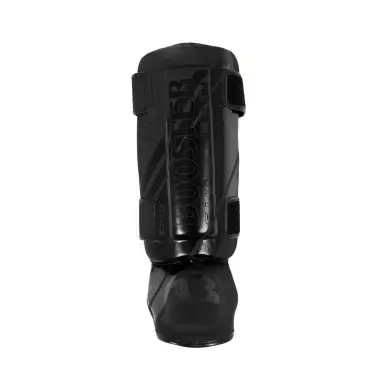
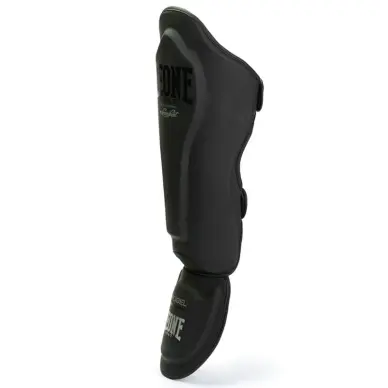
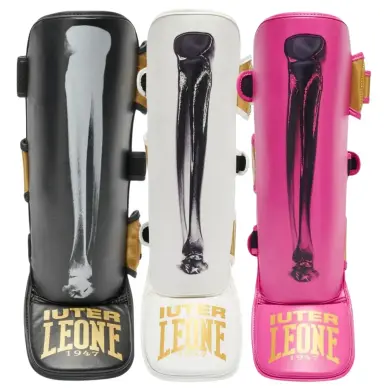
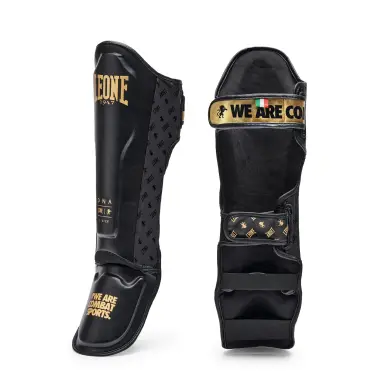
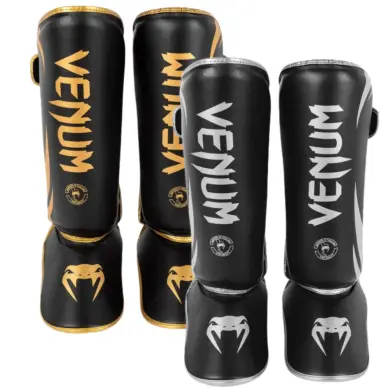
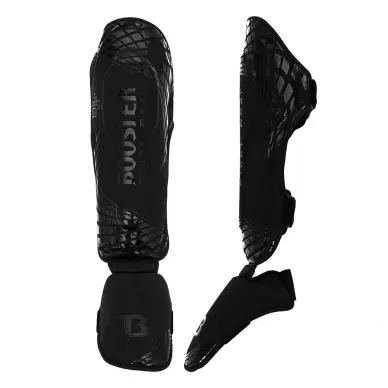
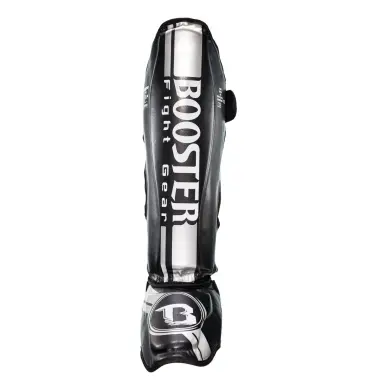
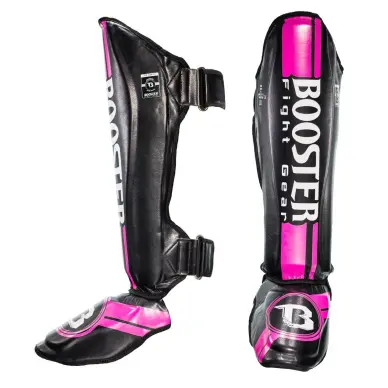
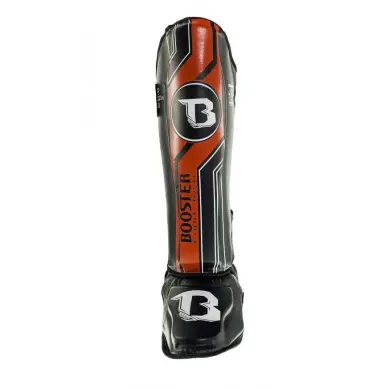
Budo-Fight offers models from BudoFight, Metal Boxe, Fairtex, Twins Special, Venum, Booster, Leone, Montana, Elion, and Shock Doctor, depending on availability.
To complete your gear, also check out our selection of boxing and combat sports protection.
Why Wear Shin Guards and Foot Guards?
In striking disciplines, your legs and feet are heavily used for kicks and blocks.
Training sessions may include roundhouse kicks, front kicks, low kicks, and various partner drills.
Shin guards and foot guards are designed to cover exposed areas and absorb some of the impact, depending on their design.
However, they do not eliminate the risk of injury.
Covering Areas Exposed to Contact
The areas covered depend on the type of equipment.
A basic shin guard mainly covers part of the lower leg.
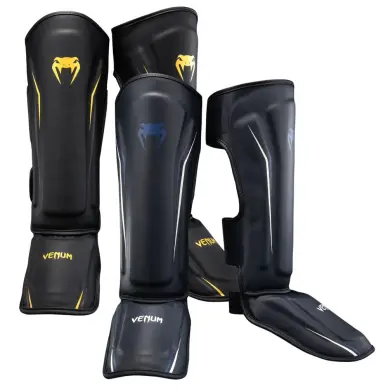
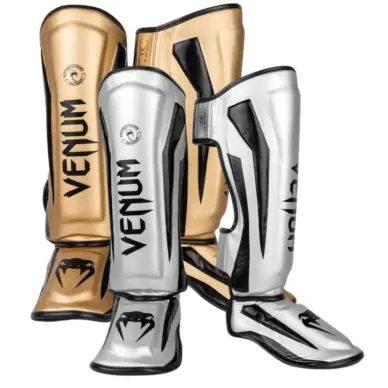
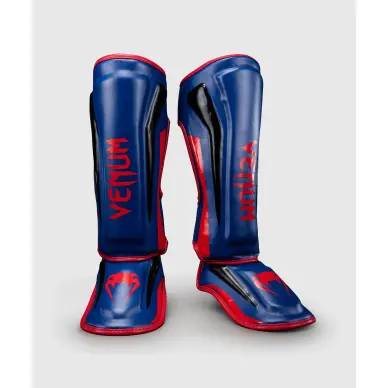
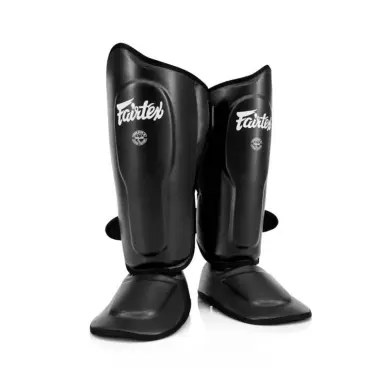
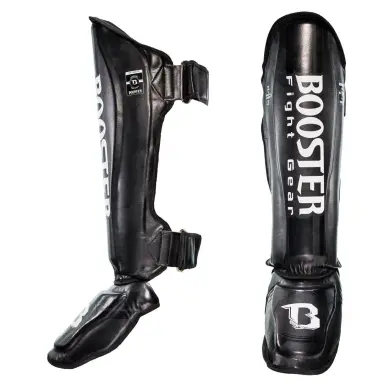
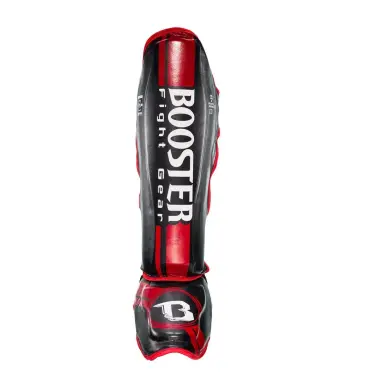
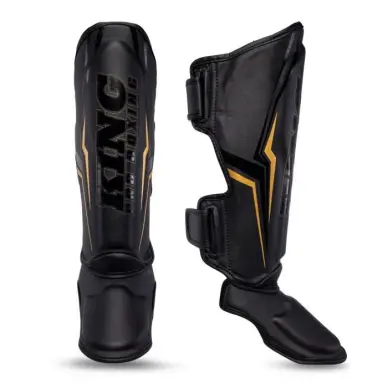
A full model usually combines shin protection with a section for the top of the foot.
Some gear also covers part of the sides of the leg or the ankle.
Training Kicks and Blocks
In Muay Thai and kickboxing, practitioners regularly repeat leg techniques.
Proper protection can improve comfort during certain contact drills.
The quality of the padding, the coverage area, and stability during movement are all important factors.
Maintaining Good Freedom of Movement
Protection should move with you and allow kicks without excessively restricting your joints.
Very bulky or poorly fitted gear can become uncomfortable.
The right choice is a balance between coverage, padding, weight, and support.
What Are the Different Types of Leg and Foot Protection?
The Budo-Fight category includes several types of gear.
Not all are designed for the same level of impact or for use in the same disciplines.
Comparison Table of Protection Gear
Equipment | Area Covered | Main Use |
|---|---|---|
Flexible shin guards | Shins | Technical drills and limited contact depending on the model |
Flexible shin and foot guards | Shins and top of the feet | Beginner training and some striking sessions |
Semi-rigid shin guards | Shins, sometimes feet depending on the model | Drills requiring different padding and structure |
Reinforced shin and foot guards | Shins and instep | Sparring and regular training depending on the model |
Separate foot guards | Top of the feet | Full Contact and specific practices |
Ankle supports | Ankles | Comfort and support, depending on the design |
Thigh guards | Wearer's thighs | Partner kicking drills |
These pieces of equipment can complement each other, but they are not interchangeable.
To choose, first identify the techniques you practice and the level of contact expected during your sessions.
Shin Guards Only or Shin and Foot Guards: What’s the Difference?
The choice mainly depends on the areas you want to cover.
Shin Guards Only
A basic shin guard is designed to cover part of the lower leg, mainly the front.
It can be used for certain striking or blocking drills, depending on the model.
This setup does not necessarily cover the top of the foot.
It can be suitable when the discipline uses separate foot guards or when the exercises do not require additional coverage for this area.
Integrated Shin and Foot Guards
Integrated shin and foot guards combine two protection zones in a single piece of equipment.
They generally cover:
A part of the front of the shin.
The top of the foot.
Sometimes certain lateral areas, depending on the design.
The part designed for the foot may be connected to the shin guard in a flexible or articulated way.
This configuration is especially common in Muay Thai and kickboxing training.
Which Protection to Choose for Sparring?
For sessions that include repeated kicks with a partner, a wraparound protection for the shin and instep can be a good choice.
The model, however, must be designed for this type of use.
A rigid or heavily padded shin guard is not automatically suitable for all training: check the manufacturer's recommendations and your club's guidelines.
Soft, Semi-Rigid, or Reinforced Shin Guards: Which to Choose?
The structure of the shin guard affects its weight, flexibility, support, and how it absorbs impacts.
Soft models and reinforced protections meet different needs.
Soft Shin Guards: For Technical Drills
Soft shin guards are usually made of stretch fabric combined with a padded area.
They are easy to slip on and allow for good mobility.
At Budo-Fight, our range includes in particular:
BudoFight Soft Shin Guards.
BudoFight Soft Shin and Foot Guards, available in several colors.
These pieces of equipment can be suitable for certain technical drills and training with limited contact.
They are especially appealing to practitioners who value lightness and ease of use.
Note: a soft textile shin guard is not necessarily designed to withstand powerful kicks during intensive sparring.
Semi-Rigid Shin Guards: Another Compromise
Semi-rigid shin guards use a different construction than very flexible textile protections.
They may combine more structured padding with an outer layer that still allows for some mobility.
Budo-Fight offers semi-rigid models, as well as versions that combine shin and foot protection.
Their use depends on the shape, padding, and specific indications of each reference.
A semi-rigid model should not automatically be considered equivalent to a reinforced shin guard designed for sparring.
Rigid and Reinforced Shin Guards: For Regular Training
More structured models generally feature thick padding and an adjustable support system.
They can be a good choice for regular training in striking disciplines.
At Budo-Fight, several references allow you to compare different designs:
BudoFight Rigid Shin Guards.
BudoFight Pro Shin and Foot Guards, also known as Rock.
BudoFight Blade Shin and Foot Guards.
BudoFight Pro Thai Boxing Shin and Foot Guards.
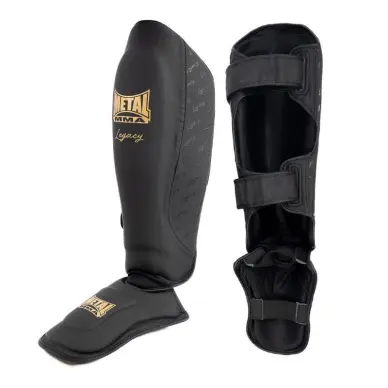
Metal Boxe Blade Shin and Foot Guards.
These models stand out in particular for their materials, padding layout, closure system, and available sizes.
The BudoFight Blade model, for example, features EVA foam padding and support with velcro straps and an elastic band under the foot.
Your choice should always match the intensity of your training and your comfort needs.
Is a Reinforced Shin Guard Always Better?
No.
For some technical drills, a soft protection can offer interesting mobility.
For exchanges with heavier contact, a wraparound model designed for this use may be more suitable.
The level of protection cannot be determined solely by the visible thickness of the padding.
Build quality, coverage zones, and support are also important.
Full Contact Foot Guards: Separate Protection
In some disciplines, practitioners use foot guards that are independent from shin guards.
This setup is especially found in Full Contact and certain specific martial arts practices.
BudoFight Full Contact Foot Guards
Budo-Fight offers a Full Contact foot guard designed with injected foam structure and a polyurethane coating.
Its closure system uses velcro straps.
It comes in different sizes, including formats suitable for younger practitioners.
The available colors vary depending on the references in stock.
Why Choose a Separate Foot Guard?
An independent foot guard allows you to select the protection for the top of the foot and the shin separately.
This setup is ideal when the rules of the discipline or specific drills require separate equipment.
However, it is not always the best solution for Muay Thai training involving repeated impacts to the shins.
Foot Guards for Karate
Karate requirements depend on the style practiced and any federation guidelines.
Some competitions require protective gear of a specific shape or color.
Equipment designed for Full Contact is therefore not automatically interchangeable with gear intended for karate competitions.
To compare equipment for this discipline, check out our selection of karate gear.
Which Shin Guards to Choose for Muay Thai?
Muay Thai, or Thai boxing, uses punches, kicks, knees, and elbows.
Kicks and blocks put special strain on the legs.
Shin and foot guards are therefore commonly used during technical partner drills.
For Low Kicks and Middle Kicks
Low kicks and middle kicks are frequent techniques in Thai boxing.
When performed with a partner, protection must match the intensity of the contact.
For sparring sessions, practitioners generally look for:
Proper shin coverage.
Foot protection when needed.
Padded support suitable for the expected impacts.
Straps that ensure a stable fit.
Sufficient freedom of movement.
Secure Fit for Movement
The practitioner must be able to pivot, move, and lift the leg without the guard shifting excessively.
Underfoot and heel straps can help with support, depending on the model.
A guard that twists or slips frequently should be adjusted or replaced with a better-fitting size.
Which Models to Compare?
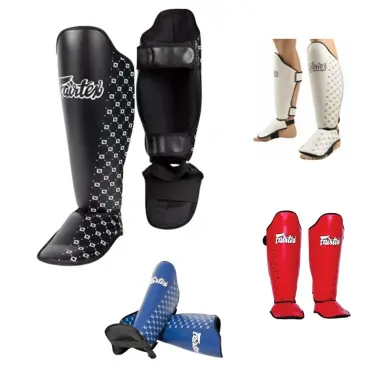
For Thai boxing, Budo-Fight offers models from BudoFight, Fairtex, and Twins Special, subject to availability.
These manufacturers offer different shin guard designs, with variations in padding, weight, and closure systems.
The BudoFight Boxe Thaï Pro model is also a benchmark to compare for kickboxing training.
Before purchasing, check the dimensions and recommended uses.
Shin Guards for Kickboxing and K-1
In kickboxing and K-1, practitioners combine various punching and kicking techniques.
The nature of the drills influences the type of protection needed.
For Beginners’ Training
Beginners may start with controlled technical drills.
Depending on club guidelines, a flexible or semi-rigid model may be suitable for certain sessions.
The priority should remain on movement precision and strike control.
For Sparring
For training involving repeated contact, a shin guard with extensive coverage and suitable padding can be beneficial.
Adjustable closure models are often appreciated for their stability.
It’s important to compare the fit around the calf, heel, and foot.
For Competition
Approved protection varies by federation, category, and applicable rules.
A model suitable for sparring is not automatically allowed in competition.
Before purchasing, check in particular:
The type of shin guard required.
Whether foot protection is needed.
The permitted color.
Any required certifications.
The approved shape and materials.
A commercial “competition” label does not guarantee approval for all events.
Shin Guards for MMA, Krav Maga, and Other Combat Sports
Requirements vary depending on the discipline and techniques practiced.
Shin Guards for MMA
MMA combines stand-up striking, grappling, and groundwork.
During striking sessions, shin and foot guards may be used for certain partner drills.
However, a bulky or rigid model can hinder movement during grappling.
The choice should therefore match the type of session.
To complete your gear, explore our selection of MMA equipment.
Shin Guards for Krav Maga
Krav Maga includes striking and self-defense drills.
Flexible or reinforced shin guards may be used depending on the techniques and level of contact.
Certain BudoFight models are also designed for this discipline.
To complete your training, check out our range of Krav Maga equipment.
Shin Guards for Savate
In savate boxe française, kicking techniques are codified and the gear used depends on the type of practice.
The choice of shin guards should be suited to the drills and club recommendations.
Any protection required in competition is subject to the relevant regulations.
Boxing Ankle Supports: Stability and Comfort for Striking Martial Arts
This category also includes several models of ankle supports.
They are especially popular in Muay Thai, kickboxing, and other combat sports training.
Their function depends on their design.
Flexible Ankle Supports for Muay Thai
Textile ankle supports are generally lightweight and easy to slip on.
They can provide a sense of support and enhance comfort during movement.
At Budo-Fight, you’ll find in particular:
BudoFight Fluo Ankle Supports.
Venum Kontact Ankle Supports.
Booster AG and AG Pro Ankle Supports.
The Venum Kontact models, for example, use a construction combining cotton and neoprene.
They are available in various sizes and colors.
These ankle supports are not a substitute for shin guards designed to absorb kicks.
Ankle Supports with Gel
Some ankle supports feature gel inserts.
This is the case with the BudoFight Gel Protection Ankle Supports.
The presence of gel can enhance the comfort or protective features of the model.
The level of coverage and the exact function should be checked on the product page.
Compression and Support Ankle Supports
Budo-Fight also offers Shock Doctor accessories, including compression ankle supports and some models with reinforced closures.
They are mainly designed for specific support needs, depending on their construction.
It’s important to distinguish support ankle supports from padded guards intended for impact protection.
If you experience pain, injury, or joint issues, consult a healthcare professional. A compression accessory does not replace a medical diagnosis or treatment.
Ankle Supports or Knee Pads: What’s the Difference?
Ankle supports mainly cover the ankle area.
Knee pads are designed for a different joint and may be used for certain ground exercises.
These products do not serve the same purpose.
For training sessions requiring specific knee protection, check out our knee pads for combat sports category.
Thigh Guards: Equipment for Partner Drills
The Budo-Fight catalog also includes thigh guards designed for certain striking drills.
These items should not be confused with shin guards worn by the striker.
Metal Boxe Vulcan Thigh Guards
Metal Boxe Vulcan Thigh Guards are designed for drills involving kicks to a target worn on the thighs.
They feature:
Padded with EVA foam and latex.
Outer polyurethane covering.
Elastic support straps with velcro closure.
They can be used in certain Muay Thai and kickboxing partner training sessions.
What Drills Are They For?
Thigh guards allow you to present a target on the wearer’s legs.
They are ideal for precision drills and controlled low-kick repetitions.
The person receiving the strikes must adopt the proper stance.
Even with padded protection, impacts should always be suited to both partners’ technical level.
These items are not a substitute for shin guards worn by the striker.
Which Size of Shin and Foot Guards Should You Choose?
The size affects stability, comfort, and coverage of the protected areas.
Improperly fitted gear may slip during training or restrict movement.
Measuring Shin Length
To choose a shin guard, it’s important to check the length of the area to be covered.
The guard should be positioned correctly on the leg, without excessively restricting the knee or ankle.
Sizing guidelines vary by manufacturer.
Check Calf Circumference
Calf circumference can affect comfort and the fit of the guards.
This is especially important for models with velcro closures.
Guards that are too loose may shift during movement.
Models that are too tight may cause discomfort.
Consider Shoe Size
Some brands use shoe size as a guide for selecting the right size.
Others offer a guide based on shin length, weight, user height, or other measurements.
Sizing is not universal.
For example, some BudoFight models use sizes XS to XL, while Pro or Blade models come in S/M and L/XL.
These guidelines should not be applied to all products.
Check Foot Protection
For full-length models, the instep guard should be positioned correctly.
It should not excessively restrict foot flexion.
Also check that elastic bands or straps remain comfortable during movement.
How to Choose Between Two Sizes?
If your measurements fall between two sizes, check the manufacturer's recommendations.
Calf width, leg shape, and padding design can affect the fit.
The best choice is not necessarily the larger size.
Straps, Velcro, and Support: Key Features to Check
Padding is not the only important factor.
Shin guards must also stay securely in place during training.
Velcro Closures
Many reinforced models use one or more Velcro straps around the calf.
This system allows you to adjust the tightness to your leg shape.
Make sure the closures stay in place without excessively compressing your leg.
Elastic Bands Under the Foot
Some shin and foot guards feature elastic bands that go under the foot.
These help position the part designed for the instep.
The quality of the elastic and its compatibility with your shoe size are important.
Heel Straps
A strap behind the heel can also help with support.
Its placement affects comfort when pivoting or moving.
Slip-On Guards
Softer models often use a textile construction that slips on directly.
They eliminate some adjustments, but their stability depends on elasticity and size.
With wear, a stretched fabric may not hold the guard as securely.
Cotton, Synthetic Leather, and Foam: Which Materials to Choose?
Materials affect comfort, finish, and certain durability features.
However, the level of protection also depends on the overall product design.
Cotton and Stretch Fabric
Softer models typically use textile materials combined with padded zones.
They can be a good option for those looking for lightweight, easy-to-wear protection.
Care instructions will depend on the exact composition.
Polyurethane and Synthetic Leather
Polyurethane (PU) is used in many reinforced shin guards.
It allows for different finishes and designs.
BudoFight Rock and Blade models, for example, use synthetic coverings.
Durability also depends on the quality of stitching and closure systems.
Genuine Leather
Some specialized manufacturers also offer shin guards with natural leather coverings.
Leather has unique feel and care characteristics.
However, it is not automatically more protective than synthetic models.
Injected Foam and EVA Foam
Several shin guards use injected foam or EVA foam.
These materials can help absorb some of the impact.
The thickness, density, and distribution of the padding affect how the guard performs.
A model with thick foam is not automatically suitable for every type of training.
How to Compare Two Guards?
When choosing, consider in particular:
The quality of the padding.
The areas actually covered.
The durability of the stitching.
The weight of the gear.
The closure system.
Freedom of movement.
The manufacturer's usage recommendations.
Price or brand reputation alone are not enough to determine the best choice.
Which Guards to Choose for Starting Combat Sports?
For your first sessions, it's best to ask your club which gear is required.
Needs vary between boxing, kickboxing, Muay Thai, savate, or MMA.
For Initial Technical Drills
A soft model may be suitable if your training involves limited contact.
BudoFight soft shin and foot guards are a good option to consider for beginners.
Their easy slip-on design and light weight can be appealing.
For Starting Sparring
For your first partner drills, your protection should match the expected intensity.
A model with sufficient padding and a good fit may be necessary.
Always follow your coach's recommendations.
For Kids and Teens
Younger athletes should use guards adapted to their body type.
Some models are available in sizes for smaller feet.
However, size should not be chosen based solely on age.
Shin guards that are too bulky can restrict a child's movement.
To prepare for your first sessions, check out our essential gear guide for starting boxing.
Boxing Sets for Beginners
Some prefer to buy several accessories as a set.
Boxing sets for kids and adults let you compare different combinations for each discipline.
Before placing your order, check if shin and foot guards are included and which sizes are available.
Shin Guards for Sparring and Competition
The guards you use in training are not always the same as those allowed in competition.
For Sparring Sessions
Sparring involves technical exchanges with a partner.
Shin guards should match the intensity of strikes and the coach’s instructions.
Good coverage of the shin and foot can be important in striking disciplines.
However, no equipment can eliminate all risks related to impacts.
For Official Competition
The rules depend in particular on:
The discipline.
The federation.
The age category.
The competition level.
The type of bout.
Any required certifications.
Some events require specific shin guards, while others do not allow the same equipment as used during sparring.
Always check the official regulations before purchasing.
Is CE marking enough?
No.
CE marking, when applicable, does not automatically mean sports certification for all competitions.
Organizers may require specific features.
Shin and Foot Guard Brands at Budo-Fight
Our selection brings together several brands specialized in martial arts and combat sports.
BudoFight: Protection for All Levels
Our brand offers in particular:
Flexible shin guards.
Flexible shin and foot guards in various colors.
Semi-rigid protection.
Reinforced models Rock and Blade.
Boxe Thaï Pro shin and foot guards.
Full Contact foot guards.
Ankle supports and complementary protection.
These references allow you to compare different materials, sizes, and fastening systems.
Metal Boxe: Equipment for Striking Sports
Metal Boxe offers various striking and protective equipment.
The selection includes Blade shin and foot guards as well as Vulcan thigh guards for certain partner drills.
These products do not all meet the same needs.
Fairtex and Twins Special: The Muay Thai World
Fairtex and Twins Special are particularly well-known brands in the world of Thai boxing.
They offer a range of protection for striking training.
To compare their models, look at the dimensions, foot coverage, padding, and closure system.
Venum, Booster, and Shock Doctor: Ankle Supports and Accessories
Venum and Booster offer various ankle supports designed for combat sports.
Shock Doctor specializes in support and stabilization accessories.
Their function is different from padded shin guards designed for striking.
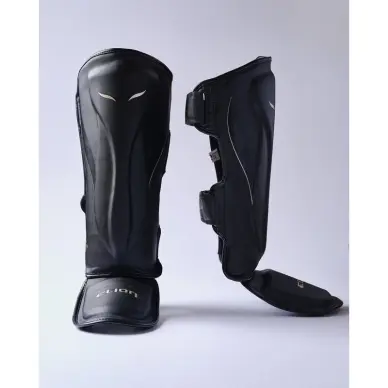
Leone, Montana, Elion and Other Brands
Leone, Montana, and Elion complete the selection with different models of shin guards and striking protection.
Features vary by reference: material, padding, shape, weight, and fastening.
When choosing, focus on the technical features of the model and its suitability for your training.
What Other Equipment Should You Use With Shin Guards?
Leg protection is part of the gear used in several striking disciplines.
Depending on the drills, they should be paired with other suitable protective gear.
Boxing Gloves
For partner training, choose boxing gloves suited to your discipline.
Weight, padding, and wrist support depend on the exercises.
Hand Wraps
Hand wraps can provide extra support for hands and wrists.
They must be properly adjusted.
Mouthguard
The mouthguard helps reduce the risk of certain dental injuries during contact training.
It should fit the user’s teeth properly.
Boxing Headgear
Depending on club guidelines, boxing headgear can be used during some sparring sessions.
It does not guarantee prevention of concussions.
Groin Guard
A groin guard may also be necessary depending on the discipline and level of contact.
The model should be suited to the user’s body type and practice requirements.
For more on sparring gear, also check our guide to choosing sparring gloves.
Shin and Foot Guards for Clubs and Coaches
In a club, protection is used by practitioners with different body types and skill levels.
It can therefore be useful to have several sizes and types of products available.
Choose Models Suited to the Drills
Flexible models can be used for certain technical drills.
More enveloping protection can meet other needs, especially during sparring sessions.
The choice depends on the disciplines taught and the contact conditions.
Check the Quantities Sold
Many shin guards and foot guards are sold in pairs.
However, some accessories, such as ankle supports, may have different packaging.
Always check if the product is sold individually or as a pair before placing your order.
Inspecting Shared Equipment
Protective gear should be inspected regularly.
Pay special attention to seams, straps, velcro fastenings, and padded areas.
For shared equipment, make sure to establish proper hygiene guidelines.
How to Care for Your Shin Guards, Foot Guards, and Ankle Supports?
Regular maintenance helps preserve the comfort and condition of your gear.
After Each Training Session
Take your protective gear out of your sports bag.
Let them dry in a well-ventilated area.
Avoid leaving them damp in a closed bag for extended periods.
Cleaning Synthetic Gear
For polyurethane coverings, use a cleaning method compatible with the material and the manufacturer's recommendations.
Avoid harsh products that could damage the surface.
Do not expose your gear to excessive heat.
Caring for Textile Models
Soft shin guards and some ankle supports may require regular washing.
Follow the temperature and care instructions on the product label.
Do not assume all models are machine washable.
Check Velcro and Elastic Bands
Fastening systems are subject to repeated stress.
Regularly check velcro straps, seams, and elastic components.
Damaged closures can make the protection unstable.
Monitor the Padding
Over time, impacts can cause the foam to deform or wear out.
If the padding becomes heavily damaged or develops unusually hard spots, check the condition of the gear before using it again.
When Should You Replace Your Protective Gear?
There is no universal lifespan.
Replacement depends on training frequency, contact intensity, and maintenance.
Any protection that becomes unstable, heavily deformed, or damaged should be inspected and replaced if necessary.
Frequently Asked Questions About Shin and Foot Guards
Which Shin Guards Should Beginners Choose for Kickboxing?
A soft model may be suitable for certain technical drills with limited contact. For sparring, choose protection that matches the intensity of your sessions and your coach's recommendations.
What’s the Difference Between Soft and Rigid Shin Guards?
Soft models usually feature stretch fabric and light padding. Reinforced models often have a more enveloping structure and thicker foam. The choice depends on your training needs.
Should You Protect Your Feet in Muay Thai?
During some sparring sessions, models combining shin and instep protection are commonly used. The choice depends on the intensity and your gym’s guidelines.
Can You Use Shin Guards Without Foot Guards?
Yes, when the drills and discipline allow it. However, a shin guard alone does not necessarily cover the top of the foot.
Are Full Contact Foot Guards Suitable for Karate?
Not automatically. Karate competitions may require specific shapes, colors, or approved equipment.
What Size Shin Guards Should You Choose?
Refer to the manufacturer's size guide. Pay attention to shin length, calf circumference, and for full models, the position of the foot guard.
Can You Choose Your Size Based Only on Shoe Size?
Some models use shoe size as a reference, but this is not universal. Leg shape and fastening system are also important.
Which Shin Guards Should You Use for Sparring?
A well-fitted, enveloping model designed for contact drills is a good choice. Check the padding and coverage areas.
Do Rigid Shin Guards Prevent Injuries?
No. They can absorb some impacts depending on their design, but no protection eliminates all injury risks.
Can You Use Kickboxing Shin Guards for MMA?
Some models are suitable for striking in MMA. However, they may be less effective for grappling or wrestling phases.
What Are Muay Thai Ankle Supports For?
Depending on their design, they can provide comfort or a sense of support around the ankle. They do not replace shin guards for drills involving leg impacts.
What’s the Difference Between a Soft Ankle Support and a Compression Ankle Support?
A soft ankle support can be used for comfort during movement. A compression ankle support is designed more for support, depending on its construction. The exact functions vary by model.
Can You Wear Ankle Supports with Shin Guards?
This may be possible when the gear is compatible. Make sure their combination does not interfere with fit or foot mobility.
What Are Thigh Guards Used For?
Thigh guards can be worn by a partner or coach to absorb certain kicks during technical drills. They are different from shin guards, which are worn by the fighter delivering the strikes.
Are shin guards sold in pairs?
Many models are, but packaging varies depending on the reference. Always check the included quantity on the product page.
Can shin guards be used in competition?
This depends on the discipline, federation, and applicable rules. A model suitable for training is not automatically approved for competition.
How do you clean your shin guards?
Follow the manufacturer's instructions. Textile models and structured synthetic guards may require different care methods.
When should you replace your shin guards?
Regularly inspect the padding, stitching, straps, and fasteners. Equipment that is heavily deformed, unstable, or damaged may need to be replaced.
Why buy your shin and foot guards from Budo-Fight?
Since 1963, Budo-Fight has supported martial arts and combat sports practitioners in selecting their equipment.
Our selection includes soft, semi-rigid, and reinforced shin guards, full shin and foot guards, Full Contact foot guards, ankle supports, and thigh guards.
Whether you practice Muay Thai, kickboxing, K-1, savate, karate, MMA, or Krav Maga, compare models based on size, materials, padding, and usage conditions.
From your first technical sessions to regular partner training, discover a range of brands and product lines to suit your needs.
Explore our shin and foot guards at Budo-Fight and choose protection tailored to your discipline, body type, and training requirements.