




Strike Shields: How to Choose the Right Shields, Pads, and Coach Protection
Looking for a strike shield for boxing, Muay Thai, kickboxing, or Krav Maga? At Budo-Fight, discover a selection of equipment to train controlled power, precision, and combinations with a coach or training partner.
Flat or curved strike shields, kicking pads, low-kick shields, belly pads, chest guards, and thigh protectors: each piece of equipment is designed with features tailored to specific drills.
Your choice depends on your discipline, the techniques you practice, the target size, and the comfort of the person holding the shield.
Budo-Fight offers equipment from various brands, including BudoFight, Metal Boxe, Fairtex, Elion, Venum, Twins Special, and King Pro Boxing, depending on availability.
To explore other targets used in training, check out our selection of striking equipment for combat sports.
Why Use a Strike Shield in Training?
A strike shield is a padded target designed to absorb punches, kicks, or other striking techniques, depending on the model.
It is usually held by a coach or partner, who presents the striking surface at the right height and angle for the drill.
Unlike many smaller targets designed mainly for precision, strike shields often provide a larger surface area.
The Benefits of Training with Strike Shields
Strike shield drills help you work on:
Precision: aiming for a defined striking zone.
Technique: repeating movements with proper form.
Controlled power: learning to manage the intensity of your strikes.
Coordination: combining strikes, footwork, and movement.
Combinations: chaining multiple techniques in a single sequence.
Endurance: maintaining quality technique during repeated drills.
The holder can adjust the target position to create different technical scenarios.
Strike shields complement training with other equipment, but do not fully replicate an opponent’s reactions.
A Target Suited to the Technique
Not all strike shields are suitable for every type of strike.
A compact model may be ideal for punching drills, while a larger shield or specialized pad may be better for certain kicks.
Your choice should also consider the usage limits specified by the manufacturer.
Thick padding helps absorb some of the impact, but never guarantees complete protection from injury.
What Are the Different Types of Strike Shields?
The Budo-Fight category brings together several types of protection and striking targets.
Some are handheld, while others are worn directly on the coach’s body.
Comparison Table of Striking Equipment
Equipment | Main Use | Feature |
|---|---|---|
Flat strike shield | Straight punches, some kicks | Relatively flat surface |
Curved strike shield | Strikes from various angles, knees, some kicks | Curved surface |
Low-kick shield | Low kick repetition | Shape adapted to the techniques |
Kicking pad | Kicks and striking drills depending on the model | Large target held by handles |
Belly pad | Strikes to the abdomen and sides | Protection worn around the waist |
Chest guard or striking vest | Combinations to the torso | Protection worn by the coach |
Thigh guards | Drills targeting the thighs | Protection strapped to the holder’s legs |
These pieces of equipment can complement each other.
To compare the different options, start by identifying the techniques you want to train and how the coach will present the target.
Flat or Curved Strike Shields: What’s the Difference?
The shape of the strike shield influences how strikes are absorbed.
Straight and curved models can be suitable for multiple disciplines. There is no universally superior shape.
Straight Strike Shields: Versatile Targets
Straight shields feature a relatively flat striking surface.
They are ideal for practicing forward-directed strikes and various percussion drills.
Depending on their size and design, they can be used for:
Straight punches and punch combinations.
Certain front kicks.
Precision drills.
Punch-kick combinations.
Controlled power training.
At Budo-Fight, our brand’s straight shields are available in several sizes.
A compact format may suit certain technical drills, while a larger version offers a bigger striking surface.
Your choice should also consider the shield’s weight and the holder’s comfort.
Curved Shields: Vary Your Strike Trajectories
Curved shields have a curved surface that affects target presentation.
This shape can facilitate certain drills performed with upward, circular, or angled trajectories.
Depending on the model, they can be used for:
Some uppercuts.
Knee strikes.
Circular kicks.
Certain elbow techniques.
Striking combinations from different angles.
Curved shields are therefore not just for uppercuts.
The holder’s position remains crucial to properly present the striking surface.
Brands like BudoFight, Elion, and Venum offer curved shields with different features.
Should You Choose a Straight or Curved Shield?
For versatile use, a straight shield can be a great first choice.
A curved model may be ideal if your drills regularly include knee strikes or strikes from various angles.
Before purchasing, compare the length, width, thickness, weight, and handle placement.
What’s the Difference Between a Strike Shield, Thai Pads, and Focus Mitts?
These accessories can be used for the same disciplines, but their use differs.
Strike Shield or Focus Mitts?
Focus mitts are generally more compact.
They are especially suited for precision drills, punch combinations, and rapid target repositioning.
The shield usually offers a larger surface to absorb different types of strikes.
To complement your punch technique training, check out our selection of boxing focus mitts.
Strike Shield or Thai Pads?
Thai pads are especially popular in kickboxing and Muay Thai.
They are typically held on the forearms with a handle and straps.
They allow the holder to present two targets and quickly vary combinations.
Shields can be useful when a larger striking surface is needed.
Discover our range of boxing Thai pads for Muay Thai and kickboxing.
Shield or Punching Bag?
The punching bag lets you train without a partner holding the target.
It’s a great addition for repeating combinations, working on rhythm, and developing overall fitness.
The shield usually requires a holder but allows you to vary target presentation based on the drill.
For solo training, also compare our punching bags for boxing and combat sports.
Shields and Low-Kick Pads: Training Low Kicks
Low kicks are widely used in many kickboxing disciplines, especially Muay Thai and kickboxing.
To practice these techniques with a partner, it’s important to choose a target suited to the height and trajectory of the strikes.
Specialized Shields for Low Kicks
Some shields are specifically shaped to absorb low kicks.
The Metal Boxe Curved Low Kick Strike Shield is a great example of a model designed for this purpose.
Its shape allows the holder to present the target in a position adapted to the intended drills.
Before choosing, check the size, padding, and handle placement.
Low-Kick Pads
Low-kick pads generally offer a large striking surface and handles for various holding positions.
They can be used for certain kicking, precision, and controlled power drills.
However, not all pads are specifically designed for low kicks.
At Budo-Fight, several brands offer low-kick pads, including Metal Boxe, Fairtex, and Venum.
Their shape and recommended use vary by model.
The Importance of Target Placement
For low-kick drills, the height and angle of the target should match the technique being practiced.
The holder must maintain a stable posture and avoid presenting the strike shield in a position that puts excessive strain on their joints.
Power should be gradually adjusted to the level of both partners.
Strike Belts: Train Body Shots
Strike belts are worn around the coach’s waist.
They feature a padded area designed for specific striking drills to the abdomen and sides of the body, depending on the model.
Unlike handheld strike shields, they leave the holder’s arms free for other exercises.
What training are they for?
A strike belt can be used for:
Body punches.
Head-body combinations with additional targets.
Certain knee strikes.
Precision drills targeting the abdominal area.
Sequences combining movement and striking.
Always check which techniques are approved by the manufacturer.
How to choose a strike belt?
The choice mainly depends on:
The protection surface.
The thickness of the padding.
The weight of the equipment.
The closure system.
Comfort around the waist and hips.
The intended drills.
The belt should stay securely in place during strikes, without excessively compressing the wearer.
This category includes models from BudoFight, Metal Boxe, Fairtex, Twins Special, King Pro Boxing, and Leone, depending on availability.
Chest Guards and Body Vests: Protect the Holder’s Torso
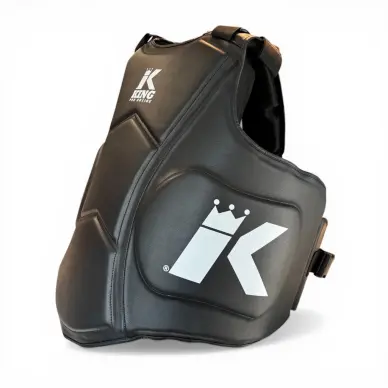
Chest guards and some protective vests are designed to absorb impacts to parts of the torso.
They allow the coach to work on combinations with the athlete without always holding a target in front.
The coverage level depends on the model.
Chest Guards for Boxing and Muay Thai
Chest guards can be used for certain punching or body striking drills.
Some models, like the BudoFight Thai Boxing Chest Guard, are available in Junior and Senior sizes.
Other models feature a reversible design or different adjustment systems.
Before buying, check the size, coverage areas, and the techniques the chest guard is designed for.
Coach’s Protective Vests
Some body vests cover a larger area of the torso.
They can be useful for specific striking drills, especially in intensive, supervised training sessions.
At Budo-Fight, models from Montana and Fairtex are among the equipment offered in this category.
A protective vest does not allow all forms of contact: always follow the manufacturer’s usage guidelines.
Thigh Guards for Kickboxing Training
Thigh guards are designed to cover certain areas of the holder’s legs.
They are especially useful for specific kicking drills, particularly in kickboxing disciplines.
The Budo-Fight range includes models such as Elion Pro.
When choosing, check the coverage areas, attachment system, material, and freedom of movement.
These are different from the shin guards worn by the athlete.
What Size Strike Shield Should You Choose?
Strike shields come in various sizes.
Their length, width, and thickness affect the striking surface, weight, and maneuverability.
Small Strike Shield: Maneuverability and Precision
Compact models can be easier to move during certain drills.
They are ideal when you want a relatively mobile target for controlled strikes.
However, their smaller surface requires greater precision.
Medium Strike Shield: Versatility
An intermediate size can offer a balance between striking surface and holder comfort.
It is suitable for different drills depending on the type of padding and model design.
For example, some BudoFight shields come in a size close to 60 × 30 × 15 cm.
It’s important to check the exact dimensions of each model.
Large Strike Shield: Greater Striking Surface
Larger models can be useful for kicks and drills that require a wider target.
Some BudoFight shields feature dimensions close to 80 × 40 × 20 cm.
On the other hand, their weight and bulk may require more effort from the holder.
A large shield is not automatically the best choice for every situation.
Why Is Weight Important?
Weight affects how easily the target can be held or moved.
Heavy equipment can become tiring during long sessions.
For coaches who train for several hours, handling comfort is especially important.
However, weight alone does not determine shock absorption quality.
Padded Construction, Materials, and Handles: Key Selection Criteria
The quality of a strike shield depends on its overall design.
The outer material, foam, stitching, and holding system must be adapted to the demands of its intended use.
High-Density Foam
Many strike shields feature dense foam designed for repeated impacts.
This helps absorb some of the shock transferred to the holder.
However, especially firm foam is not always the best choice for every type of training.
The thickness, distribution, and construction of the padding are also important.
Multi-Layer Foam
Some equipment uses several layers of foam with different properties.
This design can combine various impact absorption behaviors.
The number of layers alone does not determine the overall quality of a strike shield.
Polyurethane, PVC, Skintex, and Leather
Strike shields and coach pads can be made from a variety of materials.
Polyurethane (PU) is commonly used on several BudoFight strike shields.
Other models feature PVC, Skintex, or genuine leather covers, depending on the reference.
Durability also depends on the quality of the stitching and holding areas.
Handles and Straps
The placement of the handles directly affects how the target is presented.
Some strike shields have a top handle and forearm straps.
Others use multiple handles for different holding positions.
Make sure the system matches your exercises and your body type.
A damaged handle or loose strap can compromise the stability of the shield.
Air Vent Grommets
Certain models feature grommets that allow air to escape upon impact.
Their presence can help the padding and cover perform optimally.
However, grommets alone are not a guarantee of durability or protection.
Which Strike Shield to Choose for Your Discipline?
Needs vary depending on the techniques practiced.
Choosing equipment should start with the type of exercise you plan to do.
Strike Shields for Boxing
Boxing uses only punches.
A straight, compact, or medium-sized shield can be suitable for certain direct punch drills and combinations.
A curved model can complement exercises performed at specific angles.
Strike shields are a complement to focus mitts, which are often better suited for rapid target changes.
Strike Shields for Muay Thai
Muay Thai combines punches, kicks, knees, and elbows.
A large strike shield, suitcase-style shield, or curved model may be useful depending on the techniques being trained.
Strike belts and thigh guards can also complement certain sessions.
The equipment design and coach’s instructions determine the possible drills.
Strike Shields for Kickboxing and K-1
These disciplines combine various punching and kicking techniques.
A versatile strike shield allows for training multiple strike trajectories, while a low-kick model can be used for more specific drills.
The choice should take into account the height of strikes and the technical level of practitioners.
Strike Shields for Krav Maga
In Krav Maga training, strike shields can be used to repeat certain striking techniques and supervised self-defense drills.
The BudoFight range includes a shield specifically designed for this discipline.
To complete your gear, check out our Krav Maga equipment category.
Choose a target suited to the techniques planned and your instructor’s guidelines.
Strike Shields for Karate
In karate, strike shields can be used for certain punching and kicking drills.
They are ideal for working on precision and technique placement on a partner-held target.
Their use should be adapted to the karate style practiced and the session’s objectives.
Also discover our selection of karate equipment.
Which Strike Shield to Choose for Beginners?
For initial training, choose a model that is easy to hold and has suitable padding.
The shield should match the techniques being practiced and the expected power level.
There’s no need to immediately choose the largest model.
For a Beginner Practitioner
Early sessions should focus on controlled movements.
A sufficiently large target can make certain precision drills easier.
The holder should also be comfortable with the shield’s weight and holding system.
For a Beginner Coach
The person holding the target needs to learn how to adopt a stable stance and position the shield correctly.
It’s best to start with simple drills before increasing power or speed.
A padded target does not replace learning proper receiving techniques.
For Young Practitioners
Certain strike shields can be used in sessions adapted for children and teens.
The choice should take into account their level, the technique being taught, and the manufacturer's recommendations.
Exercises must be supervised, with priority given to control rather than power.
To complete your boxing gear, check out our essential guide for starting boxing.
Strike Shields for Coaches and Clubs
In a club, several types of strike shields can be useful for organizing a variety of drills.
Frequency of use is an important factor, especially when equipment is shared between different groups.
Plan for Different Sizes
A small shield may be suitable for certain technical drills.
A larger model can offer extra surface area for receiving kicks.
Having multiple sizes allows you to tailor sessions to your athletes.
Check Sales Conditions
Shields are generally sold individually, but some models may also be available in sets.
At Budo-Fight, several shields from our brand offer both single and set options.
Before placing your order, always check the quantity included in the displayed price.
Choose Equipment Suitable for Regular Use
For coaches and club managers, it’s important to compare:
The quality of the padding.
The durability of the cover.
The strength of the stitching.
The comfort of handles and straps.
The weight of the equipment.
Maintenance requirements.
The availability of different sizes.
Equipment designed for regular training should also be inspected frequently.
Which Gloves Should You Use for Strike Shield Training?
The choice of gloves depends on the drills and techniques practiced.
For punch training, use boxing gloves suited for training and your coach’s instructions.
Discover our selection of boxing gloves for combat sports.
Should You Wear Hand Wraps?
Hand wraps can provide additional support for the hands and wrists.
They should be properly adjusted, without excessive compression.
See our range of hand wraps for training.
Protective gear does not compensate for poor striking technique or an unsuitable shield.
What Other Equipment to Vary Your Training?
The strike shield lets you work on different drills with a partner.
To develop other skills, speed balls and striking balls can help improve coordination and rhythm.
Punching balls and free-standing striking equipment also allow you to vary your solo training.
Each piece of equipment has its own features and should be used according to the manufacturer's recommendations.
Strike Shield Brands at Budo-Fight
Budo-Fight brings together several brands specialized in striking equipment.
BudoFight: Straight Shields, Curved Shields, and Coach Protection
Our brand offers straight and curved shields in various sizes, as well as a shield designed for Krav Maga drills.
The range also includes belts and chest guards.
Features vary by model: material, padding, weight, and holding system.
Metal Boxe: Shields, Cases, and Belts
Metal Boxe offers a variety of striking equipment, including specialized shields, cases, and belts for coaches.
Some models are designed for low-kick or opposition drills.
Before choosing, check the recommended uses on the product page.
Fairtex and Twins Special: The Muay Thai World
Fairtex and Twins Special are well-known brands in the world of Muay Thai.
They offer a range of protective gear and targets for kickboxing training.
Sizes, materials, and closure systems vary by model.
Elion, Venum, King Pro Boxing and Other Manufacturers
Elion, Venum, King Pro Boxing, Leone, and Montana complete the selection with various shield models and protection for the holder.
When comparing this equipment, focus on technical features, comfort, and intended use rather than just brand reputation.
How to Use a Strike Shield Safely?
Training with a shield requires coordination between the striker and the person holding the target.
The holder absorbs some of the force from impacts.
Proper receiving technique is therefore essential.
Maintain a Stable Stance
The holder should keep a solid base and hold the shield correctly.
The target must be presented at an angle that matches the technique being performed.
It’s important to avoid positions where the wrists, shoulders, or back are under excessive strain.
Adjust Power to the Drill
Beginners should gradually increase speed and power.
Even with thick equipment, repeated strikes can put significant strain on the holder.
It's important to consider your technical level and physical condition.
Check your equipment
Before training, inspect the handles, straps, stitching, and the condition of the padding.
Do not use a strike shield if the foam is badly damaged or if a handle is at risk of coming off.
How to care for your strike shields?
Regular maintenance helps preserve hygiene and extend the lifespan of your equipment.
Clean the surface
After training sessions, clean the surfaces using a method compatible with the outer material.
Avoid harsh products that could damage leather or synthetic coverings.
Let your equipment dry in a well-ventilated area.
Check handles and straps
Regularly inspect attachment points, stitching, and velcro fasteners.
A damaged component can make the target less secure to hold.
Monitor the padding
Over time, foam may change due to repeated impacts.
If a strike shield shows significant deformation or unusually hard areas, check its condition before using it again.
Store your gear properly
Store your strike shields in a dry place, away from excessive heat sources.
Avoid leaving them compressed under heavy objects for long periods.
Follow each manufacturer's specific care instructions.
Frequently asked questions about strike shields
What’s the difference between a straight and a curved strike shield?
The straight shield has a relatively flat surface. The curved model features a bend that can make it easier to present certain strikes from different angles. The choice depends on the techniques you want to train.
Which strike shield should I choose for Muay Thai?
A large shield, a curved model, or a suitable suitcase-style shield can be used for various kicking and knee drills. Check the padding and intended use.
Which strike shield is best for Krav Maga?
Choose a model compatible with your club’s striking drills and technical scenarios. Handle stability and cover durability are especially important.
What’s the difference between Thai pads and a strike shield?
Thai pads are usually strapped to the forearm and allow you to present different moving targets. Strike shields generally offer a larger surface, suitable for other striking exercises.
What is a strike suitcase used for?
The strike suitcase is a target usually equipped with handles. Depending on the model, it can be used for various kicks and striking drills.
What is a strike belt used for?
The strike belt is worn around the coach’s waist. It allows you to train body-targeted strikes while keeping your hands free for other drills.
Which strike shield is best for beginners?
Choose a model that’s easy to handle, with a suitable striking surface and appropriate padding. The holder should also be comfortable with its weight.
Does a larger strike shield offer better protection?
Not necessarily. A larger surface may make some drills easier, but padding quality, support, and the holder’s technique remain key factors.
Are strike shields sold individually?
This depends on the model and variant. Some shields are also available in sets. Always check the quantity listed on the product page.
Can strike shields be used with children?
Certain models may be suitable for sessions with young practitioners. Exercises should match their skill level and the manufacturer’s recommendations.
Which strike shields should a club choose?
It can be useful to have different formats: straight shields, curved models, and specialized targets. The choice depends on the number of practitioners, disciplines, and training frequency.
When should you replace a strike shield?
Check the stitching, padding, handles, and straps. Significant wear can make the equipment unsuitable for some drills.
Why buy your strike shields from Budo-Fight?
Budo-Fight supports martial arts and combat sports practitioners in choosing their training equipment.
Our selection includes straight and curved strike shields, strike suitcases, low-kick guards, belts, chest guards, and other gear for striking drills.
Whether you’re a beginner, coach, advanced practitioner, or club manager, compare models by size, padding, materials, and intended use.
Discover our Budo-Fight strike shields and choose the right gear for your boxing, Muay Thai, kickboxing, karate, or Krav Maga training.