




BJJ Gear and Equipment
Find everything you need for Brazilian Jiu-Jitsu at Budo Fight: BJJ gis, belts, rashguards, grappling shorts, spats, mouthguards, and training accessories.
Whether you practice Brazilian Jiu-Jitsu in Gi or No-Gi, choose gear that delivers comfort, durability, and freedom of movement. From your first sessions on the tatami to BJJ competitions, discover equipment suited to your level, fighting style, and goals.
Perfect your control, submission, and ground fighting techniques with our selection of Brazilian Jiu-Jitsu equipment for all levels.
A Wide Selection for Every Practitioner
Budo Fight offers a range of Brazilian Jiu-Jitsu (BJJ) equipment for beginners, advanced practitioners, and competitors.
Every practitioner can select their gear according to their body type, training frequency, and the demands of their discipline.
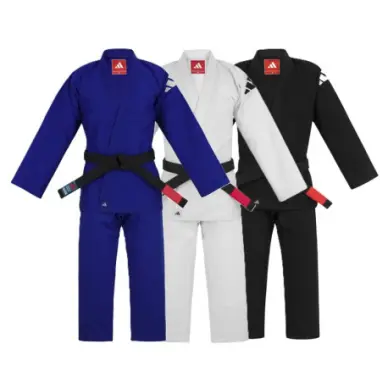
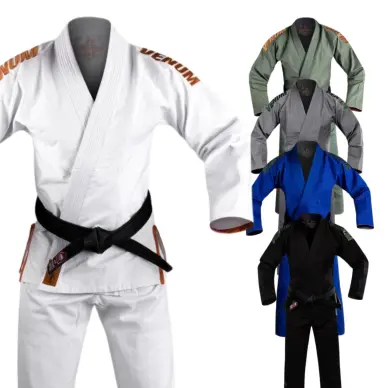
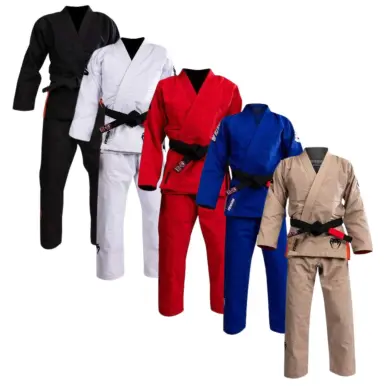
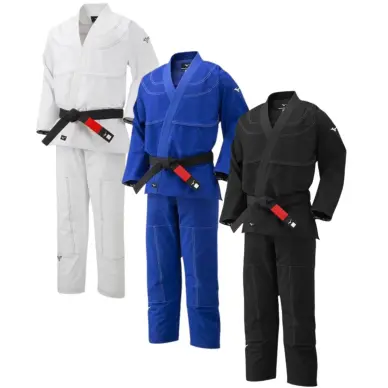
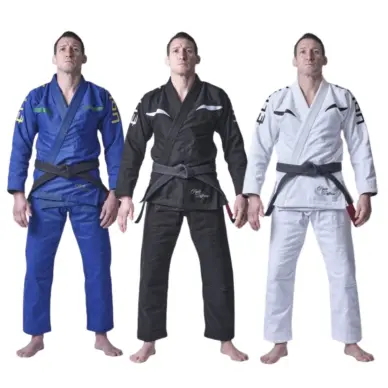
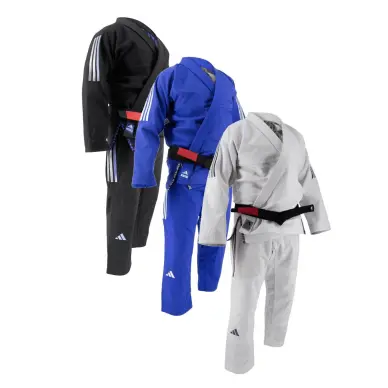
Quality BJJ Gis for All Levels
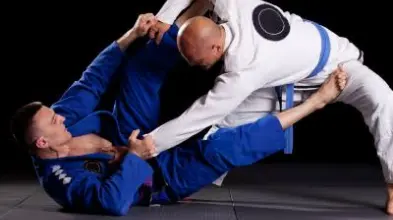
Gis designed for Brazilian Jiu-Jitsu must withstand gripping, pulling, and repeated friction during training.
Depending on the model, they may feature:
Durable cotton fabric, ideal for regular training.
Reinforced stitching in high-stress areas.
Various weights so you can choose between lightness and durability.
Comfortable pants, sometimes made from ripstop fabric.
Multiple sizes to fit every body type.
A well-fitted BJJ gi lets you train comfortably, whether you're starting Brazilian Jiu-Jitsu or preparing for a competition.
Essential Protection for Training
Mouthguards, knee pads, and ear guards can help reduce certain risks associated with contact and repeated movement on the tatami.
To complete your outfit, also check out protective gear designed for ground fighting.
Choose equipment that is properly fitted, comfortable, and suited to your training.
No protection can completely eliminate the risk of injury. Controlling your movements, respecting your partners, and following your coach’s instructions remain essential.
Specialized Equipment for Technical Training
For practitioners looking to enhance their training, certain accessories allow you to repeat movements and improve coordination.
Grappling dummies can be used to practice control positions, transitions, and specific technical sequences.
Depending on the model, they come in different sizes, shapes, and filling characteristics.
This equipment is a great complement to partner training, which is essential for developing adaptability and responsiveness.
What Is BJJ Equipment?
BJJ equipment should allow you to practice gripping, throwing, control, and submission techniques in optimal conditions.
There are two main training formats:
Gi: Training with a traditional gi, allowing for grips on the garment.
No-Gi: Training without a gi, usually with a rashguard and technical shorts, sometimes paired with compression leggings.
Equipment needs vary depending on the format, the athlete’s level, and their club’s recommendations.
Basic Components
To practice BJJ, several pieces of equipment may be required:
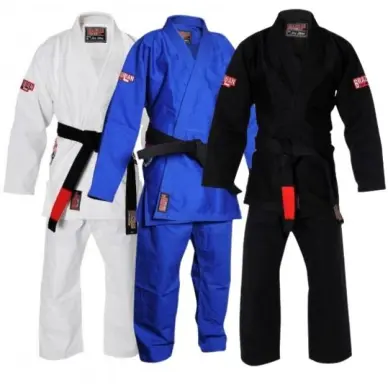
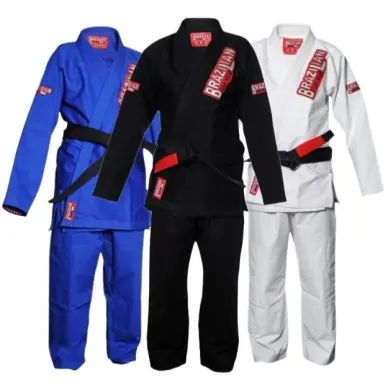
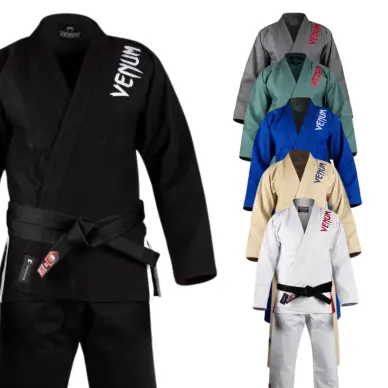
BJJ gi: Jacket and pants designed to withstand the demands of ground fighting.
BJJ belt: Holds the jacket closed and indicates the practitioner’s rank.
Rashguard: Fitted technical top, especially used in No-Gi.
Grappling shorts: Provide excellent freedom of movement during transitions and movement.
Spats: Compression leggings offering extra leg coverage.
Protective gear: Mouthguards, ear guards, or knee pads as needed.
Before entering a competition, check the rules regarding uniforms, colors, and permitted protective gear.
Why Choose Budo Fight?
Budo Fight offers equipment for all levels, with gis, belts, technical apparel, and accessories suited for Brazilian Jiu-Jitsu.
You can compare models by brand, material, size, and features to choose gear that matches your needs and budget.
BJJ Gear Essentials
The BJJ Gi: Your Outfit on the Tatami
The BJJ gi is usually more fitted than a traditional judo gi. Its design must allow for freedom of movement while resisting grips and pulls.
Weaves like Pearl Weave are popular for their balance of durability, weight, and comfort. Some pants also use ripstop fabric, designed for excellent tear resistance.
To choose your gi, make sure to check:
The fabric weight and weave type.
The strength of the stitching.
The cut of the jacket and pants.
The size and possible shrinkage after washing.
The competition rules if you plan to compete.
A comfortable, well-fitted gi is an essential part of BJJ practice.
BJJ Belts: the symbol of your progress
The Brazilian Jiu-Jitsu belt keeps your gi jacket closed and represents your rank as a practitioner.
For adults, the main colors are white, blue, purple, brown, and black. Children have a specific belt system.
When choosing your belt, consider the length, thickness, material, and quality of the stitching.
Browse our selection of BJJ belts for all ranks, designed for training and belt promotions.
Rashguards, shorts, and spats: the essentials for No-Gi
In No-Gi, practitioners usually wear technical, close-fitting gear designed to move with you during ground fighting.
The rashguard is especially popular for its fitted cut, flexibility, and ability to reduce direct friction with the tatami.
Check out our range of technical tops for BJJ No-Gi, available in different fits depending on the model.
Grappling shorts should offer great freedom of movement, with no rigid parts that could interfere with your training.
Spats complete your outfit by providing extra leg coverage and are valued for their stretch material.
If you plan to compete, check the requirements for colors, lengths, and authorized gear.
Protective gear: train in the best conditions
Certain protective gear can be useful during Brazilian Jiu-Jitsu training:
Mouthguard: helps protect your teeth and mouth from accidental impacts.
Ear guards: help reduce friction and repeated impacts to the ears.
Knee pads: provide extra comfort during ground work and movement.
Finger straps: can be used for specific support needs, as recommended by a professional.
For partner training, choose a mouthguard suited to your teeth and your practice.
Your protective gear should be suitable for your training and comply with your club or competition rules.
How to choose the right size for your BJJ gear?
Size is crucial for comfort and freedom of movement.
For your BJJ gi, consider your height, weight, and the fit offered by the manufacturer. Sizes are usually labeled A1, A2, A3, or A4, but sizing may vary by brand.
A gi that's too loose can hinder some movements, while one that's too tight can restrict your mobility.
To avoid mistakes, check out our BJJ gi size guide.
For No-Gi apparel, choose a fitted cut without excessive compression and check the manufacturer's sizing information.
How to care for your gear for maximum durability
Well-maintained Brazilian Jiu-Jitsu gear helps ensure comfort, hygiene, and a longer lifespan for your equipment.
After each training session, follow these tips:
Wash your gi after every session: don't leave your wet gi in a closed bag.
Follow the recommended washing temperatures: check the manufacturer's instructions to prevent shrinkage or fabric damage.
Wash your gi inside out if needed: this helps preserve colors and embroidery.
Choose the right drying method: air drying is often recommended, depending on the garment's material.
Take care of your belt too: follow the manufacturer's instructions and your club's hygiene rules.
Clean your protective gear: use methods suitable for their materials and let them dry completely.
Cotton and other fibers may react differently to heat and humidity. Following the manufacturer's care instructions will help your gear retain its quality for longer.
Buy your Brazilian Jiu-Jitsu gear at Budo Fight
Whether you train BJJ in gi or No-Gi, Budo Fight is here to help you choose the right equipment.
Find BJJ gis, belts, rashguards, shorts, spats, and accessories to complete your outfit and get ready for training.
Choose your Brazilian Jiu-Jitsu gear according to your level, body type, and club requirements, so you can train in comfort and move freely.