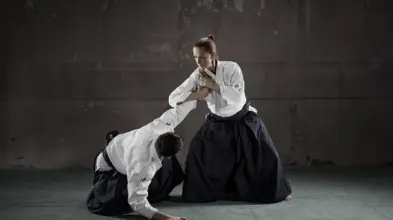

Meiji Kumemura is a range of aikido equipment that combines martial tradition, comfort, and affordable pricing. Recognizable by its blue logo, it offers hakamas, aikido gi, belts, and wooden training weapons to support practitioners throughout their progression.
Unlike Meiji Japon, identified by its purple logo and Made in Japan products, Meiji Kumemura offers equipment imported from Asia, with a more accessible price positioning.
This distinction enables aikidoka to choose their gear according to their budget, level, and expectations regarding manufacturing and finishing.
At Budo-Fight, discover Meiji Kumemura equipment to start aikido, train regularly, or complete your gear at the dojo.
Meiji Kumemura: Traditional Aikido at an Affordable Price
Aikido is a Japanese martial art that requires comfortable attire suited to movement, throws, and technical work.
When starting this discipline, it is not always necessary to immediately invest in high-end equipment made in Japan.
Meiji Kumemura meets the needs of practitioners who wish to manage their budget without giving up traditional aikido equipment.
The range is particularly suited for:
Beginners looking to purchase their first aikido gi.
Regular practitioners seeking functional gear at a reasonable price.
Aikido clubs needing to equip several students.
Younger practitioners whose size and needs are evolving.
Advanced aikidoka who want to have additional equipment.
Thanks to its diverse product range, Meiji Kumemura allows you to choose gear tailored to different practitioner profiles.
Its goal is simple: to make traditional aikido equipment accessible to a wide audience, while offering products that meet the demands of the discipline.
Meiji Kumemura and Meiji Japon: What Are the Differences?
The identity of Meiji Kumemura is based on a clear distinction within the Meiji universe.
The Kumemura range, recognizable by its blue logo, corresponds to equipment imported from Asia.
The Meiji Japon range, recognizable by its purple logo, features equipment made in Japan.
This distinction allows practitioners to choose according to their priorities: manufacturing origin, desired level of finishing, or available budget.
Criteria | Meiji Kumemura | Meiji Japon |
|---|---|---|
Identification | Blue logo | Purple logo |
Origin | Imported from Asia | Japanese manufacturing for relevant models |
Positioning | Affordable price | Premium positioning |
Target audience | Beginners, clubs, and budget-conscious practitioners | Practitioners seeking Japanese-made equipment |
Equipment | Hakamas, gi, belts, and wooden weapons | Traditional Japanese hakamas and belts |
Meiji Kumemura is therefore not presented as equipment made in Japan. Its value lies in the balance between functionality, comfort, and price.
If you are looking for Japanese manufacturing, also discover our selection of Meiji Japon equipment.
Meiji Kumemura Hakama: Tradition at an Affordable Price
The hakama is one of the most iconic garments in aikido.
Worn over the keikogi, it stands out for its wide cut, traditional pleats, and long ties that allow it to be fastened around the waist.
Meiji Kumemura hakamas allow aikidoka to equip themselves without necessarily choosing a high-end Japanese model.
Find different models in our selection of aikido hakamas.
Meiji Kumemura Black Hakama: Simplicity and Comfort
The Meiji Kumemura black aikido hakama is an attractive option for practitioners seeking traditional attire at an affordable price.
Imported from Asia, this model features an umanori cut, with two separate legs, and the characteristic pleats of the hakama.
Its fabric, combining polyester and rayon, achieves a good balance between flexibility, durability, and pleat retention.
In black, this hakama is suitable for regular training and for practitioners who want to maintain a traditional and understated look.
Hakama Meiji Kumemura blue: a traditional alternative
The Meiji Kumemura blue aikido hakama features the essential characteristics of the range in a deep blue color.
It combines a traditional cut with a fabric designed to follow your movements.
This model is particularly suitable for aikidoka who prefer a blue hakama, in line with their school's customs.
The choice between a black hakama and a blue hakama mainly depends on personal preferences and your dojo's recommendations.
Why choose a Meiji Kumemura hakama?
A Meiji Kumemura hakama may be suitable for practitioners looking for:
An affordable price, especially for a first purchase.
A traditional cut, suitable for aikido practice.
Good freedom of movement, essential for footwork.
Easy-care fabric, depending on the model's composition.
An economical alternative to hakamas made in Japan.
The material, dimensions, and finishing may vary depending on the reference. Please check the product sheet to verify its features.
How to choose the size of your first hakama?
The size of the hakama mainly depends on your height and how it is worn.
A model that is too long may hinder movement. A model that is too short may not match your dojo's customs.
Before purchasing, consult the size guide and check with your instructor from which level wearing the hakama is allowed.
Practices vary depending on the aikido school.
Meiji Kumemura aikido gi: comfort and durability on the tatami
The aikido gi, also known as aikidogi or keikogi, is the basic outfit for practitioners.
It generally consists of a jacket and pants, completed by a belt.
Meiji Kumemura gi are designed for aikidoka seeking an outfit suitable for training on tatami, while keeping to a reasonable budget.
Discover the available models in our range of aikido gi.
Meiji Club aikido gi: for regular practice
The Meiji Club aikido gi is designed to support regular training sessions.
Its cotton jacket has a fabric weight of 500 g/m², offering a balance between comfort and durability.
Knee reinforcements and the jacket's construction contribute to its longevity.
The relatively short sleeves make wrist grabs easier, while the absence of a seam on the back of the jacket improves comfort during ground techniques.
This model is particularly suitable for practitioners seeking a comfortable and durable aikido gi to progress at the dojo.
Meiji Master aikido gi: for intensive training
The Meiji Master aikido gi is designed for practitioners seeking a more structured outfit for intensive use.
Its cotton jacket has a fabric weight of 700 g/m², higher than the Club model.
This heavier fabric is designed to withstand regular training, repeated grabs, and technical exercises.
Its cut also allows for wearing a hakama.
The Master Meiji is therefore an attractive alternative for experienced aikidoka who prioritize durability and quality in their outfit.
Which Meiji gi to choose for starting aikido?
For a first set of equipment, several criteria are important:
The size, suited to your body type.
Freedom of movement, essential for footwork and falls.
Seam strength, especially during grabs.
Fabric comfort, for training sessions.
Ease of care, particularly useful for regular practice.
A well-chosen gi can perfectly meet a beginner's needs, provided it matches the intensity of the sessions.
For clubs, the range of sizes and price positioning are also important criteria when equipping several students.
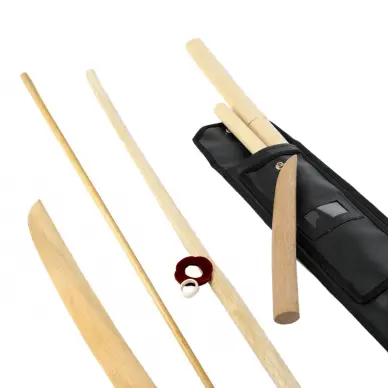
Meiji Kumemura aikido weapons: bokken, jo, and tanto in wood
Training with traditional weapons is part of the curriculum in many aikido schools.
Meiji Kumemura training weapons allow you to equip yourself for these exercises with models imported from Asia, offered at accessible prices.
Discover these items in our selection of wooden aikido weapons.
The main accessories used in aikido are the bokken, jo, and tanto.
Meiji Kumemura bokken: the traditional training sword
The bokken is a wooden reproduction of a Japanese sword.
It is used to study footwork, distance, and codified movements related to sword techniques.
The Meiji Kumemura bokken in red oak, 102 cm is a training model imported from Asia.
Made from red oak, it comes with a rubber tsuba and features the blue Meiji logo.
Before purchasing, check the length, weight, balance, and your instructor’s recommendations.
Jo Meiji Kumemura: the aikido staff
The jo, sometimes written jyo, is a traditional staff used in aikido technical exercises.
It is especially useful for developing coordination, movement, and distance management.
The Meiji Kumemura jo in white oak, 128 cm is an example of a staff designed for training.
Imported from Asia, it features a simple, traditional design.
When choosing a jo, consider its length, diameter, wood type, and the specifications required by your dojo.
Tanto Meiji Kumemura: the wooden training knife
The tanto is a training knife used for certain partner drills.
In aikido, wooden models allow for the study of technical situations in a controlled setting.
The Meiji Kumemura tanto in white oak is 28 cm long and intended for martial arts practice.
It can be used in specific aikido and kobudo exercises, depending on your training program.
As with any training weapon, it must be used in accordance with your instructor’s safety guidelines.
Meiji Kumemura belts and accessories for aikido
To complete a gi or hakama, practitioners can also select various accessories suited to their discipline.
Traditional aikido belts
The belt secures the gi jacket and may also indicate the practitioner’s rank, depending on the school’s customs.
Meiji Kumemura offers a black aikido belt embroidered with “Aikido”, featuring Japanese kanji.
This model is intended for advanced practitioners seeking a belt with traditional finishing.
When selecting your belt, check its length, width, and the personalization options available on the product page.
Cases for carrying your training weapons
To travel to the dojo with a bokken, jo, and tanto, it is important to have an appropriate carrying solution.
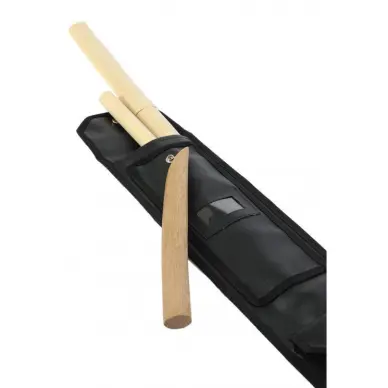
The canvas case for jo, bokken, and tanto allows you to store these accessories together.
Made from durable fabric, it features a closure and a shoulder strap for easy transport.
A suitable case helps protect your equipment from friction during travel and makes storage easier after training sessions.
Which Meiji Kumemura equipment should you choose based on your level?
Your equipment choice depends on your experience, body type, and your club’s recommendations.
Profile | Recommended equipment | Main criteria |
|---|---|---|
Beginner | Aikido gi and belt | Comfort and budget |
Practitioner authorized to wear the hakama | Traditional hakama | Size and freedom of movement |
Practitioner studying weapons | Bokken, jo, or tanto | Dimensions and dojo guidelines |
Aikido club | Uniforms and accessories for multiple students | Price and size range |
Regular practitioner | Reinforced gi and additional equipment | Durability and maintenance |
Meiji Kumemura thus provides solutions for different stages of practice, without requiring the budget of high-end Japanese equipment.
Meiji Kumemura: a good choice for starting aikido?
When starting aikido, it is best to choose equipment suited to your needs rather than always opting for the most expensive model.
A comfortable gi and a belt are generally the first essentials.
Sandals for moving around the dojo can also complete your outfit, depending on your club’s customs.
The hakama and training weapons can be added gradually, according to your school’s program.
Meiji Kumemura is especially appealing for this initial phase of equipment, thanks to its accessible pricing.
Practitioners can then upgrade their gear as their needs and experience evolve.
How to care for your Meiji Kumemura equipment?
Regular care helps maintain the comfort and lifespan of your aikido equipment.
Caring for your aikido gi
Follow the washing instructions provided by the manufacturer.
After each session, remove your gi from your bag and let it dry in a well-ventilated area.
Avoid excessive washing temperatures and be mindful of potential cotton shrinkage.
Caring for your hakama
For hakamas, follow the care instructions specific to the fabric composition.
Be sure to maintain the pleats when folding and storing your hakama.
Allow the garment to dry if necessary before putting it back in your bag.
Caring for your wooden weapons
For bokkens, jos, and tantos, regularly check for cracks, splinters, or warping.
Store training weapons in a dry place, protected from significant humidity changes.
Do not use a damaged wooden weapon.
Why buy Meiji Kumemura from Budo-Fight?
Since 1963, Budo-Fight has supported martial arts practitioners in selecting their equipment.
With Meiji Kumemura, we offer an accessible alternative to high-end aikido equipment made in Japan.
The main advantages of the range:
Accessible pricing, suitable for controlled budgets.
Equipment imported from Asia, clearly identified by the blue logo.
Traditional hakamas for aikido practitioners.
Club and Master aikido gi, suitable for various levels of practice.
Wooden weapons, including bokkens, jos, and tantos.
Belts and accessories to complete the practitioner’s equipment.
An attractive solution for beginners, clubs, and regular practitioners.
Whether you are looking for your first aikido gi, a traditional hakama, or wooden weapons for your training, take the time to compare the features of each model.
Discover our Meiji Kumemura selection at Budo-Fight and equip yourself for aikido with traditional, functional, and affordably priced gear.