
Punching Bags
Discover our range of punching bags suitable for all levels and sizes.
Sort by




Punching Bags: How to Choose the Right Model for Boxing and Combat Sports?
Are you looking for a punching bag to train at home or in your club? At Budo-Fight, discover a selection of punching bags for beginners and advanced practitioners, suitable for boxing, kickboxing, Muay Thai, MMA, and physical conditioning.
Hanging punching bags, freestanding models, uppercut bags, teardrop bags, or water-filled punching bags: each equipment serves different purposes.
To choose well, several criteria are essential: length, weight, material, filling, and mounting system.
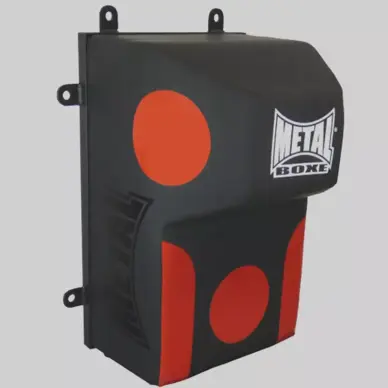
Find punching bags from BudoFight, Metal Boxe, Fairtex, King Pro Boxing, Elion, Booster, Montana, and other specialized manufacturers, depending on availability.
How to Choose the Right Punching Bag?
The best punching bag is not necessarily the biggest, heaviest, or most expensive.
It must above all match your discipline, available space, and the exercises you want to perform.
An English boxer mainly working on punches may look for a different model than a Muay Thai practitioner aiming to work low kicks and knees.
Main Selection Criteria
Criterion | Questions to Ask Yourself |
|---|---|
Length | Do you want to work only punches or also kicks? |
Weight | Are you looking for a mobile bag or a more stable target? |
Material | What durability and striking feel do you want? |
Filling | Do you prefer a bag delivered full, empty, or water-fillable? |
Mounting | Can your wall or ceiling support a hanging bag? |
Training Frequency | Will you use the bag occasionally or several times a week? |
Available Space | Can you move freely around the bag? |
To explore these questions further, check out our complete guide to choosing the right punching bag.
What Are the Different Types of Punching Bags?
Punching bags come in various shapes. Their design influences the striking sensations and techniques that can be practiced.
Classic Hanging Punching Bag
The hanging bag is one of the most used pieces of equipment in boxing gyms.
It allows you to work on jabs, hooks, combinations, and, depending on its length, kicks.
Its swinging movement can also be integrated into footwork and distance management exercises.
The choice depends notably on height, weight, and the suspension system’s durability.
Freestanding Punching Bag
The freestanding punching bag is an interesting alternative when ceiling mounting is not possible.
Depending on the model, it has a fillable base or a self-supporting structure.
Its main advantage is that it does not necessarily require drilling.
However, its stability depends on the base design, filling, and impact intensity.
To compare other self-supporting devices, discover our selection of punching balls and striking dummies.
Uppercut Bag and Teardrop Bag
Uppercut bags have a shape adapted to certain upward strikes and close-range combinations.
Teardrop-shaped models, also called teardrop, allow varying striking angles.
Their geometry can be particularly interesting for working certain punches, knees, or elbows, depending on the model.
T-Shape Punching Bag
The T-Shape bag has a specific form allowing you to work on different striking trajectories.
It can complement a traditional cylindrical bag for practitioners wanting to vary exercises.
Before choosing this type of bag, check its dimensions, weight, and the techniques recommended by the manufacturer.
Water-Filled Punching Bag
Water-filled punching bags, or aqua bags, are designed to be filled with water.
They provide striking sensations different from those of a textile-filled bag.
The surface’s softness, weight, and impact response depend on the design and filling level.
Always follow the manufacturer’s recommendations regarding water quantity, suspension conditions, and maintenance.
Which Type of Bag for Which Training?
Bag Type | Main Purpose |
|---|---|
Classic cylindrical bag | Punch combinations and general training |
Long bag | Kicking techniques and foot-fist combinations |
Uppercut bag | Rising strikes and specific angles |
Teardrop bag | Angle variations and close-range work |
Water bag | Different impact sensations |
Free-standing bag | Training without traditional suspension |
To complement your sessions, you can also compare the other striking equipment for boxing and combat sports.
Which punching bag size should you choose?
The bag’s length directly influences the techniques that can be practiced.
It should be chosen based on your discipline, stature, and available height.
Punching bag from 90 to 120 cm
Relatively short bags suit many boxing exercises.
They notably allow working on punches, combinations, and footwork.
A 100 or 120 cm bag can be an interesting solution for training mainly focused on punches.
However, the ideal length also depends on the installation height and the target type desired.
Punching bag from 120 to 150 cm
Intermediate models offer a larger striking surface.
They can suit versatile practice, with punching exercises and some kicking techniques.
They represent a good compromise for athletes looking for a bag suitable for various types of exercises.
Punching bag from 150 to 180 cm
Long bags are especially appreciated in foot-fist disciplines.
They provide more surface area to work kicks at different heights, including low kicks, depending on the bag’s position.
They can thus be interesting for Muay Thai, kickboxing, and some MMA sessions.
However, their length requires checking ceiling height and space needed for the suspension system.
Is length alone enough to choose?
No. The bag’s diameter also affects the striking surface and bulk.
A wide bag does not provide the same sensations as a narrow model.
Always check the dimensions indicated on the product page before ordering.
Which weight should you choose for your punching bag?
The bag’s weight influences its movement, stability, and impact sensations.
A relatively light bag will generally tend to move more under strikes.
A heavier bag can offer a more stable target, depending on its suspension and the techniques used.
Should you choose a bag weighing half your body weight?
It is often recommended to choose a bag representing about half the practitioner’s body weight.
This rule can serve as a first guideline, but it is not an obligation nor a universal formula.
The appropriate weight also depends on striking power, experience, exercise type, and desired movement.
Light bag or heavy bag?
A lighter bag can suit certain technical and coordination exercises.
Its movement can help work footwork and adaptation to a moving target.
A heavier bag can be interesting for practitioners seeking a target that moves less during powerful combinations.
However, weight should not be confused with hardness: the filling plays an important role in impact sensations.
What weight for a beginner?
For beginners, prioritize a bag whose movement and firmness remain compatible with your level.
It is not necessary to immediately look for a particularly heavy model.
Learning technique, hand placement, and impact control should remain a priority.
A coach can help you determine the weight suited to your exercises.
Punching bag delivered filled or empty: what to choose?
At Budo-Fight, several bags are offered in filled or empty versions.
This difference is important for budget, transport, installation, and impact sensations.
Filled punching bag
A filled bag already has filling provided by the manufacturer.
It can be convenient for those who want ready-to-install equipment, after checking the necessary suspension accessories.
Before purchase, check its weight, dimensions, and exact delivery contents.
The mounting bracket is not necessarily included with the bag.
Empty punching bag
An empty bag allows you to manage its filling according to the manufacturer’s instructions.
It can also be easier to transport before filling.
However, the final weight and firmness directly depend on the materials used.
It is therefore important to follow the filling instructions specific to each model.
How to fill an empty punching bag?
Some bags can be filled with textile scraps or other materials provided by the manufacturer.
The filling must be evenly distributed to prevent the formation of abnormally hard areas or unbalanced masses.
Avoid pouring loose sand directly into a standard bag, unless the manufacturer explicitly allows this and provides the appropriate method.
Improper filling can make the target too hard, unbalance the bag, or damage its structure.
For a water bag, use exclusively the filling intended for this model and follow the recommended quantities.
Check the final weight
An empty bag can become very heavy once filled.
Before hanging it, check that its final weight remains compatible with the chains, carabiners, and mounting support.
Also allow a margin for the additional forces generated by strikes.
Which material to choose for your punching bag?
The outer cover influences the wear resistance, feel, and ease of maintenance of the bag.
The models available at Budo-Fight can be made of natural leather, polyurethane, vinyl, or coated textile, depending on the reference.
Genuine leather punching bag
Natural leather is appreciated for its feel and durability characteristics.
It is found on some models intended for regular or intensive practice.
However, its durability depends on the quality of the leather, stitching, attachments, and maintenance.
A leather bag is not automatically better for all practitioners.
Synthetic leather punching bag
Synthetic leather, especially polyurethane, allows offering bags in different price ranges.
Some models show very good resistance to repeated stress.
They are an option to consider for occasional or regular use, depending on their design.
Vinyl and coated textile
Vinyl or coated textile covers have variable characteristics depending on their thickness and manufacturing.
They can be interesting for certain uses and budgets.
Before choosing, examine the seam strength, quality of attachments, and maintenance recommendations.
Which material for intensive use?
For frequent practice, manufacturing quality is as important as the outer material.
A robust bag must notably have attachment points adapted to repeated stress and sufficiently strong stitching.
The padding material and the quality of the suspension system must also be taken into account.
Which mounting to choose for your punching bag?
Mounting is one of the most important points when installing a punching bag.
The chosen system must withstand not only the weight of the bag but also the dynamic forces created by impacts and swinging.
Find our selection of mounts, brackets, and supports for punching bags.
Ceiling mount
A ceiling mount allows suspending a bag in a suitable training space.
Before installation, check the nature of the support and its capacity to withstand the expected loads.
The choice of anchors depends on the construction material and characteristics of the suspension system.
Installation in an unsuitable ceiling can pose a significant risk.
If in doubt about the structure's strength, have the support checked by a qualified professional.
Wall bracket
The wall bracket is another solution to hang a punching bag.
It must be fixed to a structure capable of supporting the static and dynamic loads of the equipment.
Some brackets are foldable to free up space after training.
It is essential to respect the maximum loads indicated by the manufacturer.
Frame or freestanding support
A freestanding frame can be interesting when you do not want to use wall or ceiling mounts.
However, check its footprint, stability, and maximum allowed load.
Depending on the model, the frame may require additional stabilizing elements.
Chains, springs, and carabiners
Suspension accessories include chains, carabiners, pins, and springs.
Their compatibility depends on the bag’s weight, attachments, and the support used.
Some springs can help limit certain vibrations, but their effectiveness depends on the installation.
Never use an accessory whose strength or compatibility is unknown.
At what height to install your bag?
The height depends on your stature and the exercises planned.
For boxing, the main striking zones must be accessible without adopting an abnormal posture.
For kickboxing disciplines, the position of the bottom of the bag must also allow working on the desired kicks.
Follow the manufacturer’s installation recommendations and keep enough space around the target.
Which punching bag to choose according to your combat sport?
Each discipline emphasizes different techniques.
The choice of punching bag must therefore take into account the height of strikes and the movements performed.
Punching Bag for Boxing
Boxing relies exclusively on punches.
A classic cylindrical bag allows you to work on jabs, hooks, and combinations.
The required length mainly depends on the installation height, the practitioner's size, and the exercises.
Punching Bag for Muay Thai
Muay Thai uses fists, feet, knees, and elbows.
A long bag can be particularly useful for training that includes low kicks.
Teardrop and uppercut bags can complement technical exercises by offering different striking angles.
The choice also depends on the weight and firmness of the padding.
Punching Bag for Kickboxing
In kickboxing, practitioners combine punching and kicking techniques.
A sufficiently long and stable bag can allow training at multiple striking heights.
However, the model must remain suitable for the techniques allowed in your discipline.
Punching Bag for MMA
MMA combines striking, wrestling, and ground fighting.
A punching bag can complement standing technique work, especially combinations of punches and kicks.
Some specialized models also allow other exercises depending on their design.
A classic bag, however, does not replace grappling work with a partner.
Which Punching Bag for a Beginner?
For a first setup, prioritize simplicity, stability, and equipment adapted to your space.
The bag should allow you to repeat techniques without immediately requiring a high power level.
Priority Criteria
To start, check:
Length: suitable for the techniques practiced.
Weight: compatible with your level and setup.
Padding: sufficiently consistent and adapted to impacts.
Mounting: stable and compliant with the expected loads.
Available space: enough room to move around the bag.
Maintenance: easy to perform after sessions.
A good quality synthetic material bag can be an interesting option for beginners.
Should You Start with a Very Heavy Bag?
No. A particularly heavy bag is not essential to learn fundamental techniques.
Start with progressive intensity and focus on precision, posture, and joint alignment.
To complete your personal equipment, discover our boxing sets for beginners and regular practitioners.
Training on a Punching Bag at Home: Points to Check
Installing a punching bag at home allows you to complement training done at the club.
However, installation conditions must be adapted to the environment.
Allow Enough Space
The space needed depends on the bag's dimensions and its swinging range.
You must be able to move without hitting walls, furniture, or other objects.
For long bags, also check the available floor space.
Consider Noise and Vibrations
Repeated strikes can produce noise and transmit vibrations to the building structure.
This point is especially important in apartments.
The choice of support, bag weight, and exercise intensity influence possible disturbances.
No mounting system guarantees completely silent use.
Mounting or Freestanding Model?
A hanging bag can be interesting when an appropriate anchor point is available.
A freestanding model is an alternative when mounting conditions are not met.
In both cases, it is important to follow the manufacturer's instructions and check stability before each use.
What Protective Gear to Use When Training on a Punching Bag?
Repeated strikes put stress on the hands, wrists, and, depending on the exercises, the legs.
Correct technique and suitable protection contribute to a more comfortable practice.
However, they do not eliminate the risk of injury.
Punching Bag Gloves
Some practitioners choose specific gloves for bag work.
These models feature a design intended for repeated strikes on a target.
Padding, shape, and support vary by manufacturer.
They are not necessarily suitable for sparring with a partner.
Classic Boxing Gloves
Boxing training gloves can also be used on certain bags, depending on their design and the manufacturer's recommendations.
The choice of weight in ounces depends on your build, the exercise, and your coach's instructions.
For frequent use, some boxers reserve one pair for bag work and another for partner sessions.
Hand Wraps and Hand Support
Hand wraps provide additional support to the hands and wrists.
They must be applied correctly, without excessive compression.
Discover our selection of hand wraps to support your training sessions.
Hand wraps do not compensate for unsuitable gloves or incorrect punching technique.
Should you wear a mouthguard or headgear?
For typical individual training on a bag, mouthguards and headgear are generally not necessary.
However, they may be required during certain partner drills or specific situations.
Needs depend on the session and the coach’s recommendations.
To learn more about choosing gloves, check out our guide to gloves for punching bag training.
Are shin guards necessary for hitting a bag?
Shin guards are not systematically required for individual bag exercises.
Their use depends notably on the intensity of strikes, the practitioner’s experience, and club recommendations.
For sessions that require them, you can compare shin and foot guards.
Which punching bag to choose for a child?
A child discovering boxing should use equipment suited to their size, age, and technical level.
An adult bag may be too heavy, too hard, or poorly positioned for initial exercises.
Size and weight
Choose a model matching the characteristics recommended by the manufacturer for young practitioners.
The striking height should allow learning movements without adopting an uncomfortable posture.
The weight must remain compatible with the child’s technical level.
Padding and stability
Check the quality of the padding and the absence of excessively hard areas.
The attachment system must be sized for the bag and regularly inspected.
A freestanding bag must also have sufficient stability.
Which gloves for a child?
Gloves must fit the hand size and the exercises performed.
Gloves that are too large or too heavy can hinder learning.
Training should be supervised appropriately, prioritizing technique over power.
To prepare for their first sessions, consult our guide to essential equipment for starting boxing.
Punching bag brands available at Budo-Fight
Budo-Fight offers several brands specialized in combat sports, with bags suited to different uses.
BudoFight: models for various levels
The BudoFight brand offers bags for classic training, Pro Line and Rookie models, as well as specialized formats.
Depending on the references, some bags are sold empty or pre-filled.
Compare their dimensions, coverings, and suspension systems.
Metal Boxe: bags for training and clubs
Metal Boxe offers various bag models, notably in ranges intended for regular training.
Some are available empty, allowing you to choose filling according to the manufacturer’s recommendations.
Fairtex: bags for striking sports
Fairtex is especially well-known in the Muay Thai world.
The brand offers bags with specific shapes designed for different striking exercises.
Elion, Montana, Booster, and King Pro Boxing
These manufacturers also offer punching bags with features that vary by model.
Differences include outer material, length, weight, shape, and type of filling.
Aqua Training Bag and water bags
Water bags represent another category of equipment.
They require filling and installation according to the manufacturer’s instructions.
Before purchasing, check the weight when filled and the compatibility of the suspension system.
Choosing a brand should come after selecting the type of bag and its technical features.
How to maintain your punching bag?
Regular maintenance helps preserve the lifespan and proper functioning of your equipment.
Clean the covering
After training, clean the bag’s surface with a method compatible with the outer material.
Avoid harsh products that could damage leather, polyurethane, or other coverings.
Allow the surface to dry properly before applying protection or storing.
Check chains and attachments
Regularly inspect chains, carabiners, attachments, and suspension points.
Also check the support’s condition and ensure no loosening or deformation.
Do not use a bag with damaged attachments.
Monitor the filling
Over time, some fillings may settle.
If the bag has abnormally hard areas, imbalance, or significant deformation, check its condition and follow the manufacturer’s recommendations.
Do not modify the filling of a model not designed to be opened.
Maintain your gloves after sessions
After bag work, let your gloves dry in a ventilated area.
Also check the condition of their foam and stitching.
To keep your equipment in good condition, find our boxing glove care tips.
Frequently Asked Questions About Punching Bags
What size punching bag should I choose to start?
A relatively short or medium-length bag can suit many boxing exercises. For disciplines involving low kicks, a longer model may be preferable.
What weight should a punching bag be?
There is no universal weight. The choice depends on your level, striking power, desired movement, and the capabilities of the mounting system.
Is it better to buy a filled or empty punching bag?
A filled bag is convenient if you want a pre-prepared filling. An empty bag allows you to choose a filling compatible with the manufacturer's instructions. Also compare transport and installation conditions.
Can a punching bag be filled with sand?
Only if the manufacturer allows it and specifies the appropriate method. Loose sand in a bag not designed for this use can create very hard spots or damage the equipment.
How do you hang a punching bag from the ceiling?
Use a mounting suitable for the building’s structure and the static and dynamic loads of the equipment. Check the assembly instructions and have the support inspected by a professional if necessary.
Which punching bag is best for Muay Thai?
A long bag is often ideal for working low kicks, knees, and various foot-fist combinations. Firmness and mounting are also important.
Can a punching bag be installed in an apartment?
It is possible if the space, building structure, and installation conditions allow it. Consider noise and vibrations transmitted to neighboring rooms.
Which punching bag should I choose for a child?
Choose a model designed for their age and size, with appropriate padding and stability. Follow the manufacturer’s recommendations and ensure proper supervision.
Do you need gloves to hit a punching bag?
Proper gloves are strongly recommended for repeated striking exercises. The choice depends on the bag’s design, intensity, and trainer’s advice.
What is the difference between a punching bag and a speed ball?
The classic punching bag is usually a larger target, mainly for striking combinations. The speed ball refers to a more mobile device, sometimes spring-mounted, used for rhythm and coordination exercises.
Why buy your punching bag from Budo-Fight?
Since 1963, Budo-Fight has supported martial arts and combat sports practitioners in choosing their equipment.
Whether you are a beginner, regular boxer, coach, or club manager, our selection allows you to compare different brands, sizes, materials, and shapes of punching bags.
Find hanging bags, models delivered filled or empty, water bags, specialized equipment, and mounting solutions adapted to various spaces.
Before choosing, check the features of each model and installation options.
Discover Budo-Fight punching bags and prepare your boxing, kickboxing, Muay Thai, or MMA training with equipment suited to your goals.