





Karate Gis, Protective Gear, and Accessories for Karate
Looking for karate equipment to get started, improve at the dojo, or prepare for competition? At Budo-Fight, discover a selection of karate gear for kids and adults, suited to different styles, levels, and goals.
Find all the essentials for karatekas: karate gis, belts, kumite gloves, shin guards, foot guards, and training accessories. Each piece of equipment meets a specific need, whether you’re learning fundamental techniques, working on your katas, or practicing sparring with a partner.
Whether you practice Shotokan, Goju-ryu, Shito-ryu, Wado-ryu, or another karate school, choose gear adapted to your body type, training frequency, and your instructor’s recommendations.
What Equipment Do You Need for Karate?
To start karate, a karate gi and a belt are usually the basic outfit. As you move into partner sparring, additional protective gear may become necessary.
The equipment also depends on the type of exercise: kata, kumite, and traditional training each have their own requirements.
Essential Karate Equipment Table
Equipment | Main Use | Relevant Practice |
|---|---|---|
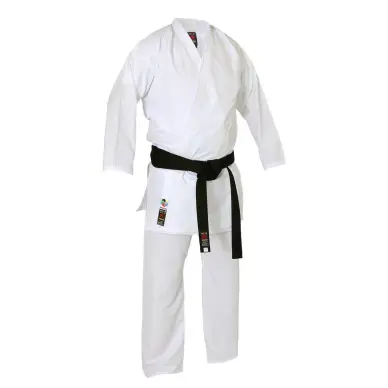
Karate gi | Allows for stances, movement, and techniques | Kata, kumite, and training |
Karate belt (obi) | Keeps the jacket in place and shows rank | All practices |
Karate gloves | Provides extra protection for the hands | Kumite |
Shin guards and foot guards | Reduce impact during exchanges | Kumite |
Mouthguard | Reduces the risk of certain oral injuries | Contact drills |
Chest guard and chest protection | Protects parts of the torso | Depending on rules and categories |
Karate headgear | Helps prevent minor injuries | Certain categories and practices |
Strike shields and targets | Improve precision, coordination, and strike control | Technical training |
Mandatory equipment may vary depending on your club, federation, age group, and competition rules. Ask your instructor before purchasing specific protective gear.
Karate Gi: How to Choose Your Karate Gi?
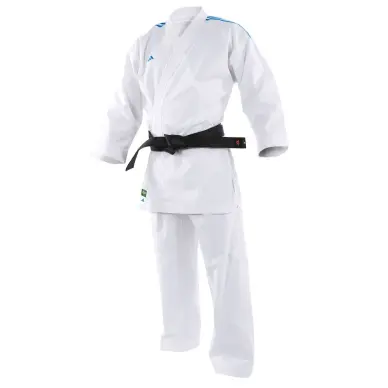
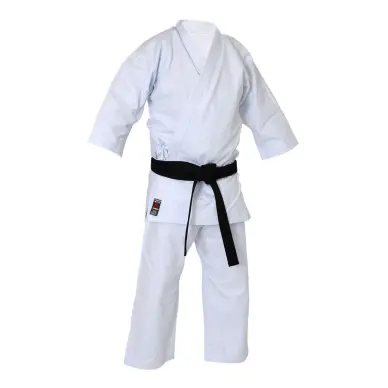
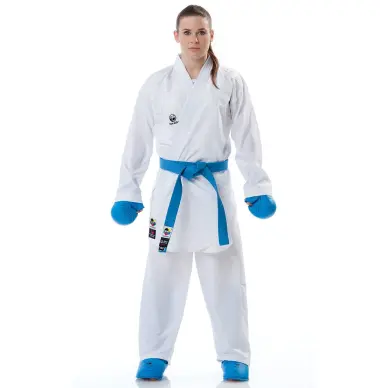
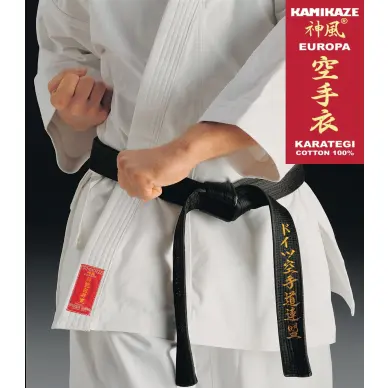
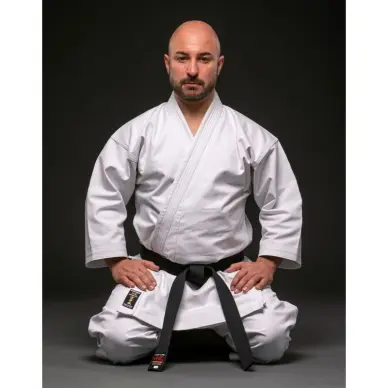
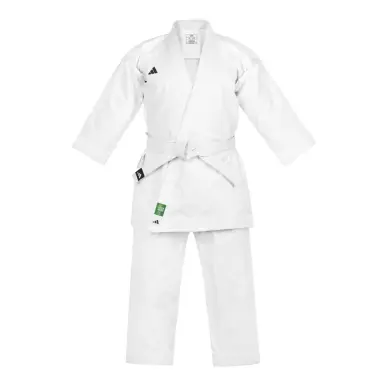
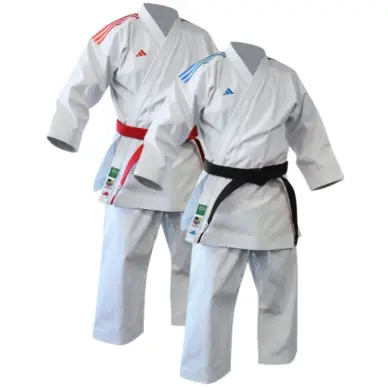
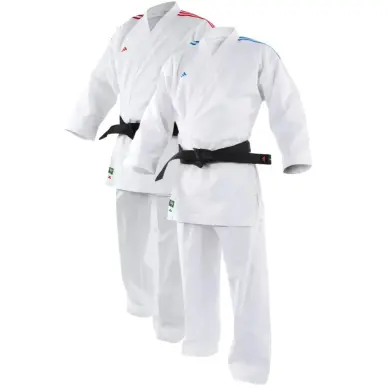
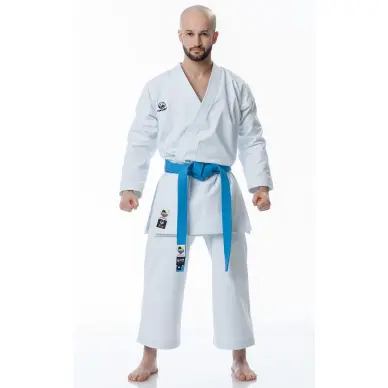
The karate gi, also called karate-gi, is the traditional uniform worn at the dojo.
It consists of a jacket and pants, along with a belt. Its cut should allow you to perform stances, blocks, punches, kicks, and movements freely.
Discover our selection of gis suited for all karate practices.
What’s the Difference Between a Karate Gi and a Judo Gi?
Both uniforms look similar, but their features are different.
The karate gi is generally designed to maximize freedom of movement and quick technique execution. The judo gi, called judogi, is built for gripping, pulling, and throwing.
It’s best to choose a uniform specifically suited to your discipline rather than using the same gi for several martial arts.
Karate Gi for Beginners and Kids
For starting karate, choose a lightweight, comfortable gi that’s easy to care for.
A soft fabric lets you learn stances and basic techniques without discomfort.
Cotton and fiber blends offer different qualities in terms of feel, flexibility, and care.
Before buying, check the quality of the seams, the cut of the pants, and the manufacturer’s washing instructions.
For more guidance, see our guide to choosing your karate gi.
Karate Gi for Kata
Kata involves performing a codified sequence of techniques while meeting strict requirements for precision, balance, rhythm, and body control.
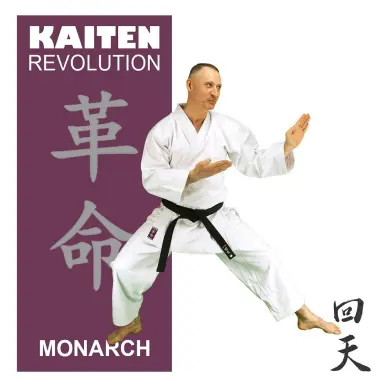
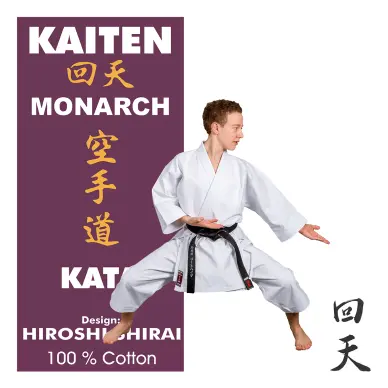
For this practice, many karatekas look for a relatively structured fabric and a cut that ensures stable positioning.
Some kata karate gis are designed to produce a sharp sound, often called a snap, during fast movements.
The quality of the fabric, its density, the finishing, and the cut all influence comfort and feel during technique execution.
Karate gi for kumite
Kumite refers to the various forms of sparring with a partner, from conventional drills to regulated matches.
This practice requires the ability to move quickly, change direction, and control distance.
Kumite karate gis are generally lighter and more flexible than the structured models used for kata.
They prioritize mobility and ease of movement during exchanges.
For versatile training, a classic karate gi may be suitable. Regular practitioners and competitors sometimes choose a specific outfit for each activity.
How to choose the right size karate gi?
Karate gi sizes are usually based on the practitioner's height.
However, two models offered for the same height may have different cuts.
To choose correctly, consider your height, body type, the cut of the model, and any potential shrinkage indicated by the manufacturer.
The pants should allow you to perform low stances and kicks without pulling excessively on the fabric. The jacket should remain comfortable when you raise your arms.
Check our martial arts gi size guide to better understand the sizing options.
Kata or kumite: what are the equipment differences?
Although both practices are part of karate, their technical and equipment requirements are not the same.
Criteria | Karate kata | Karate kumite |
|---|---|---|
Main goal | Precision, rhythm, balance, and technical mastery | Distance, speed, timing, and control during exchanges |
Preferred karate gi | Often more structured fabric | Generally lightweight and flexible fabric |
Sought-after cut | Good support for stances and movements | Maximum freedom of movement |
Protective gear | Generally unnecessary for solo performance | Often required depending on the drills |
Selection criteria | Fabric hold, cut, and comfort | Mobility, lightness, and fit |
There is no universally superior outfit. The right choice depends on your practice and preferences.
If you compete, also check the clothing requirements for your category.
Karate protective gear: getting equipped for kumite
Kumite requires protective gear adapted to the permitted techniques, the intensity of exchanges, and the rules followed by your club.
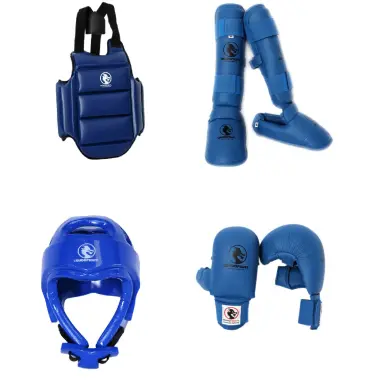
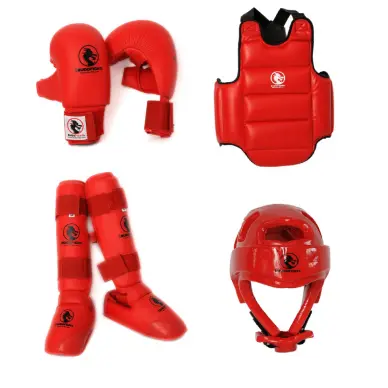
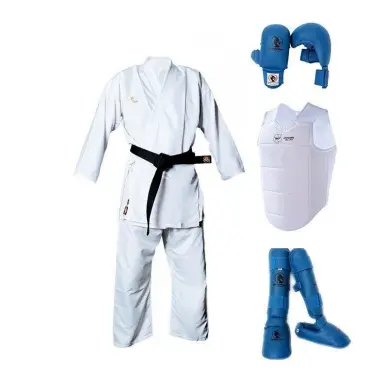
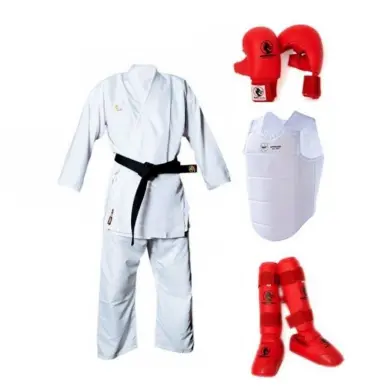
Our protective gear designed for karate training and competitions includes equipment for hands, legs, feet, and torso.
Karate gloves for kumite
Karate gloves, sometimes called kumite mitts, provide extra protection for the hands during sparring.
They must stay secure during strikes without overly restricting movement.
To choose a pair, check the size, padding, closure system, and any required color or certification.
Compare our gloves for karate practice by their design and recommended use.
Sport kumite gloves and models for contact karate are not always interchangeable.
Shin guards and foot guards
Shin guards and foot guards help absorb impacts during kicks and blocks.
Fit is especially important: a guard that slips or rotates can hinder movement.
Some models use separate elements for the shin and foot, while others offer a combined set.
For competition, check the required colors and certifications.
Karate headgear
Headgear may be used in certain age categories, some training sessions, or specific competitions.
It should fit your head circumference, offer good visibility, and stay secure during movement.
Headgear can help reduce certain superficial injuries, but it does not eliminate the risk of concussion.
Supervision, controlled strikes, and respect for your partner remain essential.
Chest Guard and Chest Protection
The chest guard is designed to absorb some impacts to the torso.
Depending on the category and regulations, a chest protector or other additional equipment may be required.
The size should match the practitioner's body type to ensure a comfortable fit without excessively restricting movement.
Mouthguard and Groin Guard
The mouthguard is important during contact drills. It can help reduce the risk of certain injuries to the teeth and mouth tissues.
Some mouthguards for combat sports are moldable and can be adjusted according to the manufacturer's instructions.
The groin guard is used to protect the genital area from accidental impacts.
Also discover our range of groin guards designed for combat sports.
Important: Equipment suitable for training is not automatically allowed in competition. Check your event's rules before purchasing.
Karate Belts: Understanding Ranks and Choosing Your Obi
The karate belt, called obi, secures the karate gi jacket and symbolizes the practitioner's progress.
The colors are associated with ranks, but their order and meaning may vary depending on the school and federation.
In many clubs, progression starts with the white belt and advances through various colors to higher ranks.
Explore our selection of karate belts for beginners and advanced practitioners.
Which Karate Belt Length Should You Choose?
The length of the belt depends on your waist size, the type of knot, and the desired length for both ends.
A belt that's too short will be difficult to tie correctly. An excessively long belt may hinder movement.
For more guidance, check out our martial arts belt size guide.
Embroidered Belts and Personalization
Some karatekas choose an embroidered belt with their name, their school's name, or a traditional inscription.
Personalization is especially popular for belts meant to be kept for a long time.
Before having a belt embroidered for competition use, make sure the inscription and its placement comply with the applicable rules.
Main Karate Styles and Their Features
Karate originated from the martial traditions of Okinawa before developing in Japan and worldwide.
It includes several styles whose stances, techniques, and teaching methods may differ.
Shotokan Karate
Shotokan is especially associated with Gichin Funakoshi, who played a key role in spreading karate in Japan.
It places great emphasis on movement precision, stances, footwork, and technical mastery.
Training is based on kihon, kata, and kumite.
Goju-ryu
Goju-ryu combines both soft and hard technical principles.
It particularly emphasizes breathing, movement, and working at different ranges.
Shito-ryu
Shito-ryu is known for its extensive kata repertoire and diverse technical influences.
Practice includes various stances, movements, and martial applications.
Wado-ryu
Wado-ryu focuses especially on movement, evasion, and managing motion.
Fluidity and positioning are key in technical execution.
Whatever style you practice, choose gear and protection that meet your dojo's requirements.
Kihon, Kata, Kumite, and Bunkai: The Basics of Training
Understanding the different forms of karate practice helps you choose the right equipment.
Kihon: Learning Fundamental Techniques
Kihon includes basic stances, blocks, punches, kicks, and footwork.
These drills develop coordination, stability, and precision of movement.
A comfortable outfit is essential for repeating techniques.
Kata: Developing Precision
Kata is a codified sequence of techniques.
It helps develop rhythm, balance, coordination, and body control.
For this practice, the cut of the karate gi and the feel of the fabric can play an important role in the practitioner's experience.
Kumite: Partner Work
Kumite allows you to apply techniques in various sparring situations.
Depending on your level, it can take the form of conventional drills, technical exchanges, or regulated matches.
The required protection depends on the type of exercise and your club's rules.
Bunkai: Understanding Applications
Bunkai refers to the study of practical applications of kata movements.
These partner drills allow you to explore technical principles and combat situations related to combinations.
Depending on your training methods, additional protective gear may be recommended.
Karate Equipment for Precision and Physical Conditioning
In addition to the karate gi and protective gear, certain accessories help diversify your training sessions.
Strike Shields and Targets
Strike shields and targets are used to practice punches, kicks, and technical combinations.
They help develop accuracy, coordination, distance management, and strike control.
Your choice depends on the striking surface, padding, holding systems, and the type of drill performed.
Discover various striking accessories for martial arts and combat sports.
How to Organize a Technical Training Session?
A session can include a gradual warm-up, stance exercises, technical repetitions, and target work.
Movement quality should always take priority over power, especially for beginners.
Training accessories complement instruction at the dojo but do not replace your instructor’s guidance and corrections.
Kobudo: Traditional Okinawan Weapons
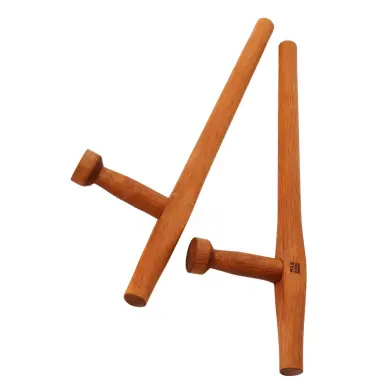
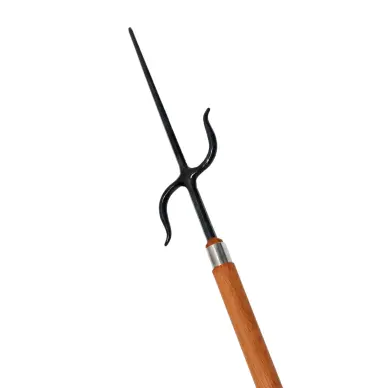
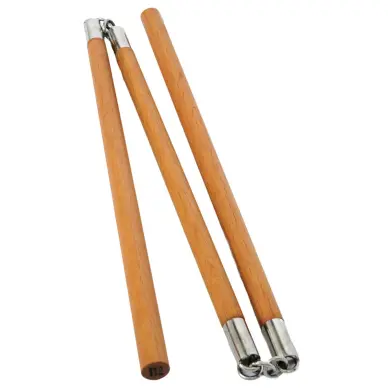
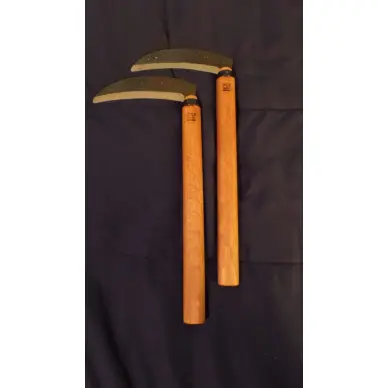
Okinawan kobudo is a traditional martial art focused on the study of various weapons, including the bo, sai, tonfa, and nunchaku.
Although separate from karate, kobudo shares part of its cultural heritage and may be taught at affiliated schools.
For interested practitioners, Budo-Fight offers equipment for kobudo training.
Your choice depends on the weapon studied, its dimensions, material, your skill level, and your instructor’s recommendations.
These accessories should be used in a suitable environment, following safety instructions and applicable regulations.
Karate Equipment for Kids: Preparing for the First Classes
For a child starting karate, comfort and simplicity are the main selection criteria.
A lightweight karate gi, a belt matching their rank, and a bag to carry their gear usually provide a solid foundation.
Kumite protective gear can be added gradually, depending on the child’s age and the drills practiced.
What Size Gi Should You Choose for a Child?
Height is the main reference, but body shape and the model’s cut should also be considered.
A gi that is too large may hinder movement. A model that is too small can restrict technique range.
Check the manufacturer’s size guide and care recommendations before choosing.
What Protective Gear for Young Karateka?
The required protective gear depends on age, type of practice, and club rules.
Before buying gloves, headgear, or a chest guard, ask your instructor for advice.
The priority remains gradual technique learning and movement control.
Carrying Your Gear to the Dojo
A suitable bag lets you carry your gi, belt, protective gear, and a water bottle.
For kids, choose an easy-to-carry format. For competitors, a larger bag may be useful.
Check out the sports bags designed for karate practitioners.
Karate Competition: Understanding FFK and WKF Approvals
Karate competitions may require specific standards for uniforms and protective gear.
In France, some competitions under the French Karate Federation (FFK) apply specific rules depending on age group, discipline, and event.
International competitions organized by the World Karate Federation (WKF) may require different approvals.
How to Check if Your Equipment Is Compliant?
Before a competition, check the following:
Event regulations: requirements vary by category and discipline.
The karate gi: its cut, dimensions, and any required approvals must comply.
Protective gear: only authorized equipment may be used.
Colors: some competitions require specific colors for gloves or accessories.
Markings: logos and inscriptions must comply with applicable rules.
FFK approval does not automatically mean equipment meets WKF requirements, and vice versa.
As regulations may change, always consult the latest official documents or confirm with your coach.
How to Care for Your Karate Gi and Protective Gear?
Regular care helps maintain comfort, hygiene, and the lifespan of your equipment.
After each session, take your karate gi and protective gear out of the bag to let them dry.
Follow the manufacturer’s washing instructions, especially for fabrics that may shrink.
Avoid treatments that could damage fibers or elastic components.
Clean your protective gear according to each product’s specific recommendations.
Regularly check the stitching, fastenings, and padding. Damaged equipment should always be inspected before further use.
Frequently Asked Questions About Karate Equipment
Which gi should I choose to start karate?
A lightweight, comfortable, and easy-care karate gi is usually ideal for your first classes. Check the size and your club’s recommendations.
What is the difference between a kata gi and a kumite gi?
Kata models often feature a structured fabric and excellent shape retention. Kumite models are generally lighter and more flexible to support fast movements.
Are protective gear required for karate practice?
Not necessarily for initial technical exercises. Protective gear becomes important during certain partner sessions and may be mandatory in competition.
How do I choose the size of a karate belt?
Consider your waist circumference, the type of knot, and your preferred end length. Refer to the manufacturer’s guidelines.
What karate equipment should I buy for a child?
A karate gi suited to their size and a belt matching their grade are usually enough to get started. Protective gear is chosen according to the instructor’s guidelines.
Is a standard karate gi allowed in competition?
This depends on the rules. Some competitions require specific dimensions, colors, markings, or certifications.
Why Choose Budo-Fight for Your Karate Equipment?
Since 1963, Budo-Fight has been supporting martial arts and combat sports practitioners in selecting their gear.
Whether you’re a beginner, experienced karateka, instructor, or competitor, discover a selection of uniforms, protective gear, and accessories tailored to your needs.
From your first classes at the dojo to belt tests and competitions, choose equipment that matches your style, level, and budget.
Get ready for training and advance your karate practice with Budo-Fight.